Abstract
Introduction: This article analyzes the meanings and practices of
traditional Afro-descendant midwives in Nuquí, Chocó, from a critical
social and decolonial feminist perspective. Objective: To recognize
their practices, knowledge, and challenges they face in relation to
their territory, bodies, and community. Materials and Methods:
A qualitative study was conducted using a critical ethnographic
approach, participant observation, semi-structured interviews, and
“circles of the word” (talking circles), prioritizing horizontal dialogue
and epistemological reciprocity. Results: The findings were organized
into three analytical categories. Practice and situated knowledge
showed that midwives develop their knowledge through experience,
ancestral heritage, and everyday observation, integrating care with
community ties and intergenerational knowledge transmission. The
legitimization of knowledge and grassroots power revealed tensions
with the biomedical system, characterized by its institutional failure
to recognize these practices. Finally, free bodies and knowledges of the
land highlighted a profound connection among body, territory, and
spirituality, in which the body is understood as a sacred territory, and
health is linked to the use of medicinal plants, harmony with nature, and
collective rituals. Discussion: Midwives’ knowledge represents forms
of care rooted in non-hegemonic worldviews, whose marginalization
reflects epistemic injustice sustained by colonial and patriarchal logics.
Conclusion: It is urgent to recognize and support midwives and ensure
their role receives dignified recognition through intercultural public
policies that guarantee training, support, and fair compensation, as a
pathway toward epistemic and cultural justice.
Keywords: Midwifery; African-American Traditional Medicine;
Home
Childbirth.
Resumen
Introducción: Este artículo analiza los significados y prácticas de
las parteras tradicionales
afrodescendientes de Nuquí, Chocó, desde una perspectiva crítica social y feminista decolonial.
Objetivo: Reconocer las prácticas, saberes y desafíos que enfrentan en relación con
su territorio,
cuerpo y comunidad. Materiales y Métodos: Se desarrolló una investigación
cualitativa con enfoque
de etnografía crítica, mediante observación participante, entrevistas semiestructuradas y círculos
de palabra, priorizando el diálogo horizontal y la reciprocidad epistemológica.
Resultados: Los
hallazgos se organizaron en tres categorías analíticas: en Práctica y conocimiento situado,
se
evidenció
que las parteras construyen su saber desde la experiencia, la herencia ancestral y la observación
cotidiana, articulando el cuidado con vínculos comunitarios y la transmisión intergeneracional del
conocimiento; en Legitimación de saberes y poder popular, se identificaron tensiones con
el sistema
biomédico, marcado por la invisibilización institucional de sus prácticas; por último, en
Cuerpos
libres
y saberes de la tierra, emergió una profunda conexión entre cuerpo, territorio y
espiritualidad,
donde
el cuerpo es concebido como territorio sagrado y la salud se vincula al uso de plantas medicinales,
la armonía con la naturaleza y los rituales colectivos. Discusión: El saber de las
parteras
representa
formas de cuidado arraigadas en cosmovisiones no hegemónicas, cuya marginalización refleja una
injusticia epistémica sostenida por lógicas coloniales y patriarcales. Conclusión:
Es urgente
reconocer,
apoyar y dignificar el reconocimiento de las parteras, mediante políticas públicas interculturales
que garanticen formación, apoyo y remuneración digna, como camino hacia la justicia epistémica y
cultural.
Palabras Clave: Parteras Tradicionales; Medicina Tradicional
Afrodescendiente; Nacimientos en Casa.
Resumo
Introdução: Este artigo analisa os significados e práticas de
parteiras afrodescendentes tradicionais em
Nuquí, Chocó, a partir de uma perspectiva feminista crítica social e decolonial.
Objetivo:
Reconhecer
as práticas, o saber e os desafios que elas enfrentam em relação ao seu território, corpo e
comunidade.
Materiais e Métodos: Foi realizado um estudo qualitativo utilizando uma abordagem
etnográfica
crítica, empregando observação participante, entrevistas semiestruturadas e círculos de discussão,
priorizando o diálogo horizontal e a reciprocidade epistemológica. Resultados: Os
achados foram
organizados em três categorias analíticas: em Prática Situada e Saber, evidenciou-se que
as
parteiras
constroem seu saber a partir da experiência, da herança ancestral e da observação diária,
articulando o
cuidado com os laços comunitários e a transmissão intergeracional do saber; em Legitimidade do
Saber
e Poder Popular, foram identificadas tensões com o sistema biomédico, marcadas pela
invisibilidade
institucional de suas práticas; Por fim, em Corpos Livres e o Conhecimento da Terra,
emergiu uma
profunda conexão entre corpo, território e espiritualidade, onde o corpo é concebido como território
sagrado e a saúde é associada ao uso de plantas medicinais, à harmonia com a natureza e a rituais
coletivos. Discussão: O saber das parteiras representa formas de cuidado enraizadas
em cosmovisões
não hegemônicas, cuja marginalização reflete uma injustiça epistêmica sustentada por lógicas
coloniais
e patriarcais. Conclusão: É urgente reconhecer, apoiar e dignificar o trabalho das
parteiras por
meio de
políticas públicas interculturais que garantam formação, apoio e remuneração justa, como um caminho
para a justiça epistêmica e cultural.
Palavras-Chave: Tocologia; Medicina Tradicional Afro-Americana;
Partos Domiciliares.
Introduction
Traditional midwifery has historically been a cornerstone of maternal and
child health care. In the
Afro-descendant communities of Nuquí, Chocó, it was recognized by the Colombian government
through Resolution 1077 of 20161. Afro-Pacific midwifery is far more than
a medical
practice; it
embodies a comprehensive system of care grounded in ancestral knowledge, spirituality, and
a profound relationship with nature. However, despite this regulatory recognition, it
continues to
face stigmatization and exclusion in healthcare and legal settings. This practice is deeply
rooted in a
worldview that integrates spirituality, ancestral knowledge, and respect for nature within a
territory
located in the western part of the department of Chocó, on the western slope of the Baudó
mountain
range and along the Pacific Ocean2. Afro-descendant midwives not only
provide support
throughout
childbirth but also safeguard a cultural heritage expressed through rituals, practices, and
knowledge
transmitted from generation to generation. This heritage is closely connected to an
environment
characterized by high biodiversity, abundant water resources, and territorial dynamics that
shape
community ways of life, production, and care3.
According to information provided by the municipality, Nuquí is located in
the western part of the
department of Chocó, on the western slope of the Baudó mountain range, along the Pacific
Ocean.
The municipal seat is situated at sea level and borders other localities in Chocó and the
Pacific Ocean.
The municipality covers approximately 956 km², most of which is rural and characterized by
high
rainfall, a dense network of waterways, and biodiversity that directly shapes residents’
ways of life,
production, and care4,5. From a critical and decolonial
perspective, this study seeks to
bring visibility
to and affirm the role of midwives as central figures in their communities, while also
contributing
to the safeguarding of their practices, promoting intercultural dialogue, and advocating for
public
policies that recognize midwifery as a legitimate, vital, and profoundly human body of
knowledge. Its
objective was to identify the practices, knowledge, and challenges midwives face in relation
to their
territory, bodies, and community.
Materials and Methods
Research approaches make it possible to understand a phenomenon from
ontological and
epistemological perspectives and provide the basis for methodological decisions and validity
criteria6. In this
study, qualitative research enabled the exploration of subjective
dimensions (memory,
emotions, and culture)7,8. Denzin and Lincoln caution that the use
of decontextualized
techniques
may reinforce structures of control9. Fricker introduced the concept of
epistemic injustice
to describe
the exclusion of subaltern forms of knowledge from knowledge production10. In this
context,
Black
feminism and intersectionality advance a situated epistemology that challenges
universalizing
narratives and brings visibility to the intersecting forms of oppression experienced by
racialized
women11,12. These
theoretical and political perspectives constitute ethical commitments to
resistance
and epistemic justice.
From a methodological standpoint, a critical ethnographic approach was
adopted. Unlike traditional
ethnography, critical ethnography acknowledges the researcher’s influence on the
construction of
knowledge and promotes reflexive practice that questions the researcher’s own
assumptions13,14. In
contexts such as that of the midwives of Nuquí (Chocó), this methodology fosters ethical
dialogue
with local knowledge systems and recognizes their voices and practices as legitimate forms
of
knowledge15.
The research was conducted with a group of eight midwives from the municipality of Nuquí,
Chocó.
Purposive sampling was used, prioritizing women recognized for their community leadership
and
extensive experience in traditional midwifery. Participants were contacted through local
women
leaders and community networks. A total of 16 interviews were conducted from late 2023
through
2024, each lasting between 60 and 120 minutes. These comprised 10 semistructured interviews
and
six in-depth interviews, in addition to two “circles of word” (talking circles) and
participant observation.
The interviews took place in the midwives’ everyday settings, including their homes and
community
spaces, without third parties present, and were audio-recorded after obtaining prior
informed consent.
A flexible topic guide was used and refined following an initial pilot phase
conducted with women
from Chocó living in Medellín who were knowledgeable about traditional midwifery. The
prepared
questions were administered to these women and subsequently revised. The analysis
incorporated
the participants’ voices, with the categories validated and expanded through reflective
dialogue; the
co-construction of knowledge was a central component of the study.
The analysis was conducted manually and collaboratively by the two
researchers, following the
principles of qualitative critical ethnographic methodology16. A data systematization matrix
was
developed to organize interview excerpts, from which subcategories were derived and
subsequently
grouped into categories, taking into account the theoretical perspectives underpinning the
study.
The researchers’ prior experience in qualitative research, gender, interculturality, and
communitybased
work also contributed to a sensitive, reflexive, and respectful approach to the narratives
and experiences shared by the participants. A triangulation process integrating interviews,
observations, field notes, and images was also conducted, thereby strengthening the
credibility of
the interpretations until saturation was reached. Verbatim quotations were included in the
findings
to ensure transparency and fidelity to the participants’ discourse. In addition, selected
interpretations
and emerging categories were discussed with the participants to expand, compare, and
collectively
validate the findings. This article follows the reporting criteria for qualitative research
described in the
Consolidated Criteria for Reporting Qualitative Research (COREQ) checklist.
This study adhered to ethical principles grounded in the Ubuntu philosophy,
which promotes harmony
among people, life, and nature17, as well as to international standards,
including the
Declaration of
Helsinki18 and the
Universal Declaration on Bioethics and Human Rights, and national
regulations,
including Statutory Law 1581 of 201219. Resolution 8430 of 199320, and Resolution
40455 of
2015, as
amended by Resolution 47765 of 202121. These principles and regulations
informed the
informed
consent process for audio recording and image capture. The study was approved by the ethics
committee, as documented in Minutes No. 81CEI-FE_2023. The researchers were trained women,
which contributed to a sensitive and respectful approach to the participants’ accounts.
The complete dataset is openly available for access and consultation through
Mendeley Data22.
Results
The findings, organized into three categories, emerged from research on Afro-descendant
midwifery
in Colombia’s Pacific region conducted as part of the researcher’s master’s studies. These
categories
describe how this body of knowledge is constructed, legitimized, and sustained in contexts
of cultural
and territorial diversity. The first category, “practice and situated knowledge,” explores
how midwives
acquire and apply their knowledge in specific settings.
The second category, “legitimation of knowledge and grassroots power,” addresses tensions
between
institutional health systems and traditional knowledge. The third, “free bodies and
knowledge of the
land,” examines the relationship among bodily care, nature, and autonomy. Each category
includes
subthemes that provide a detailed understanding of the dynamics shaping midwifery practice
from
ancestral and territorial perspectives.
Practice and situated knowledge
In Nuquí, midwifery is an ancestral practice transmitted orally across generations, as shown
in
Figure 1. More than a technique, it is a living art connected to
territory, memory, and
family ties.
Many midwives reported learning from their mothers or grandmothers: “I have 36 years of
experience
as a midwife, and I learned from my mother” (OG1). This account reflects a form of
learning
grounded
in observation and support. Elder midwives are central figures who transmit knowledge and
sustain
community networks (OG2).
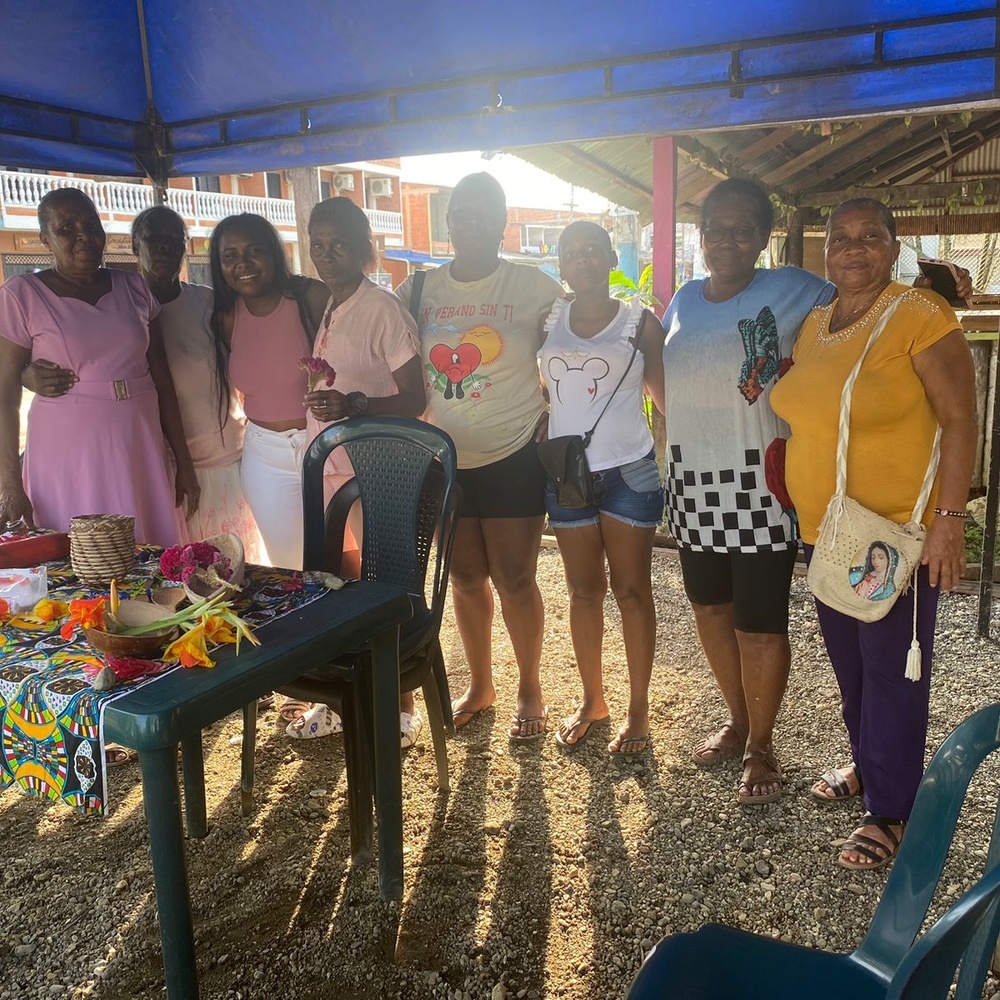
Figure 1. Group of traditional midwives from Nuquí
Note: Photograph taken by the author in Nuquí (2024)
However, learning is not limited to the maternal lineage. Some women entered midwifery out of
necessity, such as one midwife who attended the birth of twins at age 19 in Juradó (PM1). These
experiences shape a collective form of care and resistance.
Being a midwife is a source of pride, identity, and commitment to life. “I am saving another
life…
midwives are essential to the municipality” (IV11). However, this work is carried out under
precarious
conditions, including barriers to access, limited resources, and inadequate infrastructure.
“They came
to get me by river… the woman was giving birth” (AM2), one midwife recalled, illustrating
the geographic
and logistical challenges they face. Other midwives expressed a desire for appropriate facilities:
“I
would like to have a place with a proper bed” (DM1).
In response to these limitations, midwives combine ancestral knowledge with
intuition and creativity.
They use medicinal plants in situations in which the biomedical system is unable to respond:
“When
the
doctors cannot stop the bleeding, I use chicory, and it works” (DM4). Although they
recognize the
limits
of their knowledge, they also understand when referral to a health care facility is necessary:
“When
childbirth becomes risky… the woman has to be taken to the health center” (OG12).
Thus, midwives sustain their practice through wisdom, resilience, and love of life.
Their work, which
is essential in contexts of exclusion, represents a form of resistance to institutional neglect and
an
affirmation of the sovereignty of ancestral knowledge in community care
Free bodies and knowledge of the land
Traditional midwifery is sustained by a profound relationship among women, the body, and the
territory. Within this interconnected framework, nature is not an external resource but a vital ally
and
a tapestry of wisdom that accompanies midwives in their everyday practice. The alliance between
midwives and nature is a central pillar of ancestral knowledge that has endured across generations.
This
connection with the land and its elements is expressed particularly through the use of medicinal
plants.
Over time, midwives have learned to interpret signs in nature and to use the resources it provides
to
support women through the process of giving birth, as one participant explained: “Well, yes, in
the
past,
women had their little secrets, but now many ideas have been taken from us. We even share
knowledge
with Indigenous women, and they share with us” (OG16). This account highlights the
collective and
dynamic nature of this knowledge, which is enriched through dialogue among communities, such as
that occurring between Afro-descendant and Indigenous women.
This knowledge is not activated only during critical moments in childbirth; rather,
it is part of the
midwives’ everyday lives. “And it is different: if I tell her, ‘This herb can be crushed to induce
vomiting,’
she uses it for something else, and another woman uses it for yet another purpose” (IV2). This
statement
illustrates how botanical knowledge is exchanged and enriched among women, weaving a network
of knowledge that strengthens both bodily care and the relationship with the natural environment.
Maintaining this connection with the land is also an act of resistance to
medicalization and the
imposition of hegemonic health models. When midwives draw on natural remedies and traditional
techniques, they not only provide comprehensive care but also defend a way of life grounded in
balance between the body and nature. Through these practices, they protect women’s health and
safeguard a heritage that has demonstrated its effectiveness and wisdom over time.
This vital alliance finds its fullest expression in the use of medicinal plants,
which many midwives
regard as the very heart of midwifery. The cultivation, harvesting, and use of these plants
constitute
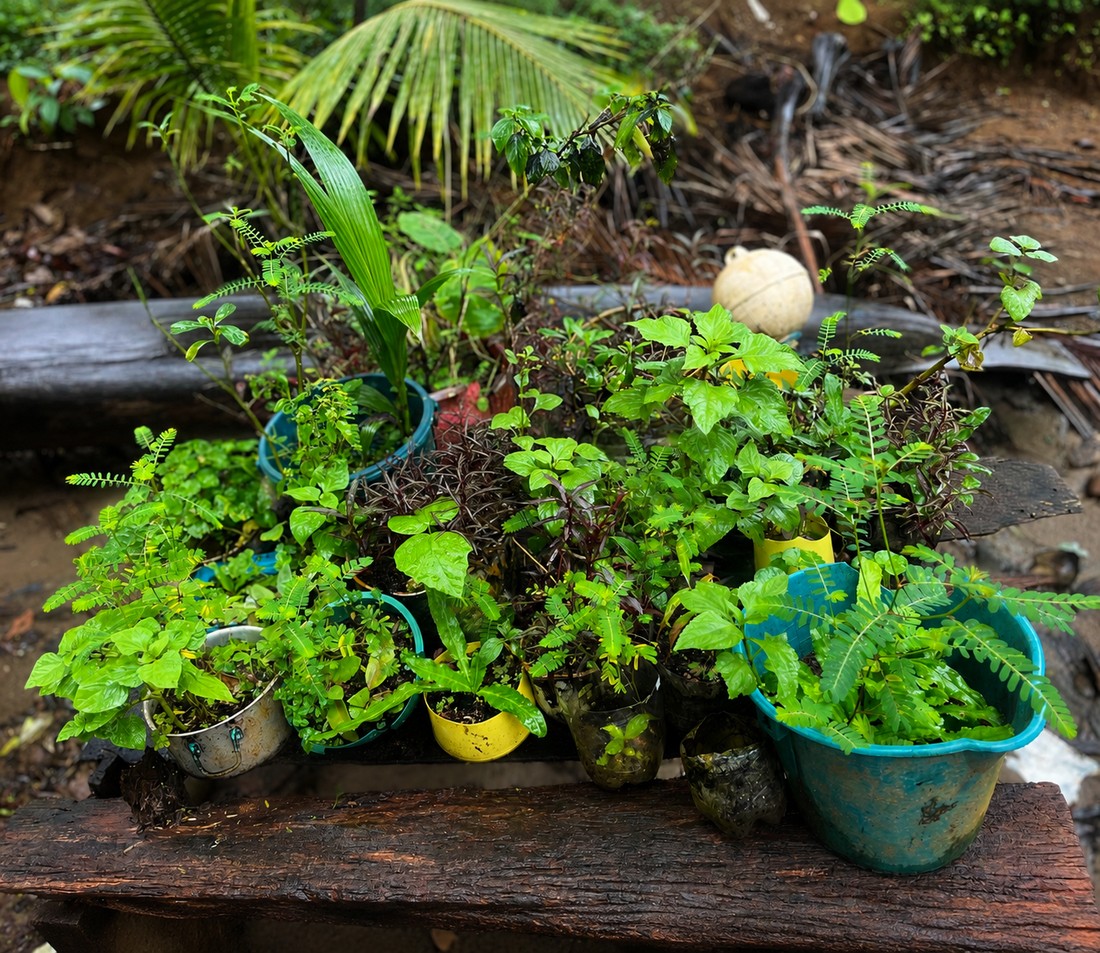
an essential component of midwifery knowledge, as shown in Figure 2.
Figure 2. A midwife’s medicinal plant garden
Note: Photograph taken by the author in Nuquí in 2024. Plants used during and after childbirth
include basil (Ocimum basilicum L.), carpintero (pectoralis), descanse (Alternanthera bettzickiana),
mugwort (Artemisia vulgaris), and nacedera (Trichanthera gigantea)
Moreover, increasing medicalization has reduced the demand for these traditional
practices. As another
midwife lamented, “What has changed is that now people no longer come looking for us to attend
births.
You may have your herbs and know how to use them, but if they do not seek you out, how are you
supposed
to gather the plants and give them to the women?” (NM13). This shift threatens to silence
knowledge
that has long been a cornerstone of community health, displacing forms of care deeply connected to
the land and spirituality.
Beyond their practical effectiveness, medicinal plants also hold symbolic and
spiritual significance.
They embody the connection between the human body and the territory, and between the visible
and invisible dimensions of the birthing process. One midwife explained: “Every woman continues
to
bleed after giving birth, and the chicory stopped it all—and put a sack of salt on her”
(DM2). Here, the plant
not only acts on the physical body but also forms part of a ritual intended to provide protection
and
restore vital balance.
Ultimately, traditional midwifery, as practiced and experienced by these women,
cannot exist without
medicinal plants. Midwives are the guardians of a body of knowledge that not only safeguards health
but also embodies a way of understanding and inhabiting the world. In the face of the pressures of
modernity and institutional devaluation, they steadfastly maintain that without plants, there can be
no midwifery. In doing so, they defend not only a practice but an entire worldview in which the
body,
the land, and care are woven into a single fabric of life.
Legitimation of knowledge and grassroots power
Integrating midwives’ knowledge into health systems not only enriches health care but also promotes
intercultural collaboration in which scientific and community-based knowledge mutually reinforce
one another. Far from posing a threat to formal medicine, traditional midwifery offers an
opportunity
to broaden approaches to care from a perspective rooted in culture, territory, and women’s dignity.
Training midwives in partnership with medical institutions, as has occurred in other
countries,
demonstrates that this knowledge can be legitimized without stripping it of its essence. This
process
is grounded in building relationships of respect and reciprocity in which midwives are recognized
not only as health care providers but also as bearers of a profound cultural legacy. As one midwife
explained:
“I dream of us being recognized, and of midwives in every community having a little place of our
own
where we could attend births—just a small room attached to the house where we could receive the
woman, care for her, and then take her back home. I would really like that. It would be
beautiful to see”
(OG21).
This dream of having a private, dignified space of their own in which to care for
women in their
community encapsulates the desire to bring together cultural identity, autonomy,
and respect for life.
Beyond a physical setting, midwives are calling for an infrastructure that enables them to practice
their
knowledge with the necessary resources, as another woman explained: “All the supplies, a little
bed for
attending births, everything they need. They would have the roots, their plants, their garden
with all
their
plants—nacedera, carpintero, all those things—with the roots planted there” (OG22). Her
words convey
a request not only for a space, but also for recognition of the symbolic and material environment
that
sustains midwifery care.
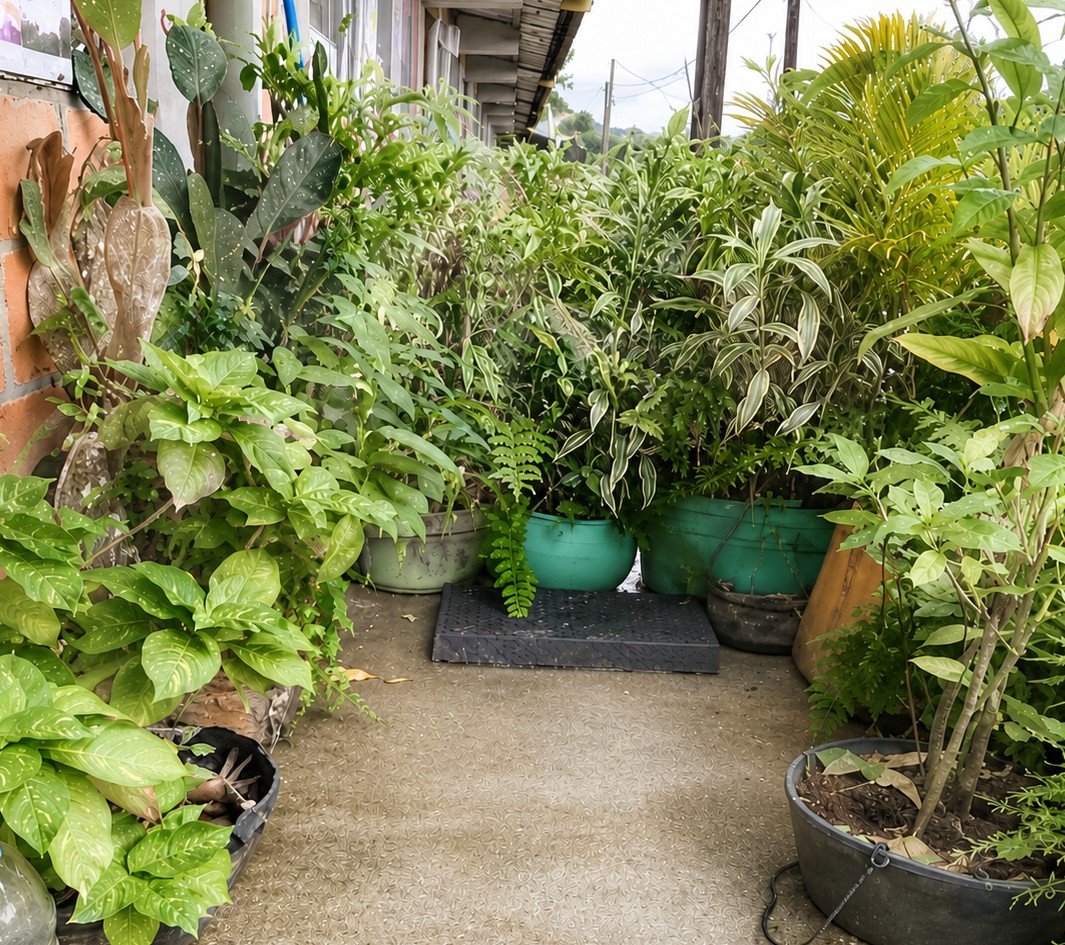
Figure 3 shows the entrance to a midwife’s home surrounded by
medicinal plants
that embody the
connection between knowledge and the land. The image represents the ideal of a holistic home: a
place for gathering, exchanging knowledge, and carrying out their work as guardians of life.
However,
this aspiration remains unrecognized by many health care institutions, which continue to exclude
midwives from the system.
Figure 3. Front walkway of a midwife’s home in Nuquí
Note: Photograph taken in 2023. It shows the front walkway—the outdoor area near the entrance—of a
midwife’s home.
As she leaves to carry out her work, she has medicinal plants readily available to treat the evil
eye, including santa maría de anís
(Piper auritum), yerba santa (Absinthium L.), doradilla (Selaginella lepidophylla), and
desbaratadora (Justicia spicigera)
Official recognition of midwives is also an act of social justice. Legitimizing
their role within the health
system can empower them, give them a voice and greater visibility in collective health
decisionmaking,
and strengthen the social fabric of their communities. This process should be accompanied
by policies that support their practices and educational programs that recognize midwifery as a
safe,
accessible, and culturally appropriate option.
To advance this recognition, studies documenting the impact of midwifery on
maternal and
child health are essential. Indicators such as reductions in mortality rates and childbirth-related
complications, as well as maternal satisfaction, can demonstrate the effectiveness of midwifery
care.
Qualitative studies that capture the voices of the women who received this care can further
highlight
the humane, emotional, and spiritual quality of the support provided. Such data are essential for
raising awareness among health authorities and advancing the formal inclusion of midwifery.
However, this process of legitimation faces major obstacles. In many territories, the
biomedical system
continues to dismiss midwives’ knowledge, rendering it invisible within institutions and denying it
legitimacy. In communities where access to health care services is limited, midwives serve as
frontline
care providers during pregnancy and childbirth.
Despite their experience and ability to recognize warning signs, midwives’ knowledge
is often
disregarded by health care personnel. “Look, this happened to me at the hospital itself, right
there
in
Nuquí... I told the doctor, ‘The baby girl is already coming.’ But he did not listen to me. By
the
time he came,
it was too late—the baby girl had died” (AM7). This account reveals the painful
consequences of a
lack
of institutional recognition, which puts lives at risk and undermines collective work.
Institutional abandonment not only excludes midwives but also seeks to control the
knowledge they
have preserved for generations. This devaluation of their role also constitutes a way of imposing a
single model of care that has historically marginalized women’s and community-based knowledge.
“We midwives do not have supplies, and we are not recognized, but we are still here because we
often
save lives” (IV5), one woman stated, underscoring that their commitment to life persists
despite the
barriers imposed by the system.
Despite these adversities, midwives continue to dream of having a space of their own
where they can
practice their knowledge without depending on institutions that have marginalized them. “I
dream
of having a place of our own—a house where we could receive mothers and have everything
organized.
That would make things easier” (PM5). This aspiration, shared by many, reflects their
desire for
dignity
and autonomy, as well as the need to continue caring for women in a setting that respects their
roots.
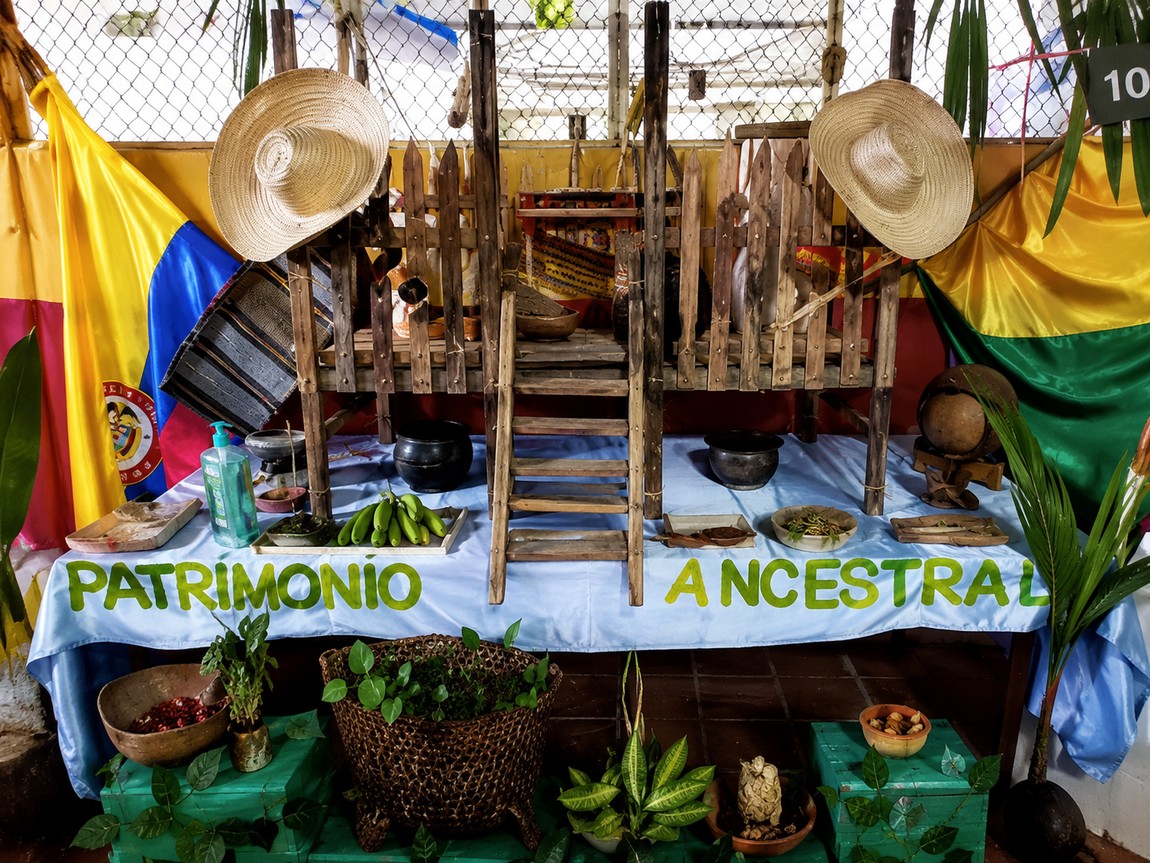
Figure 4 shows a home that is more than a place of shelter; it
is a symbol of
resistance, knowledge, and
care. It embodies the hope for a future in which midwives are recognized not as occasional
assistants,
but as central figures in the care and preservation of life.
Figure 4. Home of an Asoparupa Midwife, 2021
Note: Photograph provided by Asoparupa in 2021. It represents a dedicated space and the midwives’
dream of having a home
equipped with the supplies needed to attend births. It also symbolizes ancestral heritage and
territory
In conclusion, legitimizing midwives’ knowledge is an urgent task that seeks not only
to integrate
different forms of knowledge but also to address historical patterns of exclusion. In the face of
institutional abandonment and the control of knowledge, midwives continue to defend their
practices as legitimate, effective, and profoundly humane ways of supporting childbirth. They are
women who resist, care, and teach from the land, while claiming a dignified place within health
systems and in the collective memory of their communities.
Taken together, the categories “practice and situated knowledge,” “free bodies and
knowledge of
the land,” and “legitimation of knowledge and grassroots power” provide an understanding of
Afrodescendant
midwifery as a comprehensive system of care deeply rooted in territory, memory, and
women’s collective experience. Far from being a marginal practice, midwifery emerges as a form
of cultural and political resistance that protects life, affirms the dignity of ancestral knowledge,
and
challenges the hegemonic logics of the biomedical system. These categories demonstrate how
midwifery knowledge is not only transmitted and transformed in everyday and community settings
but also asserted as a legitimate voice in the face of historical inequalities, reaffirming
autonomy,
grassroots power, and a vital connection to the land.
Discussion
Afro-descendant and Indigenous communities have historically faced processes of
dispossession
rooted in colonial, patriarchal, and capitalist structures. However, they have not been passive
victims;
rather, they have acted as agents of resistance through their ancestral knowledge, spiritual
practices,
and connections to their territories. Within this context, women play leading roles as community
leaders, caregivers, and guardians of collective memory, advancing transformative cultural,
political,
and epistemic initiatives.
From the category of “practice and situated knowledge,” women can be seen
reinterpreting and
reaffirming their knowledge through lived experience and dialogue with their surroundings. The
Special Safeguarding Plan (PES)23 recognizes that midwives in Colombia’s Pacific
region serve not
only
a caregiving role but also act as guardians of traditional knowledge, bringing together medicinal
plants, spirituality, and community care in defense of their territory. This living body of
knowledge,
deeply connected to spirituality, becomes a central form of resistance to structural
violence.
Several qualitative and ethnographic studies have shown that midwifery knowledge is
acquired and
applied through everyday practice, observation, and intergenerational transmission in domestic and
community settings, shaping an embodied and context-specific body of knowledge that integrates
the bodily, relational, and territorial dimensions of care24-28.
According to Lozano29, this spirituality brings social struggles
together and
strengthens leadership,
while Lozano and Viveros30
highlight the symbiotic relationship among body, land, and spirituality
as
the foundation of a situated epistemology.
The category “free bodies and knowledge of the land” highlights the body as
a
political territory.
Grueso31 and Gelacio et
al.32 argue that
Afro-descendant women reclaim and reinterpret their bodies
as sites of memory and dignity, challenging extractivist, racist, and patriarchal narratives. This
bodily
reclamation is shaped through everyday life and in connection with nature. Along these same lines,
movements advocating respectful maternity care and sexual and reproductive health demonstrate how
the pregnant body becomes a site of agency in the face of practices of control, discipline, and
obstetric violence, affirming the right to make decisions about one’s own body and the process of
giving birth33.
Montañez Pico34 underscores the role of spirituality in
fostering social cohesion
amid crises
generated by racial capitalism and cultural homogenization. Within midwifery practices, this
spirituality and bodily autonomy are expressed through approaches to care that integrate the use of
heat, medicinal plants, and relationships with the surrounding environment, giving rise to forms of
knowledge that connect body, nature, and power through nonbiomedical logics35,36.
Ethnobotanical studies have shown that knowledge of medicinal plants is a central
component
of land-based knowledge, transmitted across generations and closely linked to cultural identity,
language, and the defense of territory37,38. According to Vergara-Figueroa et al.39, women’s
networks
are essential for the intergenerational transmission of knowledge and the coordination of collective
struggles.
From the perspective of “legitimation of knowledge and grassroots power,”
the
findings reveal the
processes through which these women position their knowledge within institutional settings while
contesting hegemonic frameworks. In maternal health, this contestation is reflected in the tension
between global discourses that promote biomedical standards of “safe childbirth” and place-based
midwifery practices, thereby producing epistemic hierarchies that subordinate community-based
knowledge. Within this context, legitimation becomes a contested arena in which decisions are made
about which forms of knowledge are recognized, who is authorized to practice them, and under what
conditions40,41.
Crenshaw’s intersectional framework42 provides insight into how these women confront
multiple,
simultaneous forms of oppression while developing complex and creative responses that give rise
to new ways of engaging in politics, without idealizing the past or abandoning their ethical and
community-based principles.
Lugones43
argues that cultural differences can function as political tools. In this
sense, Afrodescendant
women advance transformative proposals from the local to the global level, engaging
with decolonial feminisms and epistemologies of the South. Authors such as Collins et al.11 and
Lugones44 emphasize the
need to recognize the situated epistemologies of racialized women
and advocate for a radical multiculturalism capable of transforming structures of exclusion and
acknowledging their epistemic capacity.
With regard to traditional midwifery, this contestation is further complicated by ambivalent legal
and policy frameworks that, while invoking cultural “dignification,” may also lead to mechanisms of
control, the weakening of midwives’ role, and the risk of losing this cultural heritage.
Legitimation,
therefore, is not a neutral form of recognition but a process shaped by regulation, surveillance,
and
disputes over authority in care45. Likewise, recent experiences incorporating
traditional midwives
into institutional settings show that integration can create opportunities for recognition while
also
generating tensions arising from imposed protocols and power asymmetries. Even so, midwives
employ strategies of negotiation and intercultural mediation that strengthen cultural safety and
community care “from below,” thereby reconfiguring legitimacy through everyday practice46,47.
In urban settings, as Viveros Vigoya48 shows, Black middle-class communities
reinterpret their
ancestral knowledge in order to preserve cultural identity amid pressures of assimilation. This
dialogue between ancestral and modern ways of knowing gives rise to evolving forms of resistance.
Finally, according to Lozano and Grueso49, collective memory becomes a political resource
that
strengthens identity, supports claims for rights, and helps envision a more just future.
In sum, the three analytical categories provide insight into how Afro-descendant and Indigenous
women reconfigure knowledge, bodies, and territories from a transformative perspective. Their
leading role in defending ancestral knowledge, reclaiming and reinterpreting the body, and building
grassroots power networks constitutes a political commitment to social and epistemic justice,
reaffirming them as historical agents who forge pathways toward dignity, memory, and freedom.
Conclusions
Traditional Afro-descendant midwifery constitutes a comprehensive system of care
that brings
together the body, territory, and collective memory. Grounded in ancestral knowledge and a profound
relationship with nature, this practice challenges institutional neglect and biomedical hegemony
while
asserting autonomous and culturally situated ways of supporting life. Medicinal plants, community
ties, and the intergenerational transmission of knowledge are fundamental pillars of this practice.
Within this framework, future research is needed to evaluate the impact of
midwife-provided care on
maternal and neonatal health and to further examine the role of health professionals, particularly
nurses, as intercultural mediators capable of reducing tensions between the hospital-based
biomedical
system and traditional practices. Likewise, advancing certification and training, and integrating
midwives into national health systems through intercultural and noncoercive approaches, is essential
to
strengthening their recognition.
Recognizing midwives entails not only including them in health systems but also
committing to
epistemic justice and to communities’ sovereignty over their ways of giving birth and providing
care.
Far from being a practice of the past, midwifery embodies a living form of resistance to
medicalization
and a political vision of dignity, equity, and grassroots power emerging from the margins.
Conflicts of Interest: The authors declare no conflicts of
interest.
Funding: This study was funded by Minciencias and the Universidad
de Antioquia through a project
of the General System of Royalties, supported by the Department of Chocó, and by the WWB Colombia
Foundation Fund for Research.
Acknowledgments: The authors thank the knowledgeable women midwives
of Nuquí, Chocó, for their
wisdom and resistance.
Author contributions: YV-M: Conceptualization; Data Curation; Formal
Analysis; Funding Acquisition; Investigation; Project
Administration; Resources; Writing – Original Draft Preparation. CA-F: Conceptualization; Data
Curation; Formal
Analysis; Methodology; Software;
Supervision; Validation; Visualization; Writing – Original Draft Preparation; Writing – Review &
Editing.
References
-
Ministerio de Cultura, República de Colombia.
Resolución 1077 de 2017, por la cual se incluye
la manifestación “Saberes asociados a la partería afro del Pacífico” en la Lista
Representativa de
Patrimonio Cultural Inmaterial del ámbito nacional y se aprueba su Plan Especial de
Salvaguardia.
Bogotá: Ministerio de Cultura; 2017. Consulta: Julio 15, 2024. Disponible en:
https://normograma.mincultura.gov.co/compilacion/docs/resolucion_mincultura_1077_2017.htm
-
Angola M, Cano Molina PA.
Parteras tradicionales afrodescendientes del Pacífico
colombiano y su aporte a la construcción de paz. Rev Análisis. 2022;55(102).
https://doi.org/10.15332/21459169.7682
-
Fondo de Población de las Naciones Unidas (UNFPA).
Parteras de América Latina y el Caribe:
en primera línea para salvar vidas. Nueva York: UNFPA; 2025. Consulta: Septiembre 10, 2025.
Disponible en:
https://lac.unfpa.org/es/news/integracion-de-saberes-ancestrales-sistema-de-salud-permite-salvar-vidas-de-embarazadas-bebes
-
Alcaldía de Nuquí.
Plan de desarrollo de Nuquí 2022–2025. Geografía municipal: ubicación,
altitud y coordenadas. Nuquí: Alcaldía de Nuquí; 2022. Consulta: Agosto 22, 2024.
-
Departamento Administrativo Nacional de Estadística (DANE).
Proyecciones de población
municipal. Bogotá: DANE; 2018. Consulta: Octubre 5, 2024. Disponible en:
https://www.dane.gov.co/index.php/estadisticas-por-tema/demografia-y-poblacion/proyecciones-de-poblacion
-
Hernández Sampieri R, Mendoza Torres CP.
Metodología de la investigación: las rutas
cuantitativa, cualitativa y mixta. 6a ed. Ciudad de México: McGraw-Hill Education;
2018.
-
Ramírez Serna AM. La investigación cualitativa y su
relación con la comprensión de la subjetividad.
RHS-Revista Humanismo y Sociedad. 2016;4(2):1-9.
https://doi.org/10.22209/rhs.v4n2a02
-
Silverman D.
Doing qualitative research. 5th ed. London; Thousand Oaks (CA): SAGE Publications; 2017.
https://doi.org/10.1007/s10935-023-00730-6
-
Denzin NK, Lincoln YS.
The SAGE handbook of qualitative research. 3rd ed. Thousand Oaks (CA):
Sage Publications; 2008.
-
Fricker M.
Injusticia epistémica: el poder y la ética del conocimiento. Barcelona: Herder; 2017.
-
Collins PH, Bilge S.
Intersectionality. Cambridge: Polity Press; 2016.
-
Collins PH.
Black feminist thought: knowledge, consciousness, and the politics of empowerment.
New York: Routledge; 2000.
-
Guber R.
La etnografía: método, campo y reflexividad. Buenos Aires: Siglo XXI; 2010.
Consulta: 20
Ago 2024. ISBN 978-987-629-693-9.
-
Valdez Ayala Z.
Etnografía crítica: surgimiento y repercusiones. Revista Comunicación.
2012;21(1):16-24.
https://revistas.tec.ac.cr/index.php/comunicacion/article/view/810
-
Restrepo E.
Técnicas etnográficas. Popayán: Fundación Universitaria Claretiana -FUCLA; Material
de apoyo para la Especialización en Métodos y Técnicas de Investigación en Ciencias
Sociales.
2013. Consulta: Julio 15, 2024. Disponible en:
https://naturalezaculturaypoder.wordpress.com/wp-content/uploads/2014/02/restrepo-2013.pdf
-
Vasco LG.
Así es mi método en etnografía. Tabula Rasa. 2007;(6):19-52. https://revistas.universidadmayor.edu.co/index.php/tabularasa/article/view/1556
-
Ramírez JR, Guevara LCPL de.
De la democracia fragmentaria al Ubuntu africano: aportación de
los movimientos afrodescendientes a la democracia relacional en América Latina. Acta
Scientiarum.
Human and Social Sciences. 2020;42(2):e54150.
https://doi.org/10.4025/actascihumansoc.v42i2.54150
-
Asociación Médica Mundial.
Declaración de Helsinki de la AMM- Principios éticos para las
investigaciones médicas con participantes humanos. 2024. Consulta: Julio 17, 2025.
Disponible
en: https://www.wma.net/es/policies-post/declaracion-de-helsinki-de-la-amm-principioseticos-para-las-investigaciones-medicas-en-seres-humanos/
-
Congreso de la República de Colombia.
Ley 1581 de 2012 -Por la cual se dictan disposiciones
generales para la protección de datos personales. Bogotá: Congreso de la República;
2012. Consulta: Agosto 09, 2024. Disponible en: https://www.funcionpublica.gov.co/eva/gestornormativo/norma.php?i=49981
-
Ministerio de Salud de Colombia. Resolución 8430 de 1993. Bogotá:
Ministerio de Salud; 1993.
Consulta: Septiembre 03, 2024. Disponible en:
https://www.invima.gov.co/biblioteca/resolucion-8430-de-1993pdf
-
Universidad de Antioquia.
Resolución Rectoral 47765 de 2021. Medellín: Universidad de
Antioquia; 2021. Consulta: 28 Oct 2024.
-
Vanegas Y, Alvarez Franco C.
Cuerpo, territorio y memoria: la partería en comunidades
afrodescendientes, Colombia. Mendeley Data V1. 2025. Disponible en:
https://doi.org/10.17632/rmmnrr9t4r.1
-
Suárez-Krabbe J.
En la realidad: hacia metodologías de investigación descoloniales. Tabula
Rasa. 2011;(14):183-204.
https://revistas.universidadmayor.edu.co/index.php/tabularasa/article/view/1410
-
Ministerio de Cultura.
Plan especial de salvaguardia de los saberes asociados a la partería afro
del Pacífico. Bogotá: Ministerio de Cultura. Consulta: Diciembre 7, 2024.
https://patrimonio.mincultura.gov.co/Paginas/PLAN-ESPECIAL-DE-SALVAGUARDIA-DE-LOS-SABERES-ASOCIADOSA-LA-PARTER%C3%8DA-AFRO-DEL-PAC%C3%8DFICO.aspx
-
Rodríguez-Venegas V, Duarte Hidalgo C.
Saberes ancestrales y prácticas tradicionales:
embarazo, parto y puerperio en mujeres colla de la región de Atacama. Diálogo
Andino.
2020;(63):113-122. https://doi.org/10.4067/S0719-26812020000300113
-
Rodríguez-Garrido P, Goberna-Tricas J.
Birth cultures: A qualitative approach to home birthing
in Chile. PLoS ONE. 2021;16(4):e0249224.
https://doi.org/10.1371/journal.pone.0249224
-
Stone NI, Thomson G, Tegethoff D.
Skills and knowledge of midwives at free-standing birth
centres and home birth: A meta-ethnography. Women and Birth. 2023;36(5):e481-e494.
https://doi.org/10.1016/j.wombi.2023.03.010
-
Musie MR, et al. Musie MR, Mulaudzi MF, Anokwuru R, Bhana-Pema V.
Recognise and
Acknowledge Us: Views of Traditional Birth Attendants on Collaboration with Midwives for
Maternal
Health Care Services. Int J Reprod Med. 2022:9216500.
https://doi.org/10.1155/2022/9216500
-
Lozano BR.
Feminismo negro afrocolombiano: ancestral, insurgente y cimarrón. Un feminismo
en lugar. Intersticios de la política y la cultura. Intervenciones
Latinoamericanas.
2016;5(9):23-48.
https://revistas.unc.edu.ar/index.php/intersticios/article/download/14612/15192/41786
-
Lozano BR, Viveros M.
Descolonizando mundos. Buenos Aires: CLACSO; 2017.
-
Grueso L.
Escenarios de colonialismo y (de) colonialidad en la construcción del Ser Negro.
Apuntes sobre las relaciones de género en comunidades negras del Pacífico colombiano.
Comentario Internacional. 2007;(7):145-156.
https://revistas.uasb.edu.ec/index.php/comentario/article/view/136
-
Gelacio PJD.
Memoria y resistencia. Jurídicas. 2013;10(2):167-180.
https://revistasojs.ucaldas.edu.co/index.php/juridicas/article/view/4864
-
Muñoz Cortés JP.
Déjame parir en paz: análisis (auto)etnográfico del Movimiento Nacional por
la Salud Sexual y Reproductiva “Las Bien Paridas”1. Manzana Discordia. 2021;16(2).
https://doi.org/10.25100/lamanzanadeladiscordia.v16i2.11910
-
Montañez Pico D.
Marxismo negro: Pensamiento descolonizador del Caribe anglófono. Buenos
Aires: CLACSO; 2020.
-
Botteri E, Bochar Pizarro JE.
Saberes que conectan con el poder durante el parto: la partería
tradicional en Morelos (México). Alteridades. 2019;29(57):125-135.
https://www.scielo.org.mx/scielo.php?pid=S0188-70172019000100125&script=sci_abstract
-
Laako H.
Los derechos humanos en los movimientos sociales: el caso de las parteras autónomas
en México. Rev Mex Cienc Polit Soc. 2016;61(227):167-194.
https://doi.org/10.1016/S0185-1918(16)30025-3
-
Gheno-Heredia YA, Nava-Bernal G, Martinez-Campos AR, Sanchez-Vera E.
Las plantas
medicinales de la organización de parteras y médicos indígenas tradicionales de
Ixhuatlancillo,
Veracruz, México y su significancia cultural. Polibotánica. 2011;(31):199-251.
https://www.scielo.org.mx/scielo.php?pid=S1405-27682011000100012&script=sci_abstract
-
Rodríguez-Zúñiga J, Ávila-Nájera DM, Mora-Garduño LC, Tovar-Martínez
R, Bautista-Santos
H, Sánchez-Galván F.
Midwifery and Medicinal Plants in the Mazahua and Otomi Indigenous
Group of the State of Mexico. Soc Sci. 2023;12(10):542.
https://doi.org/10.3390/socsci12100542
-
Vergara Figueroa A, Arboleda Hurtado K.
Feminismo Afrodiaspórico. Una agenda emergente
del feminismo Negro en Colombia. Universitas humanística. 2014;78(78).
https://revistas.javeriana.edu.co/index.php/univhumanistica/article/view/6404
-
Argüello Avendaño HE, Mateo González A.
Parteras tradicionales y parto medicalizado, ¿un
conflicto del pasado? Evolución del discurso de los organismos internacionales en los
últimos
veinte años. LiminaR. 2014;12(2):13-29.
http://www.scielo.org.mx/scielo.php?script=sci_arttext&pid=S1665-80272014000200002
-
Mattison CA.
Understanding the roles of midwives in political and health systems [Degree Doctor
of Philosophy]. Hamilton, Ontario: McMaster University; 2017.
https://prod-ms-be.lib.mcmaster.ca/server/api/core/bitstreams/b0939d3c-de1f-48af-88e2-5f39f050972e/content
-
Crenshaw K.
Mapping the margins: Intersectionality, identity politics, and violence against
women of color. Stanford Law Review. 1991;43(6):1241-1299.
https://doi.org/10.2307/1229039
-
Lugones M.
Multiculturalismo radical y feminismos de mujeres de color. Revista internacional
de filosofía política. 2005;(25):61-79.
https://e-spacio.uned.es/bitstreams/661a3329-b1e0-42fe-9914-e627b9662155/download
-
Lugones M.
Hacia un feminismo decolonial. La manzana de la discordia. 2011;6(2):105-119.
https://hum.unne.edu.ar/generoysex/seminario1/s1_18.pdf
-
Carvajal Barona R, Gómez Gómez MC, Restrepo Acuña N, Varela Arévalo
MT, Navarro
Valencia MC, Angulo Valencia ES.
Panorama académico y político que enfrentan las parteras
tradicionales en América Latina. Revista Cubana de Salud Pública. 2018;44(3):e1061.
https://www.scielosp.org/article/rcsp/2018.v44n3/e1061/es/#
-
Lievense B, Leach K, Modanlo N, Stollak I, Wallace J, Dominguez A, et
al.
Improving maternity
care Where Home Births Are Still the Norm: Establishing Local Birthing Centers in Guatemala
That Incorporate Traditional Midwives. Global Health: Science and Practice.
2024;12(5):e2400057.
https://pmc.ncbi.nlm.nih.gov/articles/PMC11521561/
-
Sarmiento I, Paredes-Solís S, De Jesús-García A, Maciel-Paulino N,
Meneses-Rentería A,
Amaya C, et al.
Traditional midwifery contribution to Safe Birth in Cultural Safety: Narrative
Evaluation of an Intervention in Guerrero, Mexico. Community Health Equity Research &
Policy.
2024;44(4):377-389.
https://doi.org/10.1177/0272684X221120481
-
Viveros Vigoya M.
El oxímoron de las clases medias negras. 1 ed. Guadalajara: grupo editorial.
Universidad de Guadalajara; Publicado en asociación con: Centro Maria Sibylla Merian de
Estudios Latinoamericanos Avanzados (CALAS) / Coeditorial: UNSAM Edita. 2021.
https://doi.org/10.32870/97860757127720
-
Lozano BR, Grueso L.
Memorias insurgentes y territorios colectivos. En: Cuerpos, territorios y
feminismos. Buenos Aires: CLACSO; 2020