Abstract
Introduction: Mental disorders affect one in eight people worldwide
and cause significant
disturbances in thinking, emotional regulation, and behavior. Objective: To map the
effect of
mindfulness intervention in reducing stress, anxiety, and depression levels in people deprived of
their liberty. Materials and Methods: The five-stage methodological framework
proposed by
Arksey and O’Malley was used. A systematic literature search was conducted in the PubMed, SAGE
Journals, ScienceDirect, Springer, and Web of Science databases. Results: A total
of 10 articles
were
included, which analyzed 10 different interventions. Regarding participant sex, most studies focused
on male populations, except for three studies that evaluated women and one that included a mixedsex
sample. Six of the seven interventions reviewed showed a significant reduction in at least one
of these variables, with the Path of Freedom intervention standing out. Discussion:
The adapted
Path of Freedom program stood out as the most effective intervention for reducing stress, anxiety,
and depression. This result suggests that its impact goes beyond traditional mindfulness
practices
by integrating key components of emotional regulation in a more structured way.
Conclusion:
Mindfulness-based interventions have proven to be effective in reducing stress, anxiety,
and
depression
among incarcerated individuals. However, their impact varies depending on the methodological
approach, program duration, and the components incorporated.
Keywords: Mindfulness; Stress; Anxiety; Depression;
Prisoners.
Resumen
Introducción: Los trastornos mentales afectan a una de cada
ocho personas en el mundo y provocan alteraciones significativas
en el pensamiento, la regulación emocional y la conducta.
Objetivo: Mapear el efecto de la intervención de mindfulness
en la reducción de los niveles de estrés, ansiedad y depresión en
personas privadas de la libertad. Materiales y Métodos: Se utilizó
el marco metodológico de cinco etapas de Arksey y O´Malley. Se
realizó una búsqueda sistematizada en las bases de datos PubMed,
SAGE Journals, Science, Springer y Web of Science. Resultados:
En total, se incluyeron 10 artículos, los cuales analizaron 10
intervenciones distintas. En cuanto a la distribución por género,
la mayoría de los estudios se enfocan en poblaciones masculinas,
con excepción de tres estudios que evaluaron a mujeres y uno
que incluyó una muestra mixta. Seis de las siete intervenciones
revisadas mostraron una disminución significativa en al menos una
de estas variables, destacando la intervención Path of Freedom.
Discusión: La adaptación del programa Path of Freedom destacó
como la más efectiva en la reducción del estrés, la ansiedad y la
depresión. Este resultado sugiere que su impacto va más allá de
las prácticas tradicionales de Mindfulness, integrando de manera
más estructurada componentes clave de la regulación emocional.
Conclusión: Las intervenciones basadas en Mindfulness han
demostrado ser efectivas para reducir el estrés, la ansiedad y la
depresión en personas privadas de la libertad. Sin embargo, su
impacto varía según el enfoque metodológico, la duración del
programa y los componentes incorporados.
Palabras Clave: Atención Plena; Estrés; Ansiedad; Depresión;
Prisioneros.
Resumo
Introdução: Transtornos mentais afetam uma em cada oito pessoas no
mundo e causam alterações
significativas no pensamento, na regulação emocional e no comportamento. Objetivo:
Mapear o
efeito da intervenção de mindfulness na redução dos níveis de estresse, ansiedade e depressão em
indivíduos encarcerados. Materiais e Métodos: Foi utilizado o modelo metodológico
de cinco etapas
de Arksey e O'Malley. Uma busca sistemática foi realizada nas bases de dados PubMed, SAGE Journals,
Science, Springer e Web of Science. Resultados: Um total de 10 artigos foram
incluídos, analisando
10 intervenções diferentes. Em relação à distribuição por gênero, a maioria dos estudos focou em
populações masculinas, com exceção de três estudos que avaliaram mulheres e um que incluiu uma
amostra mista. Seis das sete intervenções revisadas mostraram uma diminuição significativa em pelo
menos uma dessas variáveis, com a intervenção Caminho da Liberdade se destacando.
Discussão: O
programa Caminho da Liberdade adaptado se destacou como o mais eficaz na redução do estresse,
da ansiedade e da depressão. Este resultado sugere que seu impacto vai além das práticas
tradicionais
de mindfulness, integrando componentes-chave da regulação emocional de forma mais
estruturada.
Conclusão: Intervenções baseadas em mindfulness têm se mostrado eficazes
na redução do estresse,
da ansiedade e da depressão em indivíduos encarcerados. No entanto, seu impacto varia dependendo
da abordagem metodológica, da duração do programa e dos componentes incorporados.
Palavras-Chave: Atenção Plena; Estresse; Ansiedade; Depressão;
Prisioneiros.
Introduction
Mental health has become the leading global health concern since
20211,2. Conditions such
as
depression and anxiety disorders affect 3.8% and 4.0% of the global population,
respectively3,4. In
Latin America and the Caribbean, anxiety disorders have the highest prevalence worldwide,
while
depressive disorders rank second5.
Mental health problems have a greater impact on vulnerable populations, such as incarcerated
individuals6,
because they are exposed to a highly stressful environment7
characterized by loss of
autonomy, judicial uncertainty, the need to adapt to strict institutional rules8,
overcrowding9,
violence, lack of privacy, and interpersonal conflicts10,
as well as disconnection from the family
environment and the absence of a sense of purpose11.
Stress, anxiety, and depression are interconnected and may reinforce one another over
time12. Aunque
Although negative emotions serve an adaptive function by helping individuals identify
threats, their
persistence may trigger maladaptive responses and increase the risk of mood disorders13.
Perceived
stress arises from the appraisal of a situation as threatening and the perception that one
lacks
sufficient resources to cope with it14. Its persistent presence may lead to
anxiety, characterized by a
state of heightened alertness and recurrent negative thoughts, which, in turn, further
amplifies the
perception of stress through a feedback loop15.
Stress is a key factor in the development of depression, particularly among vulnerable
populations
exposed to overcrowding, violence, and uncertainty16. The diathesis-stress model posits that
certain
stressful situations may trigger depressive episodes, while persistent depression may
deplete cognitive
resources, further impairing the ability to cope with stress17.
This process creates a downward spiral in
which stress accumulates and exacerbates emotional disorders18.
One strategy for interrupting this cycle is mindfulness19, for which evidence supports its
effectiveness
in reducing stress, anxiety, and depression by promoting adaptive coping strategies20. In
correctional
settings, its implementation has demonstrated benefits such as enhanced resilience, improved
impulse control, and reduced aggressive behavior21,22.
Evidence regarding the effectiveness of mindfulness in correctional settings remains limited
and
fragmented23,
although studies have examined its effects on emotional regulation and the reduction
of aggressive behavior24. The objective of this scoping review
was to map the effects of mindfulness
interventions on reducing levels of stress, anxiety, and depression among incarcerated
individuals.
Materials and Methods
This scoping review25 was
conducted using the five-stage methodological framework developed
by Arksey and O’Malley26.
The study findings are reported in accordance with the PRISMA-ScR
2020 (Preferred Reporting Items for Systematic Reviews and Meta-Analyses Extension for Scoping
Reviews) reporting guidelines25.
Research question
The research question that guided the search strategy was developed using the PICO framework
(P = Patient or Problem, I = Intervention, C = Comparison, and O = Outcome)27. The population of
interest consisted of incarcerated individuals, the primary intervention was mindfulness, and the
outcome variables included stress, anxiety, and depression. The following key questions guided the
review:
What is the scope of the evidence on the effects of mindfulness interventions in reducing stress,
anxiety, and depression among incarcerated individuals?
What characteristics of mindfulness interventions have been shown to be effective in reducing
stress,
anxiety, and depression in this population?
Relevant studies
A systematized literature search was conducted in the PubMed, SAGE Journals, ScienceDirect,
Springer, and Web of Science databases between January and March 2025. The search strategy
included MeSH and DeCS terms in Spanish, English, and Portuguese: “Mindfulness,” “Prisoners,”
“Stress,
Psychological,” “Anxiety,” “Depression,” “atención plena,” “prisioneros,” “estrés psicológico,”
“ansiedad,”
“depresión,” “Atenção Plena,” “Prisioneiros,” “Estresse Psicológico,” “Ansiedade,” and “Depressão.”
These
terms were combined using the Boolean operator AND. The search strategy was adapted to the
specific requirements of each database and tested in all three languages before the final search was
conducted.
Study selection
Original articles reporting randomized controlled trials, as well as studies reporting a single
randomized
or quasi-experimental clinical trial, published between January 1, 2015, and January 1, 2025, were
included. Eligible studies had to evaluate mindfulness interventions in relation to stress, anxiety,
and
depression, be available through open access, and be published in Spanish, English, or Portuguese.
Studies that did not report outcome measures for any of these dimensions were excluded, as were
non-systematic literature reviews, study protocols, gray literature (e.g., conference abstracts and
theses), and descriptive or correlational studies.
Data charting
The study selection process was conducted sequentially, from identification through inclusion,
following the PRISMA-ScR flow diagram25. Initially, studies were identified through
searches of the
PubMed, SAGE Journals, ScienceDirect, Springer, and Web of Science databases, as well as through
manual searches. Duplicate records were then removed using reference management software.
Subsequently, the records were organized in a Microsoft Excel spreadsheet to assess their
eligibility.
Two reviewers independently screened the titles and abstracts by applying the eligibility criteria.
Studies considered potentially relevant were retrieved in full text for further assessment. Reasons
for
exclusion were documented for subsequent review by a third reviewer. Finally, any disagreements
arising during the final stage of the selection process were resolved by the third reviewer, leaving
no
unresolved discrepancies.
Collating, summarizing, and reporting the results
Using a standardized data extraction form, two reviewers independently extracted the data and
organized them in a Microsoft Excel spreadsheet. The extracted information included the year
of publication, the country where the study was conducted, the sample size, and specific data on
the characteristics of the mindfulness intervention.
The
12 checklist items were independently assessed by two reviewers, who evaluated aspects such as
the intervention name, theoretical foundation, materials, procedures, facilitator qualifications,
mode
of delivery, setting, duration, adaptations, and intervention fidelity. The results were organized
into
an Excel matrix to facilitate comparative analysis. All extracted data are publicly available
through Mendeley Data28.
Ethical considerations
Review studies do not require approval from a research ethics committee because they do not
involve the direct collection of data from participants. However, they must adhere to a rigorous
methodological approach to ensure the validity and reliability of the findings.
Results
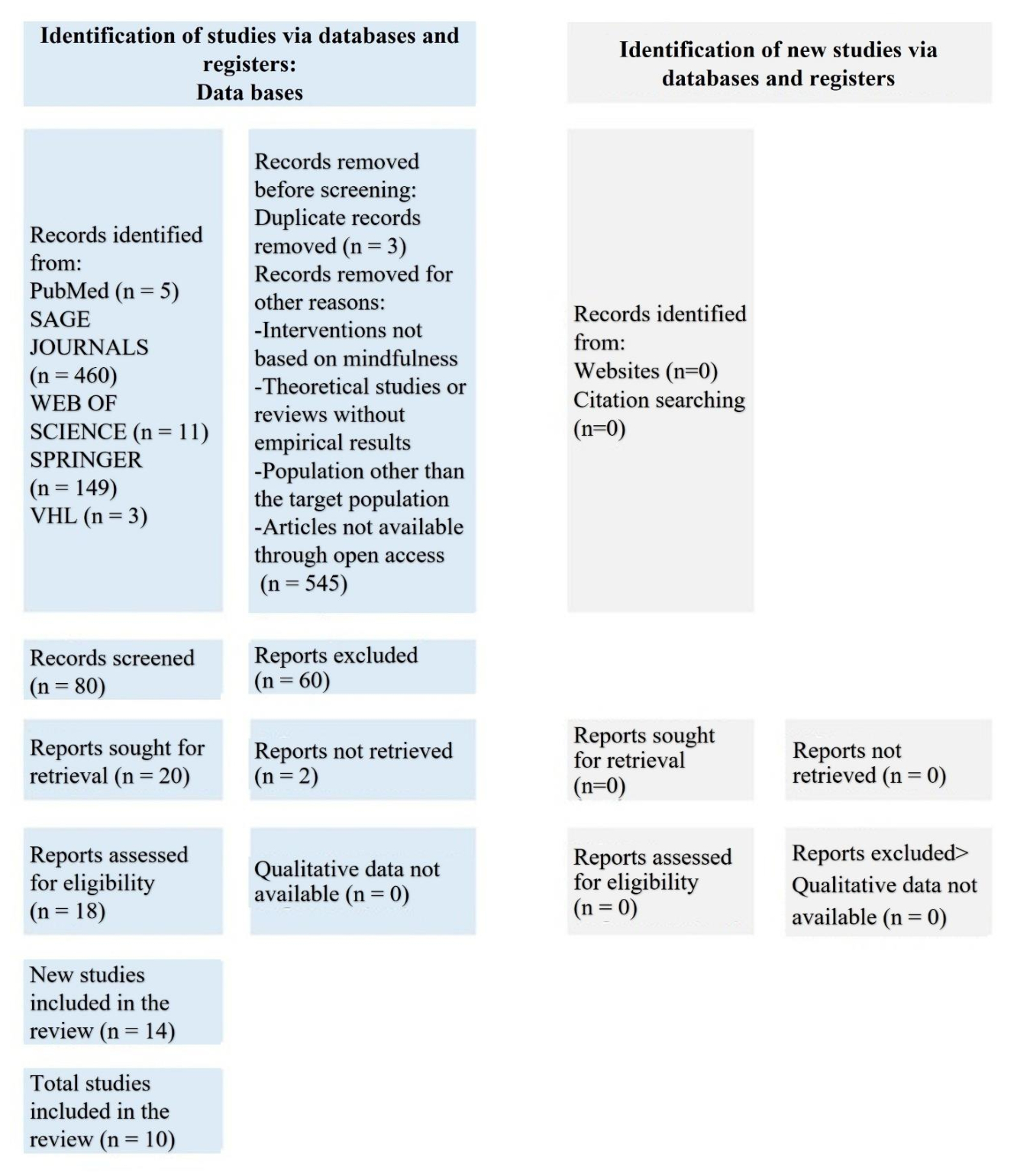
A total of 628 records reporting interventions described in original articles were identified. After
duplicate records were removed, an initial screening based on titles and abstracts was conducted,
resulting in the exclusion of 545 records that did not meet the eligibility criteria. As a result,
80 articles
were selected for full-text review.
In addition, a complementary search was conducted to identify randomized controlled trials or
quasiexperimental
studies that specifically evaluated mindfulness interventions. Of the studies retrieved,
60 were excluded because they did not meet the predefined eligibility criteria. The main reasons for
exclusion included the absence of a focus on mindfulness-based interventions, theoretical papers or
review articles without empirical findings, inclusion of populations other than the target
population,
insufficient methodological information, and unavailability of the full text. Ultimately, 20
articles were
identified as potentially relevant, of which 10 met all the established eligibility criteria and
addressed a
range of mindfulness interventions Figure 1.
Figure 1. PRISMA ScR flow diagram for the identification of studies via databases and
registers
To address the research questions, the selected studies were analyzed systematically, and their
findings
were classified into three main domains: (1) characteristics of the participant population, (2)
study
design and intervention components, and (3) study results and the effects of the intervention on
stress,
anxiety, and depression.
Characteristics of the study population
Table
1 summarizes the characteristics of the study populations included in the selected studies
published between 2015 and 2025. These studies were conducted across diverse regions of the
world, including the United States29,30, China31-33,
the Netherlands34, the
United Kingdom35,36, Spain37, and Portugal38, providing a global
perspective on the use of mindfulness interventions in correctional
settings.
Regarding participant sex, most studies focused on male populations, with the exception of three
studies that evaluated women and one that included a mixed-sex sample. Participants’ ages varied
widely, ranging from adolescents aged 14 years to adults aged 60 years, with study-specific
differences
according to the geographic setting and study design. Marital status was reported in only a few
studies,
indicating that participants were either single or married.
With respect to educational level, few studies reported this information. Among those that did, most
participants had completed secondary education. Finally, the duration of incarceration was reported
inconsistently across studies, ranging from relatively short periods of 8 months to as long as 23
years Table
1.
Table 1. Characteristics of the study population (2015-2025)
X
Table 1. Characteristics of the study population (2015-2025)
|
Author/year
|
Country
|
Sex
|
Age
|
Marital
status
|
Educational
level
|
Mean duration of
incarceration
|
Study
design
|
| Ferstz et
al.29
,
2015 |
United States |
Women |
20-53 years |
Single |
Not applicable |
Not applicable |
QE |
| Himelstein et
al.30
,
2015 |
United States |
Men |
14-18
years |
Not applicable |
Not applicable |
8 months |
RCT |
| Xu et al.31
,
2016
|
China
|
Men |
22-57
years |
Married |
Secondary |
Not applicable |
QE |
| An et al.32
,
2019
|
China |
Men |
19-57
years
|
Not applicable |
Not applicable |
3 years |
QE |
| Song et al.33
,
2021
|
China |
Women |
40 years |
Not applicable |
Secondary |
15 years |
QE |
| Bouw et al.34
,
2019
|
Netherlands |
Men |
23-55
years |
Not applicable |
Not applicable |
15 -
209 months |
QE |
| Simpson et al.35
,
2019
|
United
Kingdom |
Men |
16-21
years |
Not applicable |
Secondary |
52 months |
QE |
| Davies et al.36
,
2021
|
United
Kingdom |
Men and
women |
26-35
years
|
Not applicable |
Not applicable |
23 years |
QE |
| Gallego et al.37
,
2023 |
Spain |
Men |
23-58
years
|
Not applicable |
Not applicable |
Not applicable |
RCT |
| Carmo et al.38
,
2024 |
Portugal |
Men |
23-60
years |
Single |
Secondary |
Not applicable |
QE |
QE=Quasi-experimental study, RCT = Randomized controlled trial
The selected studies were analyzed systematically, and their findings were
classified into two main
domains: (1) study design and intervention components, and (2) study results and the effects of the
intervention on stress, anxiety, and depression.
Characteristics of the identified intervention designs
Quasi-experimental studies: Eight quasi-experimental studies29,31-36,38
and two randomized controlled
trials30,37 were identified that
evaluated mindfulness interventions for reducing stress, anxiety, and
depression among incarcerated individuals.
Among the quasi-experimental studies, interventions were delivered in person and
included between
18 and 44 participants per study group. Intervention duration ranged from 6 to 12 weeks. Most
interventions comprised 6 to 12 sessions, with each session lasting approximately 1 to 3 hours.
Activities
implemented in the intervention groups included meditation, relaxation exercises, body scan, seated
meditation, yoga, mindful movement, and group discussions29-38. Regarding the care provided to the
control groups, several studies did not describe the comparator intervention29,31-33,35,38. Others used
alternative interventions, such as substance use treatment programs30, individual psychotherapy33, or sports programs or
training provided after the study period32,37. The findings showed significant
reductions in stress29,33,
anxiety, and depression following the intervention29,31,34-36,38, as well as
improvements in self-esteem30,32 and sleep quality29.
Randomized controlled trials
In contrast, the randomized controlled trials included between 33 and 44 participants per study
group. The interventions lasted 8 and 10 months, respectively, and consisted of 8 to 11 sessions of
approximately 2 hours each. The interventions comprised meditation practices, psychoeducation,
practical exercises, guided meditation, and informal practice, together with the use of workbooks.
Regarding the control groups, mindfulness-based interventions were provided after the trial
period30,37. The findings indicated
that mindfulness-based interventions produced significant reductions in stress,
anxiety, and depression, with effect sizes ranging from moderate to large30,37 Table
2.
Table 2. Overall characteristics of the intervention designs identified between 2015 and
2025
X
Table 2. Overall characteristics of the intervention designs identified between
2015 and 2025
|
Author/year
|
Sample
|
Mode of
delivery
|
Duration
|
Number of
sessions and
length
|
Intervention
group care
|
Control group
care
|
Primary outcomes
|
Findings
|
Ferstz
et
al.29
,
2015 |
Intervention
group
(IG): 18
participants;
Control
group
(CG):
15
participants
|
Face-toface
|
12 weeks |
12 sessions;
1 hour per
session |
Meditation,
relaxation
exercises, and
mindful breathing |
Treatment not
reported |
Perceived stress decreased from 24.61 to 20.83
(t (17) = 2.805, p = 0.012); anxiety, measured
with the State-Trait Anxiety Inventory
(STAI), decreased from 55.44 to 43.11 (t (17)
= 4.079, p = 0.001); and depression, assessed
using the Center for Epidemiologic Studies
Depression Scale-10 (CES-D-10), decreased
from 17.78 to 13.56 (t (17) = 4.228, p =
0.001).
. |
The mindfulness intervention
significantly improved
sleep quality, as reflected
by a reduction in the mean
Pittsburgh Sleep Quality Index
(PSQI) score from 12.80 to 9.80
(t (14) = 3.574, p = 0.003).
|
Himelstein
et
al.30
,
2015 |
IG: 27
participants;
CG: 27
participants
|
Face-toface
|
12 weeks |
12 sessions;
15-25
minutes
per
session
|
Mindfulness
program
(mindfulness
meditation
and individual
counseling) |
Substance
use treatment
program and
individual
psychotherapy |
The mindfulness intervention significantly
improved decision-making skills from 8.8 (SD
= 2.0) to 10.1 (SD = 1.8), t = −3.44,
p
< 0.01. Attitudes toward drugs (pre-intervention M=38.7,
SD =5.4; post-intervention
M =40.7, SD =7.2; t =−1.60) and
mindfulness (Mindful Attention
Awareness Scale [MAAS]: preintervention M =58.8,
SD =10.9;
postintervention M =60.5, SD =11.1;
t =−0.90) changed in the
expected direction toward greater well-being.
|
Participants who received
mindfulness training
experienced a significant
increase in self-esteem, from
21.6 (SD = 3.7) to 22.8 (SD =
3.8), t = −2.07, p
< 0.05. |
Xu et al.
31
,
2016
|
IG: 19
participants;
CG: 21
participants
|
Face-toface
|
6 weeks |
6 sessions;
2.5-3 hours
per session |
Body scan, seated
meditation,
walking
meditation,
yoga, and group
discussions |
Treatment not
reported |
Significant group-by-time interactions were
observed for anxiety, depression, tensionanxiety,
depression-dejection, angerhostility,
confusion-bewilderment, and
total mood disturbance, with significant
improvements from pre- to post-intervention
in the mindfulness training group, whereas
the control group showed no meaningful
changes. For example, significant reductions
were observed for tension-anxiety (F (1.38) =
24.79, p
< 0.001) and anger-hostility (F (1.38)=22.02,
p
< 0.001) . |
Simple-effects analyses showed
that the mindfulness group had
significantly higher mindfulness
scores at posttest than the
control group (F (1.38) = 12.91,
p
< 0.001), whereas no significant changes were observed in the
control group (F (1.38)=0.25, p =0.62).
|
An et
al.
32
,
2019
|
IG: 39
participants;
CG: 44
participants
|
Face-toface
|
6 weeks |
6 sessions;
2.5-3 hours
per session |
PMeditation
practices and
mindfulness
yoga |
Received
the same
mindfulness
training after
the posttrial
period |
Compared with the waitlist control group,
participants who received mindfulness
training showed significant improvements
in several psychological indicators. These
included increased mindfulness (p
< 0.01), significant reductions in Symptom Checklist-90 (SCL-90)
scores (p
< 0.001) and aggression (p
< 0.05), as well as improvements in sleep quality
(p
< 0.05) and reductions in total mood disturbance
(p
< 0.01). |
In addition, when participants
were compared according to
sentence length, mindfulness
training was more effective
among individuals serving
longer prison sentences,
who showed significant
improvements in mindfulness
(p
< 0.05) and SCL-90 scores (p
< 0.001), along with reductions in anxiety, depression,
aggression, perceived stress, and total mood disturbance
(all p
< 0.05). |
Song et
al.
33
,
2021
|
IG: 25
participants;
CG: 30
participants
|
Face-toface
|
8 weeks |
8 sessions;
2 hours
of theory
and 30-40
minutes
of
practice
per
session
|
Body scan, seated
meditation
and other
audio-guided
meditations,
together with
informal practice
(purposefully
paying attention
to routine daily
activities) |
Mindfulnessbased
cognitive
therapy theory
without
practice |
The results showed that standard
Mindfulness-Based Cognitive Therapy
(MBCT) significantly reduced perceived
stress (p = 0.01, d = 0.65, moderate effect),
depression (p = 0.002, d = 0.82, large
effect), and state anxiety (p = 0.02, d =
0.59,
moderate effect). However, the reduction in
trait anxiety was not significant (p = 0.02,
d = 0.48, small effect).
|
Standard MBCT was more
effective than theoretical
instruction alone in reducing
stress, state anxiety, and
depression, although its impact
on trait anxiety was limited. |
Bouw et
al.34
,
2019 |
IG: 22
participants;
CG:
10
participants
|
Face-toface
|
8 weeks |
8 sessions;
2 hours
per
session |
Mindfulness
exercises
(body scan,
object-focused
meditation,
breathing
exercises, and
slow-movement
yoga) |
Treatment not
reported |
During the mindfulness intervention,
participants experienced positive changes
in several emotional domains. Anger
decreased significantly, with the median
score declining from 3.0 before the
intervention to 2.0 afterward (z = −2.151, p
=
0.031), and mean anger intensity decreased
from 6.6 (SD = 1.7) to 5.4 (SD = 1.9; t (15) =
2.30, p = 0.036, d = 0.69). Regarding stress,
no significant changes were observed in its
frequency (pre-intervention median = 4.0
vs. post-intervention median = 3.0;
z = −1.458, p = 0.145), although mean stress
intensity decreased from 7.5 (SD = 2.3) to
5.4 (SD = 2.7; t (18) = 4.16, p = 0.001,
d =
0.82).
|
Participants' self-esteem
increased significantly, from
a mean of 7.4 (SD = 2.3) to
8.3 (SD = 1.2; t (21) = 2.82, p
= 0.010, d = 0.53), indicating
an enhanced positive selfperception.
|
Simpson
et
al.35
,
2019 |
IG: 23
participants;
CG:
23
participants
|
Face-toface
|
10 weeks |
10 sessions;
30–45
minutes
per
session |
Breath awareness,
body
scan,
and
mindful
movement |
Treatment not
reported |
In terms of quantitative outcomes, the
intervention produced positive effects
on several measures. Impulsivity scores
decreased significantly on both the Teen
Conflict Survey TCS (d = 0.72; 95% CI:
0.32–1.11; p = 0.001) and the Barret
Impulsivity Scale BIS-11 (d = 0.50; 95%
CI: 0.21–0.76; p = 0.01). The BIS-11
subscales showed reductions in attentional
impulsiveness (d = 0.44; p = 0.005), motor
impulsiveness (d = 0.39; p = 0.04), and
non-planning impulsiveness (d = 0.36; p =
0.01). Improvements were also observed
in attention (d = 0.33; p = 0.01), cognitive
instability (d = 0.46; p = 0.01), and
selfcontrol
(d = 0.37; p = 0.02).
|
Mental distress decreased, with
a small effect size (d = 0.32; 95%
CI: 0.03–0.60; p = 0.26). |
Davies
et
al.36
,
2021 |
IG: 17
participants;
CG: 16
participants
|
Face-toface
|
10 months |
8 sessions;
2 hours
per
session |
Psychoeducation,
group sharing of
experiences, and
practical exercises;
sessions were
supplemented with
a workbook and
between-session
practice |
Treatment
not
reported |
Regarding perceived stress, participants
showed a significant reduction in Perceived
Stress Scale (PSS) scores (t (30) = 4.12, p
= 0.001, d = 0.80), indicating a substantial
decrease in psychological distress. Depression
and anxiety symptoms also decreased
significantly, as measured by the Self-Rating
Depression Scale (SDS) (t (27) = 3.48,
p =
0.002, d = 0.67) and the Self-Rating Anxiety
Scale (SAS) (t (27) = 3.21, p = 0.003,
d =
0.61), demonstrating a moderate effect of the
intervention on psychological well-being.
|
Improvements were also
observed in impulse control and
sustained attention, as evidenced
by a significant reduction in
Stop-Signal Reaction Time
(SSRT) (t (29) = −2.64, p =
0.013, d = 0.68), indicating
greater cognitive control and
lower impulsivity. Mindfulness
levels also increased significantly
following the intervention.
|
Gallego
et
al.37
,
2023 |
IG: 22
participants;
CG: 22
participants
|
Face-toface
|
8 weeks |
11 sessions;
2 hours
per
session |
Formal meditation
was practiced for
10 minutes during
the first session,
15 minutes during
the second session,
and 20 minutes
during subsequent
sessions |
Sports program |
Regarding depression, the Wilcoxon signedrank
test showed a significant reduction
in the mindfulness group between baseline
and the 2-month follow-up (Z = −2.383; p =
0.017; r = −0.53). Anxiety scores decreased
from moderate to mild levels at the 2-month
follow-up, although the overall change did
not reach statistical significance (χ² = 10.73;
p = 0.067).
|
The most pronounced changes
were observed for stress. In the
mindfulness group, stress levels
decreased significantly from
moderate to normal (χ² = 16.44;
p = 0.032), with significant
differences between baseline and
post-intervention (Z = −2.609; p
= 0.009; r = −0.56) and between
baseline and the 2-month
follow-up (Z = −2.533; p = 0.011;
r = −0.57), indicating a large and
sustained effect.
|
Carmo
et
al.38
,
2024 |
IG: 22
participants;
CG:
22
participants
|
Face-toface
|
5 months |
18 sessions;
90 minutes
per session |
Mindfulness
meditation
exercises (mindful
yoga, body scan,
seated meditation,
and mindful
walking) |
Treatment not
reported |
Following the intervention, although no
statistically significant between-group
differences were observed in stress, anxiety,
or depression, mean scores were consistently
lower in the mindfulness group. Selfesteem
remained significantly higher in the
mindfulness group (M = 32.42, SD = 5.96)
than in the control group (M = 28.55, SD
= 4.47; U = 140, p = 0.016, d =
0.35), with a
small but consistent effect.
|
At baseline, the control group
had higher levels of anxiety (U
= 152.5, p = 0.034, d = 0.25)
and negative affect (U = 130.5,
p = .009, d = 0.35), whereas the
mindfulness group demonstrated
higher self-esteem (U = 158, p =
0.048, d = 0.31).
|
Face-to-face = in person. IG: Intervention
Group; CG: Control Group; SD: Standard Deviation, M: Mean; CI: Confidence
Effective mindfulness interventions for reducing stress, anxiety, and
depression
The overall analysis of mindfulness interventions identified a total of eight studies that evaluated
the effectiveness of different programs for
reducing stress, anxiety, and depression among incarcerated individuals29,31-38. The interventions
included Path of Freedom29,36. Mindfulness-
Based Cognitive Therapy (MBCT), and Mindfulness-Based Stress Reduction (MBSR)31-34,36-38.
Regarding the number of sessions, most interventions were delivered in a group format and ranged
from 2 to 18 sessions. Session
duration ranged from 1 to 3 hours. All interventions were delivered by certified mindfulness
instructors with experience in mindfulness,
underscoring the importance of qualified personnel to ensure intervention effectiveness.
The most important results showed that all eight interventions achieved significant reductions in
stress,
anxiety, or depression29,31,32,34-38. The most effective interventions were the
adapted Path of Freedom
program29,36
and MBCT31,32,34,36. These interventions
produced significant reductions in anxiety,
depression, and perceived stress (p
< 0.01), with moderate-to-large effect sizes (d =0.82 to 0.84)
(d =0,82 a d = 0,84)32,36.
The 12-session Path of Freedom intervention29 achieved significant reductions in stress
(p =
0.012),
anxiety (p = 0.001), and depression (p = 0.001). The 6-session MBCT
intervention31 produced
significant
reductions in anxiety (p = 0.001) and depression (p = 0.024). MBCT
protocols34,36 also demonstrated
reductions in anxiety, depression, and total mood disturbance (p
< 0.001). The 18-session intervention combining MBSR and MBCT38 showed a positive effect in reducing anxiety
(p
= 0.034), although the
effect size was small (d = 0.25) (d = 0,25). Table 3
Table 3. Effective mindfulness interventions for reducing stress, anxiety, and depression
X
Table 3. Effective mindfulness interventions for reducing stress, anxiety, and
depression
|
Author / year
|
Intervention
name
|
Delivery/
components
|
Setting/sessions |
Intervention vs. Control
Outcome |
Ferstz, et
al.29,
, 2015
|
Adapted Path
of Freedom
intervention
|
Certified
mindfulness
instructor accredited
by the Prison
Mindfulness
Institute
|
Correctional
facility;
12 group
sessions; 1 hour
per
session
|
A significant reduction in perceived stress was observed
following the intervention (post-intervention M =
20.83,
d = 1.48) compared with baseline (pre-intervention
M =
24.61, d = 0.95), t (17) = 2.805, p =
0.012. Anxiety also
decreased significantly, with post-intervention scores
(M =
43.11, d = 1.46) being lower than baseline scores
(M = 55.44,
d = 2.45), t (17) = 4.079, p = 0.001.
Likewise, participants
showed a significant improvement in depression, with
mean scores decreasing from M = 17.78 (d =
1.20) preintervention
to M = 13.56 (d = 1.17) post-intervention,
t (17) = 4.228, p = 0.001.
|
Xu et
al.31,
, 2016
|
Mindfulness-
Based Cognitive
Therapy (MBCT)
protocol
|
Mindfulness
instructor with
experience
|
Correctional
facility; 6 group
sessions;
2.5–3
hours
per session
|
Significant time-by-treatment interactions were observed
for anxiety and depression (p
< 0.05). Simple-effects analyses showed that the mindfulness
group experienced significant reductions in anxiety (SAS:
F (1.38)=13.75, p =0.001) and
depression (SDS: F (1.38)=5.63, p =0.024)
at posttest
compared with pretest. Significant reductions were also
observed in tension-anxiety (F (1.38)=19.42, p
< 0.001), depression-dejection (F (1.38)=7.42,
p =0.01),
anger–hostility (F (1.38)=13.59, p
< 0.001), confusionbewilderment (F (1.38)=8.92,
p =0.005), and total
mood disturbance (TMD: F (1.38)=12.42,
p
< 0.001). |
An et
al.32,
, 2019
|
Mindfulness-
Based Stress
Reduction
(MBSR) and
Mindfulness-
Based Cognitive
Therapy (MBCT)
|
Mindfulness
instructor with
experience
|
Correctional
facility; 6 group
sessions; 2.5–3
hours
per session
|
The mindfulness group showed significant reductions
in overall psychological distress (p = 0.000),
particularly
in symptoms of somatization (p = 0.002), obsessive–
compulsive symptoms (p = 0.000), interpersonal
sensitivity
(p = 0.000), depression (p = .000), anxiety
(p = 0.001),
hostility (p = 0.000), phobic anxiety (p =
0.006), paranoid
ideation (p = 0.001), and psychoticism (p =
0.002).
|
Song et
al.33,
, 2021
|
Mindfulness-
Based Cognitive
Therapy (MBCT)
protocol
|
Mindfulness
instructors certified
by the Oxford
Mindfulness Center
|
Correctional
facility; 8 group
sessions; 2 hours
plus 30–40
minutes of practice
per session
|
An analysis of covariance (ANCOVA) was performed to
control for pretest values and evaluate the effects of the
intervention. Significant between-group differences were
found for state anxiety (F (2.63) = 3.28, p =
0.04) and
depression (F (2.63) = 6.37, p
< 0.001). Post hoc analyses showed that the standard MBCT group
had significantly lower levels of state anxiety than the
theoretical learning group (t =2.55, p
=0.04, d =0.67). Likewise, depression levels in the
standard MBCT group were significantly lower than those in
the waitlist control group (t =3.57, p
=0.002, d =0.84).
|
Bouw et
al.34,
, 2019
|
Mindfulness-
Based Cognitive
Therapy (MBCT)
protocol
|
Mindfulness
instructor with
experience
|
Correctional
facility; 2 group
sessions; 2 hours
per session
|
The reduction in stress intensity (from 7.5 to 5.4) was
statistically significant, with a moderate-to-large effect
size (d = 0.82).
|
Davies et
al.36,
, 2021
|
Adapted
12-session Path
of Freedom
intervention
|
Mindfulness
instructor
|
Correctional
facility;
2 group
sessions; 2 hours
per session
|
A significant increase in mindfulness was observed
following the intervention, as reflected by Five Facet
Mindfulness Questionnaire (FFMQ) scores (F = 8.86,
p =
0.006) and Child and Adolescent Mindfulness Measure–
Short Form (CAMSR) scores (F = 5.69, p =
0.024).
Perceived stress also decreased significantly over time
(F= 19.177, p
< 0.001; ηp2 = .398).
|
Gallego et
al.37,
, 2023
|
Mindfulness-
Based Cognitive
Therapy (MBCT)
protocol
|
Mindfulness
instructor with
experience
|
Correctional
facility; 11 group
sessions;
2 hours
per session
|
For stress, significant differences were observed across
assessment time points (χ²(3) = 8.793, p = 0.032), with
a marked reduction following the intervention (p =
0.009, r = −0.556), which was maintained at the 2-month
follow-up (p = 0.011, r = −0.567). For
anxiety, no overall
significant differences were found (χ²(3) = 4.310, p =
0.230), although a moderate reduction was observed at
the 2-month follow-up (p = 0.036, r = −0.468).
Likewise,
no overall significant changes were found for depression
(χ²(3) = 6.241, p = 0.100); however, depression scores
were significantly lower at the 2-month follow-up
(p = 0.017, r = −0.533). Although a downward
trend was
observed immediately after the intervention, it did not
reach statistical significance (p = 0.080, r =
−0.392).
|
Carmo et
al.38,
, 2024
|
Mindfulness-
Based Stress
Reduction
(MBSR) and
Mindfulness-
Based
Cognitive
Therapy
(MBCT)
|
Mindfulness
instructor certified
in MBCT
|
Correctional
facility; 18
group sessions;
90 minutes
per session
(60 minutes
of meditation
practice and
30 minutes of
feedback)
|
The mindfulness intervention showed positive effects in
reducing anxiety, with participants in the mindfulness
group demonstrating significantly lower anxiety levels
than those in the control group (M = 2.82, SD = 3.81
vs.
M = 4.95, SD = 4.69; U = 152.50, p =
0.034). However, the
effect size was small (d = 0.25).
|
M: Mean; SD: Standard Deviation; SAS:
Self-Rating Anxiety Scale; SDS: Self-Rating Depression Scale
Discussion
The studies included in this review provide evidence supporting the effectiveness of
mindfulness in
correctional settings, although they predominantly involved samples of incarcerated men. This limits
the understanding of its impact among incarcerated women, who may respond differently to the
intervention38.
These differences may be attributable to variations in emotional regulation and in the
prevalence of psychological disorders such as depression and anxiety. Additional studies involving
female or mixed-sex samples are needed to evaluate potential sex differences in the effectiveness of
mindfulness interventions39.
Another relevant aspect is the variability in participants' age. Some studies suggest that younger
adults may show greater initial resistance to mindfulness practice, whereas older adults tend to
engage
more readily and derive greater benefits because of a greater willingness to engage in emotional
learning40. These findings
suggest that the effects of mindfulness interventions may vary according
to age, highlighting the need to tailor intervention strategies to the age-related characteristics
of the
incarcerated population.
In addition, the length of incarceration appears to play a key role in incarcerated individuals'
willingness
to participate in mindfulness programs. Studies have suggested that individuals in the early years
of
their sentence tend to experience higher levels of stress and anxiety, which may make them more
receptive to this type of intervention. In contrast, those who have spent longer periods in prison
may
be more resistant to change or less motivated to engage in emotional regulation programs41.
A central issue emerging from this review is the differential effectiveness of the interventions
evaluated. Among them, the adapted Path of Freedom program demonstrated the greatest
effectiveness in reducing stress, anxiety, and depression. This result suggests that its impact
extends
beyond traditional mindfulness practices by more systematically integrating key components of
emotional regulation40.
Unlike other protocols that focus exclusively on meditation and mindfulness
practice, Path of Freedom incorporates emotional intelligence strategies, interpersonal skills
development, and behavioral management, which may enhance its therapeutic effects in correctional
populations42.
From a theoretical perspective, combining mindfulness with elements of emotional intelligence may
explain the greater effectiveness of this intervention. Mindfulness alone reduces stress and anxiety
by
fostering greater present-moment awareness and improving the regulation of automatic responses
to adverse situations43.
However, the inclusion of skills such as
emotion identification and regulation,
enhanced decision-making, and strengthened self-control may represent a key differentiating factor
in reducing depression. In correctional settings, where individuals are exposed to high levels of
emotional distress and interpersonal conflict, the ability to regulate emotions effectively becomes
essential for psychological well-being44.
Likewise, the structured design of Path of Freedom, which includes group sessions led by certified
instructors and an interactive methodology combining meditation practice, psychoeducation, and
self-reflection activities, may promote greater adherence to the intervention45. This holistic approach
may explain why its effects were more consistent across all psychological variables evaluated than
those of shorter programs or interventions with less methodological diversity46.
Among the strategies evaluated, MBSR and MBCT were used in five studies and demonstrated
variable effectiveness in reducing stress, anxiety, and depression, with effect sizes ranging from
low
to moderate47. MBSR
focuses on stress reduction and the promotion of overall well-being through
practices such as meditation, body scan, and yoga, making it a useful approach for enhancing
emotional regulation across diverse populations, including incarcerated individuals48.
In contrast, MBCT combines mindfulness with principles of CBT, focusing on modifying negative
thought patterns to prevent depressive relapse, making it more suitable for individuals with a
history
of depression48.
Whereas MBSR aims to strengthen resilience to stress49, MBCT emphasizes cognitive
restructuring. In correctional settings, the choice between these interventions should be guided by
participants' psychological profiles, and combining both interventions may optimize their benefits
by
providing a more comprehensive approach49.
Conclusion
Mindfulness-based interventions have been shown to be effective in reducing stress,
anxiety, and
depression among incarcerated individuals. However, their effectiveness varies according to the
intervention approach, program duration, and the components incorporated. The Path of Freedom
intervention demonstrated the greatest effectiveness, possibly because of its structured integration
of mindfulness with emotional intelligence and interpersonal skills.
Factors such as sex, age, educational level, and length of incarceration may influence adherence
to and the effectiveness of these interventions, underscoring the need for more targeted research.
Among the interventions evaluated, both MBSR and MBCT have demonstrated benefits, although through
different approaches. MBSR focuses on stress regulation and the promotion of overall wellbeing,
whereas MBCT emphasizes cognitive restructuring to prevent depressive relapse. Combining
these strategies may enhance their therapeutic effects by providing a more comprehensive approach
in correctional settings.
Conflict of Interest: The authors declare no conflicts of interest.
Funding: This research received no external funding.
Acknowledgments: The authors thank the Universidad Cooperativa de Colombia, Santa Marta
Campus,
for serving as the host institution for the research internship.
Author Contributions: YM-C: Conceptualization; Methodology; Supervision;
Writing-Review & Editing.
DECR: Investigation; Data Curation; Formal Analysis; Writing-Original Draft Preparation. HAZ:
Validation;
Visualization; Resources; Writing-Review & Editing. JMHP: Investigation; Formal Analysis;
Validation;
Writing-Review & Editing. JAZE: Data Curation; Writing-Original Draft Preparation; Writing-Review &
Editing.
References
-
Stinson J, Ipsos Knowledge Centre.
Ipsos Health Service Report 2024: Mental Health seen as
the biggest Health issue. [Internet] 2024 [cited 2025 Mar 22]. Available from: https://www.ipsos.com/en/ipsos-health-service-report
-
World Health Organization.
A clinical case definition of post COVID-19 condition by a Delphi
consensus, 6 October, 2021. [Internet] 2021 [cited 2025 Feb 25]. Available from: https://www.who.int/publications/i/item/WHO-2019-nCoV-Post_COVID-19_condition-Clinical_case_definition-2021.1
-
Organización Panamericana de la Salud y Organización Mundial de
la Salud.
La carga de los
trastornos mentales en la región de las Américas 2018. Consulta: Febrero 25, 2025.
Disponible en:
https://iris.paho.org/bitstream/handle/10665.2/49578/9789275320280_spa.pdf
-
Organización Mundial de la Salud.
Trastornos de ansiedad [Internet]. [consulta el 25 de
Febrero de 2025]. Disponible en:
https://www.who.int/es/news-room/fact-sheets/detail/anxiety-disorders
-
Santomauro DF, Mantilla Herrera AM, Shadid J, Zheng P, Ashbaugh
C, Pigott DM, et al.
Global
prevalence and burden of depressive and anxiety disorders in 204 countries and
territories in 2020
due to the COVID-19 pandemic. Lancet. 2021;398(10312):1700-1712.
https://doi.org/10.1016/S0140-6736(21)02143-7
-
Organización Mundial de la Salud.
Estrés [Internet]. 2023 [consulta el 18 de febrero de 2025].
Disponible en:
https://www.who.int/es/news-room/questions-and-answers/item/stress
-
Porter LC, Kozlowski-Serra M, Lee H.
Proliferation or adaptation? Differences across race and
sex in the relationship between time served in prison and mental health symptoms.
Social
Science
& Medicine. 2021;276:113815. https://doi.org/10.1016/j.socscimed.2021.113815
-
Antoni MH, Dhabhar FS.
The impact of psychosocial stress and stress management on immune
responses in patients with cancer. Cancer. 2019;125(9):1417–1431. https://doi.org/10.1002/cncr.31943
-
Moore KE, Siebert S, Brown G, Felton J, Johnson JE.
Stressful life events among incarcerated
women and men: Association with depression, loneliness, hopelessness, and suicidality.
Health &
Justice. 2021;9:22.
https://doi.org/10.1186/s40352-021-00140-y
-
United Nations Office on Drugs and Crime.
World Drug Report. [cited 2025 Feb 11]; Available
from:
https://www.unodc.org/wdr2018
-
Morley RH.
The Impact of Mindfulness Meditation and Self-Compassion on Criminal
Impulsivity
in a Prisoner Sample. Article in Journal of Police and Criminal Psychology.
2017;33:118-122.
https://doi.org/10.1007/s11896-017-9239-8
-
Monzonís-Carda I, Adelantado-Renau M, Beltran-Valls MR, Moliner-Urdiales D.
An
examination of the association between risk of depression and academic performance
according
to weight status in adolescents: DADOS study. Journal of Affective Disorders.
2021; 290:157–163.
https://doi.org/10.1016/j.jad.2021.04.086
-
Feng G, Xu X, Lei J.
Tracking perceived stress, anxiety, and depression in daily life: a
double-downward spiral process. Front. Psychol. 2023;14:1114332.
https://doi.org/10.3389/fpsyg.2023.1114332
-
Liu Z, Liu R, Zhang Y, Zhang R, Liang L, Wang Y, et al.
Association between perceived stress
and depression among medical students during the outbreak of COVID-19: The mediating
role of
insomnia. Journal of Affection Disorders. 2021;292:89-94.
https://doi.org/10.1016/j.jad.2021.05.028
-
Pereira-Morales AJ, Adan A, Forero DA.
Perceived Stress as a Mediator of the Relationship
between Neuroticism and Depression and Anxiety Symptoms. Current Psychology.
2019;38(1):66–
74.
https://doi.org/10.1007/s12144-017-9587-7
-
Rodríguez-Naranjo C, Caño A.
Daily stress and coping styles in adolescent hopelessness
depression: Moderating effects of gender. Personality and Individual
Differences.
2016;97:109-114. https://doi.org/10.1016/j.paid.2016.03.027
-
Monroe SM, Simons AD.
Diathesis-stress theories in the context of life stress research:
implications for the depressive disorders. Psychological Bulletin.
1991;110(3):406-425
https://doi.org/10.1037/0033-2909.110.3.406
-
Lu F, Xu Y, Yu Y, Peng L, Wu T, Wang T, et al.
Moderating effect of mindfulness on the relationships
between perceived stress and mental health outcomes among Chinese intensive care nurses.
Front. Psychiatry. 2019;10.
https://doi.org/10.3389/fpsyt.2019.00260
-
Davies J, Ugwudike P, Young H, Hurrell C, Raynor P. A
Pragmatic Study of the Impact of a
Brief Mindfulness Intervention on Prisoners and Staff in a Category B Prison and Men
Subject
to Community-Based Probation Supervision. International Journal of Offender Therapy
and
Comparative Criminology. 2021;65(1):136-156.
https://doi.org/10.1177/0306624X20944664
-
Martín-Asuero A, García-Banda G. The Mindfulness-based Stress
Reduction program (MBSR)
reduces stress-related psychological distress in healthcare professionals. The
Spanish Journal of
Psychology. 2010;13(2):897-905.
https://doi.org/10.1017/s1138741600002547
-
Bouw N, Huijbregts SCJ, Scholte E, Swaab H.
Mindfulness-Based Stress Reduction in Prison:
Experiences of Inmates, Instructors, and Prison Staff. International Journal of
Offender Therapy and
Comparative Criminology. 2019;63(15-16):2550-2571.
https://doi.org/10.1177/0306624X19856232
-
Carmo C, Iacob V, Brás M, Fernandes J.
Effects of a Mindfulness-Based Intervention on Male
Portuguese Prisoners. International Journal of Offender Therapy and Comparative
Criminology.
2024;68(6-7):677–692.
https://doi.org/10.1177/0306624X221106333
-
Abdul Manan H, Mir IA, Humayra S, Tee RY, Vasu DT.
Effect of mindfulness-based interventions
on anxiety, depression, and stress in patients with coronary artery disease: a
systematic review
and meta-analysis of randomized controlled trials. Front. Psychol. 2024;
15:1435243. https://doi.org/10.3389/fpsyg.2024.1435243
-
Per M, Spinelli C, Sadowski I, Schmelefske E, Anand L, Khoury
B.
Evaluating the effectiveness
of mindfulness-based interventions in incarcerated populations: a meta-analysis.
Criminal Justice
and Behavior. 2020;47(3):310–330. https://doi.org/10.1177/0093854819891457
-
Tricco AC, Lillie E, Zarin W, O’Brien KK, Colquhoun H, Levac D,
et al.
PRISMA extension
for scoping reviews (PRISMA-ScR): Checklist and explanation. Annals of Internal
Medicine.
2018;169(7):467-473. https://doi.org/10.7326/M18-0850
-
Arksey H, O’Malley L.
Scoping studies: towards a methodological framework.
International Journal of Social Research Methodology. 2005;8(1):19-32.
https://doi.org/10.1080/1364557032000119616
-
Martínez Díaz JD, Ortega Chacón V, Muñoz Ronda FJ.
El diseño de preguntas clínicas en la
práctica basada en la evidencia: modelos de formulación. Enfermería Global.
2016;15(43):431-438. http://scielo.isciii.es/scielo.php?script=sci_arttext&pid=S1695-61412016000300016&lng=es
-
Mateo Crisóstomo Y.
Mindfulness en la reducción del estrés, ansiedad y depresión: revisión de
alcance. Mendeley Data. 2025 V1: https://doi.org/10.17632/7fcr395nc9.1
-
Ferszt GG, Miller RJ, Hickey JE, Crisp K.
The Impact of a Mindfulness Based Program on
Perceived Stress, Anxiety, Depression and Sleep of Incarcerated Women. Int J Environ
Res Public
Health. 2015;12(9).
https://doi.org/10.3390/ijerph120911594
-
Himelstein S, Saul S, Garcia-Romeu A.
Does Mindfulness Meditation Increase Effectiveness
of Substance Abuse Treatment with Incarcerated Youth? A Pilot Randomized Controlled
Trial.
Mindfulness. 2015;6:1472-1480. https://doi.org/10.1007/s12671-015-0431-6
-
Xu W, Jia K, Liu X, Hofmann SG.
Effects of Mindfulness Training on Emotional Health in
Chinese Long-Term Male Prison Inmates. Mindfulness. 2016;7:1044-1051. https://doi.org/10.1007/s12671-016-0540-x
-
An Y, Huang Q, Zhou Y, Zhou Y, Xu W.
Who can get more benefits? Effects of mindfulness
training in long-term and short-term male prisoners. International Journal of
Offender Therapy and
Comparative Criminology. 2019;63(13):2318-2337. https://doi.org/10.1177/0306624X19846771
-
Song X, Zhao H, Lou T, Wang Y, Zheng M.
Corrigendum to Comparison of mindfulness with
and without practice among women in custody. Criminal Justice and Behavior.
2020;48(7):1025.
https://doi.org/10.1177/0093854820986315
-
Bouw N, Huijbregts SCJ, Scholte E, Swaab H.
Mindfulness-Based Stress Reduction in Prison:
Experiences of Inmates, Instructors, and Prison Staff. International Journal of
Offender Therapy and
Comparative Criminology. 2019;63(15-16):2550-2571. https://doi.org/10.1177/0306624X19856232
-
Simpson S, Wyke S, Mercer SW.
Adaptation of a Mindfulness-Based Intervention for Incarcerated
Young Men: a Feasibility Study. Mindfulness (NY). 2019;10:1568–78. https://doi.org/10.1007/s12671-018-1076-z
-
Davies J, Ugwudike P, Young H, Hurrell C, Raynor P.
Pragmatic Study of the Impact of a
Brief Mindfulness Intervention on Prisoners and Staff in a Category B Prison and Men
Subject
to Community-Based Probation Supervision. International Journal of Offender Therapy
and
Comparative Criminology. 2020;65(1):136-156. https://doi.org/10.1177/0306624X20944664
-
Gallego J, Cangas AJ, Mañas I, Aguilar-Parra JM, Langer ÁI, Navarro N, et
al.
Effects of a
mindfulness and physical activity programme on anxiety, depression and stress levels in
people
with mental health problems in a prison: a controlled study. Healthcare
(Basel). 2023;11(4):555. https://doi.org/10.3390/healthcare11040555
-
Carmo C, Iacob V, Brás M, Fernandes J.
Effects of a Mindfulness-Based Intervention on Male
Portuguese Prisoners. Int J Offender Ther Comp Criminol. 2022;68(7):677-692.
https://doi.org/10.1177/0306624X221106333
-
Zhang D, Shen J.
Dispositional mindfulness and mental health among Chinese college students
during the COVID-19 lockdown: the mediating role of self-compassion and the moderating
role
of gender. Front Psychol. 2023;13:1072548.
https://doi.org/10.3389/fpsyg.2022.1072548
-
Creswell JD.
Mindfulness interventions. Annual Review of Psychology. 2017;68:491-516.
https://doi.org/10.1146/annurev-psych-042716-051139
-
Dugan JW, Weatherly RA, Girod DA, Barber CE, Tsue TT.
Longitudinal Study of Emotional
Intelligence Training for Otolaryngology Residents and Faculty. JAMA
Otolaryngology–Head &
Neck Surgery. 2014;140(8):720-726.
https://doi.org/10.1001/jamaoto.2014.1169
-
Crowne KA, Young TM, Goldman B, Patterson B, Krouse AM, Proenca J.
Leading nurses:
emotional intelligence and leadership development effectiveness. Leadersh Health
Serv (Bradf
Engl). 2017;30(3):217-232.
https://doi.org/10.1108/LHS-12-2015-0055
-
Codier E, Freitas B, Muneno L.
Developing emotional intelligence ability in oncology nurses: A
clinical rounds approach. Oncology Nursing Forum. 2013;40(1):22-29.
https://doi.org/10.1188/13.onf.22-29
-
Durlak JA, Weissberg RP, Dymnicki AB, Taylor RD, Schellinger KB.
The Impact of Enhancing
Students’ Social and Emotional Learning: A Meta-Analysis of School-Based Universal
Interventions.
Child Development. 2011;82(1):405-432.
https://doi.org/10.1111/j.1467-8624.2010.01564.x
-
Salvarani V, Rampoldi G, Ardenghi S, Bani M, Blasi P, Ausili D, et al.
Protecting emergency room
nurses from burnout: The role of dispositional mindfulness, emotion regulation and
empathy.
Journal of Nursing Management. 2019;27(4):765-774.
https://doi.org/10.1111/jonm.12771
-
Jiménez-Picón N, Romero-Martín M, Ponce-Blandón JA, Ramirez-Baena L, Palomo-Lara
JC, Gómez-Salgado J.
The Relationship between Mindfulness and Emotional Intelligence as a
Protective Factor for Healthcare Professionals: Systematic Review. Int. J. Environ.
Res. Public Health.
2021;18(10):5491.
https://doi.org/10.3390/ijerph18105491
-
Eisendrath SJ, Gillung E, Delucchi KL, Segal ZV, Nelson JC, McInnes LA, et
al.
Randomized
Controlled Trial of Mindfulness-Based Cognitive Therapy for Treatment-Resistant
Depression.
Psychother Psychosom. 2016;85(2):99-110.
https://doi.org/10.1159/000442260
-
Gu J, Strauss C, Bond R, Cavanagh K.
How do mindfulness-based cognitive therapy and
mindfulness-based stress reduction improve mental health and wellbeing? A systematic
review
and meta-analysis of mediation studies. Clinical Psychology Review.
2015;37:1-12.
https://doi.org/10.1016/j.cpr.2015.01.006
-
Hofmann SG, Gómez AF.
Mindfulness-Based Interventions for Anxiety and Depression.
Psychiatric Clinics of North America. 2017;40(4):739-749.
https://doi.org/10.1016/j.psc.2017.08.008