Abstract
Introduction: In the surgical setting, social
determinants of health
directly influence surgical outcomes, from indication to postoperative
recovery, reflecting social inequalities that require critical nursing
attention. Objective: To reflect, in light of a narrative review, on the
influence of social determinants of health on surgical outcomes and
their implications for perioperative Nursing. Content Synthesis: This
is a theoretical-reflective essay grounded in a structured narrative
review conducted in the PubMed database between April and June
2025. Twenty-six articles were included. The analysis was carried
out through an integrative thematic synthesis organized according
to the Dahlgren and Whitehead model. The findings indicate that
incorporating social determinants broadens the scope of nursing
practice across different levels. At the macro level, it involves political
and institutional engagement, participation in policy formulation,
and equitable resource management. Regarding mesodeterminants,
expanded social assessment, individualized care planning, articulation
with community networks, and culturally sensitive health education
stand out. At the micro level, individualized clinical assessment,
psychosocial support, humanized care, postoperative planning, and
the use of technologies to support continuity of care are included. This
approach strengthens comprehensiveness and social justice within
the surgical context. Conclusions: Integrating social determinants
of health into Nursing practice in the surgical setting strengthens
patient safety, improves quality of care, and contributes to reducing
health inequities.
Keywords: Social Determinants of Health; Perioperative
Nursing;
Perioperative Care; Health Equity.
Resumo
Introdução: No centro cirúrgico, os determinantes sociais da saúde
influenciam diretamente os
desfechos cirúrgicos, da indicação ao pós-operatório, refletindo desigualdades sociais que exigem
atenção crítica da enfermagem. Objetivo: Refletir à luz de uma revisão narrativa
sobre a influência
dos determinantes sociais da saúde nos desfechos cirúrgicos e suas implicações para a Enfermagem
perioperatória. Síntese do Conteúdo: Trata-se de um ensaio teórico-reflexivo
fundamentado em
revisão narrativa estruturada realizada na base PubMed entre abril e junho de 2025. Foram incluídos
26
artigos. A análise ocorreu por síntese temática integradora, organizada a partir do modelo de
Dahlgren
e Whitehead. Evidenciou-se que a incorporação dos determinantes sociais amplia o escopo da prática
de enfermagem em diferentes níveis. No plano macro, envolve engajamento político-institucional,
participação na formulação de políticas e gestão equitativa de recursos. Nos mesodeterminantes,
destaca-se a avaliação social ampliada, o planejamento assistencial individualizado, a articulação
com redes comunitárias e a educação em saúde culturalmente sensível. Nos microdeterminantes,
incluem-se avaliação clínica individualizada, suporte psicossocial, acolhimento humanizado,
planejamento pós-operatório e uso de tecnologias para continuidade do cuidado. Essa abordagem
fortalece a integralidade e a justiça social no contexto cirúrgico. Conclusões: A
integração dos
determinantes sociais da saúde à prática da Enfermagem no centro cirúrgico fortalece a segurança
do paciente, aprimora a qualidade do cuidado e contribui para a redução de iniquidades em saúde.
Palavras-Chave: Determinantes Sociais da Saúde; Enfermagem
Perioperatória; Assistência
Perioperatória; Equidade em Saúde.
Resumen
Introducción: En el quirófano, los determinantes sociales de
la salud influyen directamente en los
resultados quirúrgicos, desde la indicación hasta el periodo postoperatorio, reflejando
desigualdades
sociales que requieren una atención prioritaria por parte de la enfermería.
Objetivo:
Reflexionar, mediante
una revisión narrativa, sobre la influencia de los determinantes sociales de la salud en los
resultados
quirúrgicos y sus implicaciones para la enfermería perioperatoria. Síntesis de
Contenido:
Este es un
ensayo teórico-reflexivo basado en una revisión narrativa estructurada realizada en la base
de datos
PubMed entre abril y junio de 2025. Se incluyeron veintiséis artículos. El análisis se
realizó mediante una
síntesis temática integradora, organizada según el modelo de Dahlgren y Whitehead. Se
evidenció que la
incorporación de los determinantes sociales amplía el alcance de la práctica de enfermería
en diferentes
niveles. A nivel macro, implica el compromiso político-institucional, la participación en la
formulación de
políticas y la gestión equitativa de los recursos. En cuanto a los determinantes sociales de
la salud, los
aspectos clave incluyen la valoración social ampliada, la planificación de cuidados
individualizados, la
articulación con redes comunitarias y la educación sanitaria culturalmente sensible. Los
determinantes
microeconómicos incluyen la valoración clínica individualizada, el apoyo psicosocial, la
atención
humanizada, la planificación postoperatoria y el uso de tecnologías para la continuidad
asistencial. Este
enfoque fortalece la integralidad y la justicia social en el contexto quirúrgico.
Conclusiones: La integración
de los determinantes sociales de la salud en la práctica de enfermería en el centro
quirúrgico fortalece la
seguridad del paciente, mejora la calidad de la atención y contribuye a reducir las
inequidades en salud.
Palabras Clave: Determinantes Sociales de la Salud;
Enfermería Perioperatoria; Atención Perioperativa; Equidad en Salud.
Introduction
Human health is influenced by multiple factors that extend beyond biological
processes and are
embedded within social, economic, cultural, and environmental structures. Social
Determinants of
Health (SDH), defined as the conditions in which people are born, grow, live, work, and age,
directly
influence patterns of health, illness, and recovery within populations1. From a social
justice perspective,
these determinants are not merely contextual variables but structural forces that generate
systemic
inequalities and shape therapeutic trajectories and clinical outcomes. In hospital settings,
particularly
within surgical centers, understanding these determinants is essential for promoting
ethical,
comprehensive, and person-centered care2.
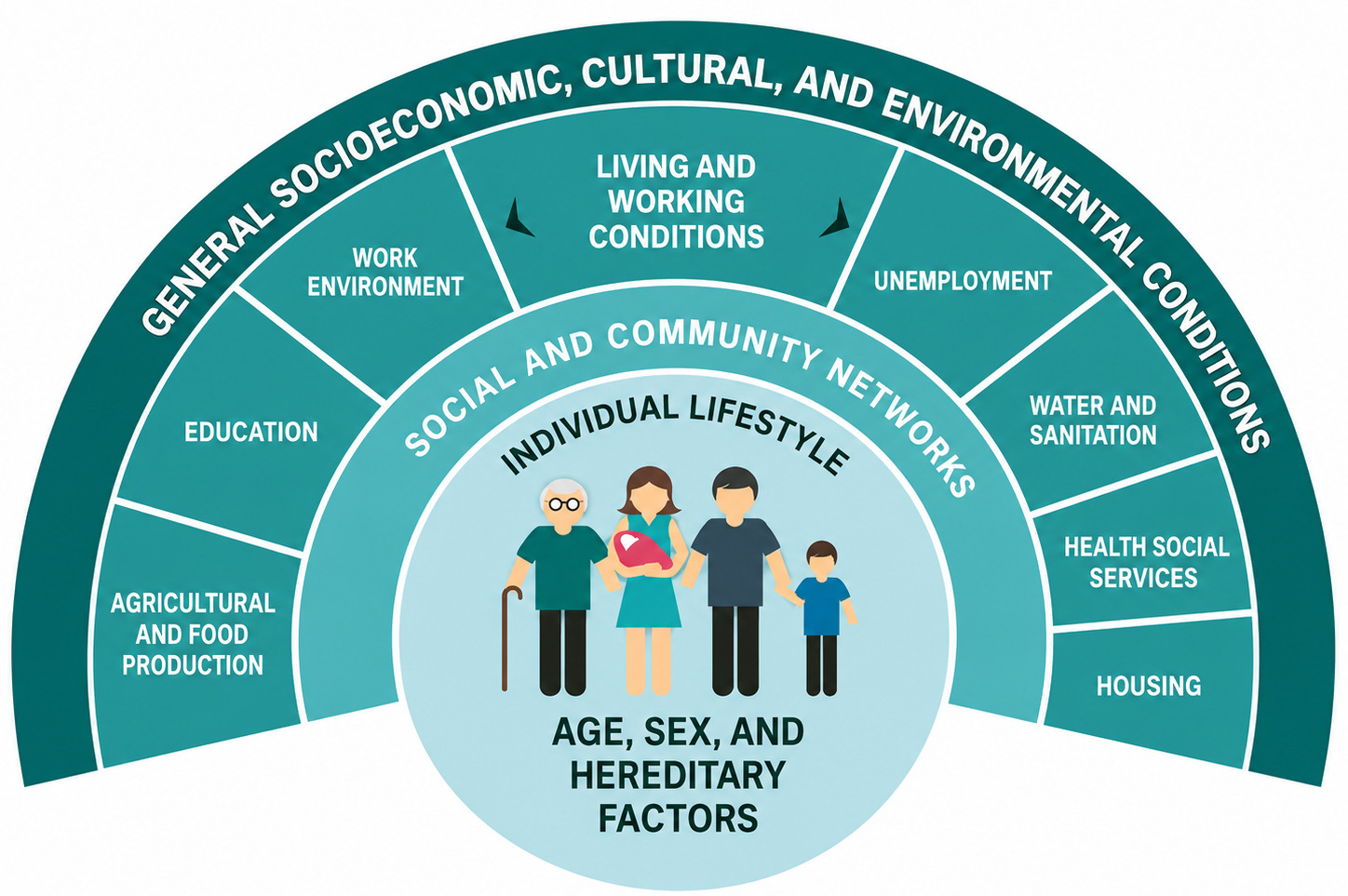
To examine this complex network of influences, the framework proposed by
Dahlgren and Whitehead
is widely used. This model categorizes SDH into macro-determinants (structural factors such
as public
policies, economic conditions, and social protection systems), meso-determinants
(intermediate
factors including housing conditions, work environments, access to healthcare services, and
social
support networks), and micro-determinants (individual and behavioral factors)2. By
illustrating the
dynamic interactions between social structures and individual experiences, the model
highlights
how health inequalities emerge and persist across populations. Consequently, these
determinants
influence surgical outcomes throughout the entire continuum of care, from surgical
indication to the
postoperative period3,4.
Recent evidence has demonstrated that factors such as income, health insurance coverage,
educational
attainment, food security, housing conditions, community context, and the physical
environment
are associated with significant differences in prognosis, length of hospital stay, quality
of life, and
postoperative complications5,6. EStudies have shown that the absence of
private health
insurance,
low household income, and residence in socially vulnerable areas are associated with
increased risks
of adverse postoperative outcomes, including infections, hospital readmissions, and
postoperative
delirium among older adults5,6. These findings suggest that surgical
risk extends beyond
traditional
biomedical factors and encompasses social determinants that influence healthcare access,
delivery,
and outcomes.
Addressing Social Determinants of Health requires a multidimensional approach
capable of capturing
the complexity of these interconnected factors7. The stratification of clinical data
according to
different SDH domains, as recommended by international guidelines, facilitates the
identification of
health disparities and supports the development of targeted interventions, including
referrals to social
services, engagement of community health workers, and adaptations to perioperative care
plans1,7,8.
Despite these recommendations being well established in the literature, their implementation
in
routine surgical practice remains limited.
Although healthcare professionals increasingly recognize the importance of SDH, their systematic
assessment, documentation, and integration into clinical workflows remain insufficient. Barriers
such
as the absence of standardized protocols, inadequate professional training, and limited availability
of
screening instruments hinder the incorporation of SDH into everyday clinical practice9.
Consequently,
a substantial gap persists between scientific knowledge and its practical application, particularly
in
complex hospital environments such as surgical centers. This gap represents not only an operational
challenge but also an ethical and epistemological concern, reflecting the difficulty of integrating
critical
perspectives on social inequities into the predominantly technocratic model of perioperative
care.
Within this context, perioperative nursing plays a pivotal role in integrating technical and
scientific
expertise with a strong ethical commitment to health equity through the lens of Social Determinants
of Health. By recognizing these determinants as integral components of patient care, nurses can
adopt a critical and proactive approach that extends beyond the performance of clinical procedures
to encompass reflection, advocacy, and social transformation10,11. Grounded in Emancipatory Nursing
Theories, this perspective requires critical awareness of the power structures that shape health and
healthcare delivery, as well as an active commitment to reducing inequities. It also demands
sensitivity
to identify hidden vulnerabilities, dedication to social justice, and the competence to implement
interventions that address the individual throughout the surgical journey11.
Therefore, integrating Social Determinants of Health into perioperative clinical
practice should not be
viewed merely as a technical recommendation but as an ethical imperative for contemporary nursing.
Such integration is consistent with a praxis committed to comprehensive care and the improvement
of population health conditions. Accordingly, this article aims to reflect, through a narrative
review,
on the influence of Social Determinants of Health on surgical outcomes and their implications for
perioperative nursing practice.
Content Summary
This study is a theoretical-reflective essay based on a narrative literature review
conducted in the
PubMed database between April and June 2025. This methodological approach was selected because
of its analytical and interpretative nature, which is consistent with the study objective of
critically
examining the relationship between Social Determinants of Health (SDH) and surgical outcomes, with
particular emphasis on implications for perioperative nursing practice12.
Unlike systematic or scoping reviews, narrative reviews do not seek to provide an
exhaustive synthesis
or quantitative assessment of the available evidence. Instead, they aim to develop an interpretative
understanding by integrating diverse theoretical and empirical perspectives on a given
topic13.
The focus of this study was to explore how Social Determinants of Health influence surgical care and
perioperative nursing practice. A narrative literature review was chosen because its purpose is not
to
identify all available evidence systematically, but rather to develop a comprehensive and
contextualized
understanding of the phenomenon under investigation.
The review was conducted exclusively in the PubMed database due to its international
relevance,
broad coverage of health-related research, and extensive indexing of peer-reviewed scientific
journals.
This database was considered appropriate for providing a comprehensive overview of surgical care
and its relationship with Social Determinants of Health at both national and international levels.
The search strategy employed the descriptors “Social Determinants of Health,”
“Surgical Care,”
“Nursing Practice,” and “Health Disparities,” combined using Boolean operators (AND/OR). The search
was restricted to studies published within the previous five years. Given the reflective nature of
this narrative review, methodological procedures typically associated with systematic, integrative,
or scoping reviews were not applied. Instead, emphasis was placed on the critical and integrative
interpretation of the literature, with the aim of exploring the relationships among Social
Determinants
of Health, access to surgical care, surgical outcomes, and the role of nursing within this context.
Although the selected studies did not always focus directly on nursing practice, the
analysis was
guided by a critical-interpretative perspective that integrated recent scientific evidence with the
authors’ professional experience in surgical and perioperative care12,14.
The analysis was conducted in three stages: (1) comprehensive reading of the selected
articles and
extraction of findings related to Social Determinants of Health and surgical outcomes; (2)
identification
of thematic patterns and conceptual convergences; and (3) organization of the findings into three
analytical dimensions: structural macro-determinants, institutional meso-determinants, and
individual
micro-determinants, according to the framework proposed by Dahlgren and Whitehead15.
A total of 26 articles published predominantly between 2021 and 2025 were included,
together with
seminal theoretical references considered essential for the conceptual foundation of the
study16-41.
Most
publications consisted of retrospective and cross-sectional observational studies based on
population
databases, as well as systematic reviews, narrative reviews, and qualitative studies. Most of
research was
conducted in high-income countries, particularly the United States and European nations, and
addressed
specialties such as oncology, colorectal surgery, thoracic surgery, orthopedics, and neurosurgery.
The
principal outcomes investigated included postoperative complications, hospital readmissions, length
of hospital stay, stage at diagnosis, and access to surgical treatment, frequently examined in
relation to
socioeconomic indicators such as income, health insurance status, and social vulnerability.
Before presenting the reflective analysis, it is important to revisit the framework
proposed by Dahlgren e
Whitehead15, which
conceptualizes Social Determinants of Health as interconnected and interdependent
layers. Based on this model, the present study organized its reflections into three analytical
dimensions
corresponding to the interactions among structural factors, institutional mediators, and individual
conditions within the surgical context Figure 1.
Figure 1. Social determinants of health
Note: Adapted from Dahlgren and Whitehead -202115
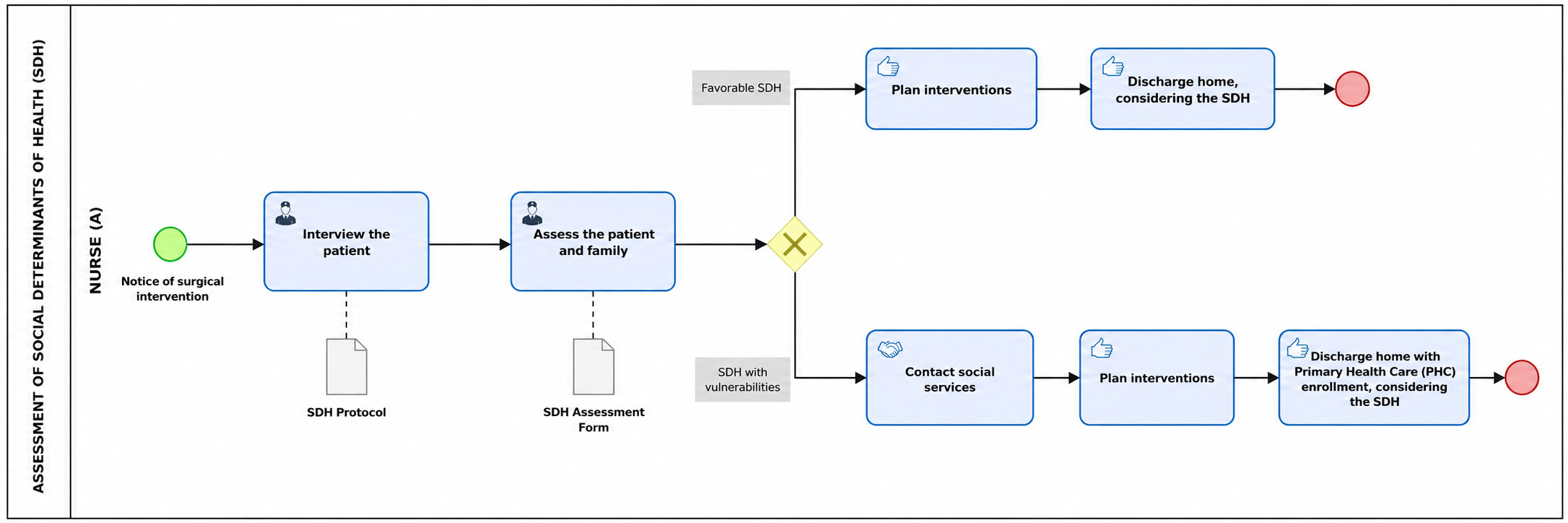
Based on this analytical framework and the reflections developed throughout the study, a graphical
model was created using Bizagi Modeler software with the aim of visually illustrating the
relationships
between the different levels of Social Determinants of Health and potential areas for intervention
in
surgical nursing practice. This graphical representation does not constitute an empirical finding;
rather,
it serves as a didactic and analytical tool designed to synthesize the thematic framework developed
from the literature.
Macro-determinants of health and the emancipatory practice of Nursing in surgical
care
Macro-determinants of health constitute the broadest layer of the framework proposed by Dahlgren
and Whitehead, encompassing the social, economic, political, cultural, and environmental factors
that structurally shape patterns of illness, access to healthcare services, and recovery
trajectories
within populations15. The
studies analyzed consistently demonstrate associations between these
determinants and disparities in access to surgical treatment, stage of disease presentation, and
the occurrence of postoperative complications. Therefore, within the context of Surgical Nursing,
understanding these determinants is essential for identifying the systemic origins of health
inequities
and guiding a critical practice that extends beyond technical care to promote social justice,
equity, and
citizenship within healthcare settings.
From a critical perspective, macro-determinants are not external influences on care but structural
forces that shape the daily functioning of surgical services, affecting service organization,
patient
profiles, resource allocation, and the practical possibilities for nursing action16,17. These
determinants
are reflected, for example, in public healthcare financing policies, which directly influence
hospital
capacity and the availability of elective and emergency surgical procedures. In Brazil, although the
Unified Health System (SUS) is guided by the principles of universality and equity, resource
constraints
often limit its ability to meet growing healthcare demands, particularly in medium- and
high-complexity
services. As a result, long waiting lists, procedure cancellations, and shortages of essential
supplies
remain common, especially in socioeconomically disadvantaged regions5,18.
This reality is also shaped by broader political and economic structures. The unequal distribution
of
public investment, combined with persistent socioeconomic inequalities, contributes to inadequate
hospital infrastructure, insufficient operating rooms, limited postoperative bed availability, and
shortages of essential materials and medications19. The literature reviewed here associates these
structural deficiencies with delays in treatment and increased risks of adverse outcomes among
vulnerable populations. Such conditions compromise not only patient safety but also the dignity of
care, an ethical dimension that nursing practice cannot overlook.
Furthermore, prevailing socioeconomic inequalities characterized by income concentration, labor
market insecurity, and racial and territorial disparities create substantial barriers to surgical
access.
Socioeconomic conditions influence patients’ ability to complete preoperative assessments,
attend healthcare appointments, maintain postoperative follow-up, and adhere to treatment
recommendations20. These
findings reinforce the notion that surgical risk is not solely determined
by
clinical factors but is deeply embedded within structural conditions that shape healthcare
experiences
and outcomes.
Within this context, the role of Surgical Nursing can be understood as both caring
and transformative.
While actively participating in direct patient care, nurses must also act as agents of social and
institutional
change, integrating technical expertise with an ethical commitment to addressing health inequities.
Recognizing the effects of macro-determinants, including structural racism, territorial
inequalities,
institutional violence, and the social exclusion of marginalized populations, allows nurses to
interpret
delays in treatment, complications, and treatment discontinuation not as individual failures but as
manifestations of historically produced social inequities3,21.
In this regard, emancipatory nursing praxis offers both an analytical framework and a
practical response
to these structural challenges. Drawing on the work of Peart and MacKinnon10, and Velasco and
Reed11,
this perspective emphasizes critical awareness, ethical responsibility, and transformative action in
response to systems of domination and exclusion. Within surgical settings, this requires challenging
the normalization of inequalities, advocating for vulnerable patients, and collectively developing
care
strategies that incorporate Social Determinants of Health into routine clinical practice.
This broader perspective expands the possibilities for nursing action at the
macro-determinant level
through three key dimensions:
-
Political engagement in institutional decision-making: nurses in leadership positions can
advocate for structural improvements in surgical services, including workforce expansion,
infrastructure development, and the acquisition of technologies. By utilizing epidemiological
evidence and social indicators, nurses can support equitable resource allocation and promote
distributive justice within healthcare institutions9.
- Participation in health policy development:
Engagement in health councils, advisory boards, and
policy forums enables nurses to contribute to the formulation of policies aimed at expanding
surgical access for historically marginalized populations, including Indigenous peoples,
quilombola communities, and individuals experiencing homelessness22. Such participation
strengthens the social role of nursing and its capacity to influence the structural determinants
of health.
- Equitable management of healthcare resources:
Through surgical scheduling, workflow
organization, and care supervision, nurses can help ensure that administrative decisions
consider
the needs of socially vulnerable populations. This may include implementing protocols that
incorporate social vulnerability screening tools, Social Vulnerability Indices (SVI), and
mechanisms
for identifying barriers to healthcare access4,23.
Therefore, the analysis of macro-determinants of health within the surgical context
is not merely a
theoretical exercise but a practical necessity for healthcare professionals committed to equity and
social
justice. Nursing practice must be grounded in a broader understanding of health as a fundamental
human right and supported by critical, interdisciplinary professional education that is responsive
to
the
sociopolitical dynamics shaping healthcare systems7.
Meso-determinants of health and their influence on surgical care
Within the framework proposed by Dahlgren and Whitehead15, meso-determinants of health occupy
the intermediate layer between macro- and micro-determinants, encompassing institutional,
organizational, territorial, and community factors that mediate the effects of structural
determinants
on individuals’ experiences within healthcare systems. In the context of Surgical Nursing, these
factors
are critical to the quality, safety, and continuity of care, serving as key mediators between
structural
inequities and clinical outcomes3,4.
Unlike macro-determinants, which relate to the broader organization of society, meso-determinants
are expressed through the functioning of healthcare institutions, service management practices, the
integration of care networks, and the capacity for collaboration among healthcare professionals and
patients. These dimensions influence the entire surgical pathway, from the indication of surgery to
hospital discharge and postoperative follow-up, directly affecting treatment adherence, complication
rates, and equitable access to care23,24. Furthermore, the studies included in this
review indicate that
poor communication between levels of care and inadequate transitional care planning contribute
to preventable hospital readmissions. Within this context, nursing not only accompanies patients
throughout the surgical process but also serves as a fundamental source of support, guidance, and
humanized care.
Among the meso-determinants most relevant to surgical care are institutional workflow
organization,
operating room and bed management, communication across levels of care, transportation availability,
community support systems, and multidisciplinary team integration3. Barriers such as surgery
cancellations due to incomplete preoperative testing, hospital discharge without continuity-of-care
planning, and the absence of social assessments during hospitalization reflect systemic deficiencies
that compromise patient safety and surgical outcomes9. These challenges have been reported across
diverse healthcare settings, particularly in resource-constrained environments.
In Brazil, such barriers are further exacerbated by regional disparities and the historical
fragmentation
of the Unified Health System (SUS). In regions with limited access to specialized healthcare
services,
including rural areas and urban peripheries, patients often face substantial obstacles to obtaining
timely
and safe surgical care. Moreover, postoperative follow-up is frequently compromised by inadequate
coordination between hospitals and primary healthcare services25. These gaps represent critical
mesodeterminants
that intensify health inequities among socioeconomically vulnerable populations.
Because nurses are involved in every stage of the surgical journey, Surgical Nursing occupies a
strategic
position in addressing meso-determinants of health. Nurses can identify hidden social
vulnerabilities,
implement educational interventions tailored to patients’ realities, coordinate formal and informal
support networks, and facilitate access to institutional and community resources. Such actions
require
reflective practice, sensitivity to social and territorial contexts, and a strong commitment to
equity
from the initial patient assessment onward22,26. Evidence suggests that coordinated,
person-centered
interventions are associated with improved treatment adherence and reduced risks of discontinuity in
surgical care26,27.
For this mediation role to be effective, healthcare institutions must recognize the importance of
incorporating social assessment into surgical planning and establish structures that support
intersectoral
collaboration. The absence of protocols that integrate social factors into surgical risk assessment,
as
well
as the undervaluation of transitional care practices, limits nursing’s ability to address
meso-determinants
effectively and perpetuates avoidable gaps in care delivery3,9.
In addition, cultural competence and effective communication are essential tools for responding to
the
sociocultural diversity of surgical patients. A person-centered approach that respects individuals’
beliefs,
language, lived experiences, and community ties strengthens the therapeutic relationship and
promotes
patient engagement throughout recovery24. Health education, when adapted to patients’
cultural and
social contexts, becomes a powerful strategy for enhancing autonomy and reducing postoperative
risks.
Therefore, a critical nursing approach to meso-determinants requires strengthening interdisciplinary
collaboration, integrating social assessment tools into clinical practice, and developing
collaborative
networks among healthcare services, community organizations, and social support systems. Such an
approach is essential to ensure that surgical care extends beyond technical procedures and is
delivered
as a comprehensive, socially responsive, and equity-oriented practice. As demonstrated by several
studies included in this review, institutional strategies that promote care coordination and
intersectoral
communication play an important role in mitigating inequities along the surgical pathway24-28.
Key nursing interventions addressing meso-determinants of health in the surgical context include:
-
Comprehensive social assessment and individualized care planning: nurses should conduct
thorough assessments upon admission and throughout hospitalization to identify social barriers
to recovery, including inadequate housing conditions, food insecurity, lack of caregiver
support,
and transportation difficulties. Based on these assessments, individualized care plans can be
developed, incorporating referrals to social services and coordination with primary healthcare
providers3.
-
Community and territorial engagement: strengthening connections with primary healthcare
services and formal or informal community support networks, such as community health centers,
Social Assistance Reference Centers (CRAS), religious organizations, and local associations, can
help establish support systems for surgical patients after discharge. Such integration reduces
care fragmentation, prevents readmissions related to treatment discontinuation, and promotes
continuity of care within vulnerable communities22. Effective intersectoral and
interprofessional
communication is essential to achieving these goals. Strategies such as shared care meetings,
streamlined referral pathways, integrated care protocols, and shared electronic health records
can facilitate communication across levels of care and strengthen healthcare continuity9,26.
- Culturally sensitive health education: preoperative
and postoperative education should be
tailored to patients’ sociocultural contexts and levels of health literacy. The use of plain
language,
visual educational materials, and family involvement can improve understanding of treatment
recommendations and enhance adherence to care plans24.
Meso-determinants of health therefore represent a crucial dimension of Surgical Nursing practice,
requiring professionals who are prepared to understand patients’ social realities and proactively
address
institutional and community barriers to care. Integrating this perspective into clinical practice
not
only
improves surgical outcomes but also reinforces the role of nursing as an agent of social
transformation
within healthcare systems.
The practice of micro-determinants in surgical nursing
The role of Surgical Nursing in addressing micro-determinants of health represents a concrete
expression
of praxis as an ethical, reflective, and transformative form of action. Located at the innermost
layer
of the Dahlgren and Whitehead15 model, micro-determinants encompass individual
and behavioral
factors that directly influence the health–disease process, including lifestyle, health literacy,
emotional
well-being, family support, treatment adherence, and self-care practices. In surgical settings,
these
factors assume particular importance because they influence both preoperative preparation and
postoperative recovery, ultimately affecting clinical outcomes and the quality of care
provided27,28.
From the perspective of critical praxis, the surgical nurse moves beyond the role of a technical
executor
of clinical protocols and becomes an active participant in the development of individualized and
humanized care. This approach requires attentive listening, a comprehensive understanding of each
patient's circumstances, and the ability to implement interventions that extend beyond conventional
clinical practice. Preoperative anxiety, for example, may significantly affect perceived pain,
immune
function, and wound healing, requiring nurses to adopt supportive and patient-centered approaches
that incorporate emotional support and educational strategies tailored to patients’ sociocultural
contexts29
.
Numerous other micro-determinants may influence surgical experience, including fear
of anesthesia,
limited understanding of the surgical procedure, low health literacy, and the absence of social
support
networks. In all these situations, nursing practice must remain critically engaged and responsive,
recognizing and addressing the subjective and contextual factors that shape surgical care.
When discussing care practices in surgical settings, an educational, dialogical, and
culturally
sensitive
approach is essential. Such praxis acknowledges patients’ individual characteristics and promotes
autonomy throughout the surgical process. The use of accessible language, visual educational
materials, and participatory teaching strategies can enhance understanding of wound care, warning
signs, pain management, and medication adherence10. This educational dimension not only reduces
postoperative risks but also strengthens the therapeutic relationship and promotes patients’ active
participation in their own care.
Contemporary healthcare realities demonstrate that many micro-determinants are
profoundly
influenced by broader social vulnerabilities. Food insecurity, limited access to medications,
inadequate
family support, and precarious housing conditions can directly affect treatment adherence and the
effectiveness of postoperative rehabilitation. In this context, nursing plays a crucial role in
identifying
barriers and seeking practical solutions tailored to each patient’s circumstances, even in
resourceconstrained
settings30,31. These factors have
been consistently identified in qualitative and observational
studies as significant obstacles to surgical recovery, particularly among socially vulnerable
populations.
The incorporation of digital health technologies represents an important
complementary strategy for
addressing micro-determinants of health. Mobile applications for symptom monitoring, medication
reminders, telehealth consultations, and educational platforms can facilitate longitudinal follow-up
of
surgical patients, strengthen self-care behaviors, and reduce the risk of postoperative
complications32.
The use of these technologies may also enhance patient engagement and improve the overall surgical
care experience32.
Addressing micro-determinants effectively also requires alignment with public
policies and healthcare
models that prioritize person-centered and comprehensive care. Primary Health Care services play a
fundamental role in ensuring continuity of postoperative follow-up, particularly among populations
experiencing social vulnerability33. However, several studies have highlighted
persistent
operational
challenges in the integration of healthcare services across different levels of care, which may
compromise
continuity and quality of postoperative management33,34.
Evidence suggests that nursing interventions focused on micro-determinants are
associated with
improved treatment adherence and better surgical recovery outcomes. Studies have demonstrated
that patients receiving individualized educational interventions delivered by nurses experience
lower hospital readmission rates34. Furthermore, continuous psychosocial support
combined with
intersectoral collaboration contributes significantly to improved clinical outcomes among surgical
patients living in highly vulnerable social contexts35.
Thus, practical examples of nursing interventions addressing micro-determinants of health include
the
following:
-
Individualized assessment and comprehensive monitoring: upon admission for surgery, nurses
conduct a thorough assessment focused on comorbidities, lifestyle behaviors, nutritional status,
health literacy, and family support. For example, among patients with diabetes, close monitoring
of glycemic control and targeted education are essential for preventing complications such as
surgical site infections and delayed wound healing36. The evidence reviewed reinforces the
importance of individualized assessment as a key strategy for preventing avoidable perioperative
complications.
- Promotion of personalized health education:
surgical nurses provide guidance to patients and
their families regarding smoking cessation, physical activity, adequate nutrition, and other
health behaviors that may optimize surgical recovery. Educational interventions should be
tailored to patients’ cultural backgrounds, cognitive abilities, and health literacy levels to
facilitate
sustainable behavioral change37. Encouraging patients to resume self-care
practices from the
early postoperative period is an important component of recovery planning.
- Psychosocial support and therapeutic communication:
recognizing that fear, anxiety, and
emotional distress may negatively affect surgical recovery, nurses establish supportive
environments based on trust, empathy, and active listening38,39. Evidence suggests that
structured psychosocial interventions can improve patients’ experiences and strengthen
adherence to postoperative care recommendations.
- Planning and coordination of postoperative care:
nursing practice is also expressed through the
individualized coordination of care according to patients’ clinical, social, and emotional
needs.
Examples include implementing early mobilization strategies for patients at increased risk of
deep vein thrombosis and providing detailed wound-care education for immunocompromised
individuals40. These
interventions illustrate the importance of care management grounded in
clinical judgment, evidence-based practice, and contextual awareness, thereby promoting
safety, effectiveness, and equity throughout the recovery process.
- Use of digital and assistive technologies: digital
health tools, including remote monitoring
applications, medication reminder systems, telehealth platforms, and educational resources,
can reinforce self-management and continuity of care, particularly among patients with limited
access to healthcare services41.
Micro-determinants of health therefore constitute a critical dimension of Surgical Nursing
practice.
Their
systematic assessment and incorporation into care planning contribute to improved quality of
care,
enhanced patient safety, greater treatment adherence, and a reduction in preventable
perioperative
complications.
Application of surgical nursing practice considering the Social Determinants of Health
(SDH).
Surgical Nursing practice, when informed by the different levels of the Social Determinants of
Health,
is expressed through interconnected actions that range from policy advocacy and institutional
engagement to individualized, person-centered care. Table 1
presents an analytical synthesis developed
from the reviewed literature and the authors’ critical-reflective interpretation, illustrating
how
nurses
can operationalize reflective praxis across each determinant level to promote more equitable,
effective,
and patient-centered surgical care.
Table 1. Nursing practice in the macro, meso and micro determinants of health in
the surgical
context
X
Table 1. Nursing practice in the macro, meso and micro determinants of
health in the surgical
context
Level of
determinants
|
Nursing practice
|
Expected results
|
|
Macro-determinants
|
Participate in councils advocating for equitable health
policies.
|
To improve access and equity in surgical services.
|
|
To propose protocols that optimize the use of hospital
resources.
|
Reduce waiting times in queues and strengthen security
in customer service.
|
|
To empower teams in social justice and social
determinants
of health.
|
To broaden the awareness and sensitivity of the
multidisciplinary team.
|
|
Meso-determinants
|
Assess social conditions and support network upon
hospital admission.
|
Identify social barriers and facilitate comprehensive
care.
|
|
Coordinate support services (social assistance, shared
transportation).
|
To ensure continuity of care and accessibility.
|
|
To develop culturally appropriate health education.
|
To facilitate understanding and adherence to treatment.
|
|
Involve family members in the care process.
|
To strengthen emotional and practical support for the
patient.
|
|
Micro-determinants
|
Assess the patient's lifestyle habits, mental health,
and level
of knowledge.
|
Personalize care and identify risks.
|
|
To carry out individualized educational interventions on
self-care.
|
To promote autonomy and safety in postoperative
management.
|
|
To offer emotional support and psychological referral.
|
Reduce anxiety and improve well-being.
|
|
Conduct post-discharge follow-up (when available) via
telephone contact or follow-up strategies.
|
Identify complications early and reinforce adherence.
|
This perspective broadens the understanding of surgical care by integrating
structural, institutional,
and individual dimensions into the care process, as highlighted in the studies analyzed,
thereby
reinforcing the profession’s ethical and social commitment to health equity. Furthermore,
based
on the thematic synthesis developed in this essay, Figure 2
was created as a didactic-analytical
framework illustrating the assessment and integration of Social Determinants of Health (SDH)
within
the perioperative context.
Figure 2. Flowchart for the assessment of DSS in the perioperative context
Note: This flowchart describes the assessment of the DSS (Discriminative Social Structure)
in
the perioperative process,
summarizing the clinical journey of the surgical patient from the communication of the
diagnosis
to hospital discharge,
highlighting the critical points of nursing intervention guided by the DSS.
The framework is organized as a logical and chronological sequence,
beginning with the
communication of the need for surgery, a stage at which factors related to Social
Determinants of
Health (SDH) may first be identified. The preoperative assessment includes the evaluation of
macro-,
meso-, and micro-determinants, such as socioeconomic conditions, access to information, and
family
support. During surgical preparation, nurses may implement educational interventions,
provide
emotional support, and identify specific clinical and social risks.
The transition through the operating room and the Post-Anesthesia Care Unit
(PACU) represents
critical stages during which clinical monitoring is reinforced while attention is given to
individual
vulnerabilities and care needs. The framework culminates in hospital discharge and the
patient’s
return home, emphasizing the importance of strategies that incorporate Social Determinants
of
Health into perioperative care to promote continuity of care, treatment adherence, and the
prevention
of postoperative complications.
Table 1 and Figure
2 therefore synthesize the analytical interpretation developed in this
study,
highlighting the strategic potential of Surgical Nursing to integrate Social Determinants of
Health into
perioperative care and thereby contribute to more equitable, comprehensive, and
patient-centered
healthcare.
Conclusions
In this context, the literature reviewed demonstrates that Nursing plays a
fundamental role in
recognizing patients’ individual circumstances and implementing personalized care strategies
based
on an understanding of the Social Determinants of Health (SDH) that shape their health
experiences.
Such an approach requires comprehensive assessments that extend beyond biomedical factors to
include nutritional status, treatment adherence, psychosocial support, environmental
conditions, and preventive measures. By addressing these dimensions, nurses can help
minimize perioperative risks
and promote more effective recovery following hospital discharge or transition to other
healthcare
services for continued treatment.
As discussed throughout this essay, nursing interventions across the
different layers of the Social
Determinants of Health are inherently interconnected and interdependent, requiring
coordination
among levels of care and integration between the clinical and social dimensions of
healthcare. Within
surgical settings, the literature reviewed indicates that structural, organizational, and
individual factors
influence access to surgical procedures, the quality of perioperative care, and clinical
outcomes.
Recognizing these determinants is therefore essential for addressing health inequities and
promoting
equitable surgical care.
The systematic incorporation of Social Determinants of Health into clinical
practice, together with
the development of institutional protocols that acknowledge local realities and
population-specific
vulnerabilities, may contribute to greater equity in surgical care. The evidence reviewed
suggests that
personalized educational interventions, intersectoral collaboration, and attention to
socioeconomic
conditions are associated with improved treatment adherence and better postoperative
recovery
outcomes.
Finally, the application of the Dahlgren and Whitehead framework to the
surgical context provides a
valuable analytical perspective for understanding how social determinants influence
perioperative
care. Incorporating this perspective into nursing practice may strengthen clinical
decision-making,
enhance patient safety, improve the quality of surgical care, and promote a more
comprehensive
approach that is responsive to social inequities and committed to health equity.
Conflicts of interest: The author declares no conflicts of
interest related to this manuscript.
Funding: This research received no specific grant from any
funding agency in the public, commercial,
or not-for-profit sectors.
Author contributions: JEdSMF: Conceptualization;
Investigation; Methodology; Project Administration;
Supervision; Validation; Visualization; Writing – Original Draft Preparation; Writing –
Review & Editing.
LRS: Conceptualization; Formal Analysis; Investigation; Methodology; Validation;
Supervision; Writing –
Review & Editing. AMSC: Data Curation; Investigation; Resources; Validation; Writing –
Review & Editing.
FEAAJ: Resources; Project Administration; Supervision; Validation; Writing – Review &
Editing. RBT:
Investigation; Resources; Supervision; Validation; Writing – Review & Editing. MBAR:
Resources; Project
Administration; Supervision; Validation; Writing – Review & Editing.
References
-
Fonseca MC, Manso RKG de S, Teixeira RS de O, Moreira MMC, Silva RAR, Pinto
ESG, et al.
A promoção de saúde e os fatores condicionantes e determinantes de saúde e sua
influência
no contexto social – uma reflexão. Contribuciones a las Ciencias Sociales.
2024;17(1):5454-68.
https://doi.org/10.55905/revconv.17n.1-325
-
Campbell JA, Egede LE.
Chapter 3 - Conceptual models and frameworks for addressing
structural inequalities in chronic disease outcomes. In: Structural Inequalities and
Health
Outcomes for Chronic Disease. Academic Press. 2025:33-61.
https://doi.org/10.1016/B978-0-443-23750-8.00007-2
-
Smith BP, Girling I, Hollis RH, Rubyan M, Shao C, Jones B, et
al.
A socioecological qualitative
analysis of barriers to care in colorectal surgery. Surgery.
2023;174(1):36-45.
https://doi.org/10.1016/j.surg.2023.03.009
-
Paro A, Hyer JM, Diaz A, Tsilimigras DI, Pawlik TM.
Profiles in social vulnerability: The
association of social determinants of health with postoperative surgical outcomes.
Surgery.
2021;170(6):1777-84.
https://doi.org/10.1016/j.surg.2021.06.001
-
Arias F, Dufour AB, Jones RN, Alegria M, Fong TG, Inouye
SK.
Social determinants of health
and incident postoperative delirium: Exploring key relationships in the SAGES study.
J Am
Geriatr Soc. 2024;72(2):369-81. https://doi.org/10.1111/jgs.18662
-
Lai V, Wesley DB, Zheng H, Lu J, Graves K, Miller KM, et
al.
Social determinants of health
and quality of life in endocrine surgery patients. J Surg Res.
2023;283:194-204.
https://doi.org/10.1016/j.jss.2022.10.053
-
Perez NP, Ahmad H, Alemayehu H, Newman EA, Reyes-Ferral
C. The impact of social
determinants of health on the overall wellbeing of children: A review for the
pediatric surgeon.
J Pediatr Surg. 2022;57(4):587-97.
https://doi.org/10.1016/j.jpedsurg.2021.10.018
-
White-Williams C, Rossi LP, Bittner VA, Driscoll A, Durant
RW, Granger BB, et al.
Addressing social determinants of health in the care of patients with heart failure:
A scientific
statement from the American Heart Association. Circulation.
2020;141(22):e841-e863.
https://doi.org/10.1161/CIR.0000000000000767
-
Sullivan GA, Gely Y, Palmisano ZM, DeSimone A, Gluth MB, Kuo
LE.
Surgeon understanding
and perceptions of social determinants of health. J Surg Res.
2024;294:73-81.
https://doi.org/10.1016/j.jss.2023.08.050
-
Peart J, MacKinnon K.
Cultivating Praxis Through Chinn and Kramer's Emancipatory Knowing.
ANS Adv Nurs Sci. 2018 Oct-Dec;41(4):351-8. https://doi.org/10.1097/ANS.0000000000000232
-
Velasco RAF, Reed SM.
Nursing, Social Justice, and Health Inequities: A Critical Analysis
of the Theory of Emancipatory Nursing Praxis. ANS Adv Nurs Sci. 2023
Jul-Sep;46(3):249-64.
https://doi.org/10.1097/ANS.0000000000000445
-
Polit DF, Beck CT.
Nursing research: Generating and assessing evidence for nursing practice.
11ª ed. Wolters Kluwer Health; 2020.
-
Ferrari R.
Writing narrative style literature reviews. Med Writ.
2015;24(4):230–235.
https://doi.org/10.1179/2047480615Z.000000000329
-
Cunha MHF, Santos CL.
O paradigma hermenêutico como fundamentação das pesquisas
etnográficas e fenomenológicas. Rev Lat Am Enfermagem. 2020;28:e3320.
https://www.scielo.br/j/rlae/a/SDZTPV7wK3vVRJLSWQjq4qd/
-
Dahlgren G, Whitehead M.
The Dahlgren-Whitehead model of health determinants: 30
years on and still chasing rainbows. Public Health. 2021;199:20-4. https://doi.org/10.1016/j.puhe.2021.08.009
-
Murthy SS, Ortiz A, DuBois T, Sharma A, Fernandez F, Dasari
BVM, et al.
The effect of
social determinants of health on utilization of surgical treatment for
hepatocellular carcinoma
patients. Am J Surg. 2023;225(4):715-23. https://doi.org/10.1016/j.amjsurg.2022.10.011
-
Abdelhack M, Tripathi S, Chen Y, Avidan MS, King CR.
Social vulnerability and surgery
outcomes: A cross-sectional analysis. BMC Public Health. 2024;24(1):1907.
https://doi.org/10.1186/s12889-024-19418-5
-
Syrnioti G, Eden CM, Johnson JA, Calvillo-Ortiz R, Farmer
DL.
Social determinants of
cancer disparities. Ann Surg Oncol. 2023;30(13):8094-104. https://doi.org/10.1245/s10434-023-14200-0
-
Pollak YLE, Lee JY, Khalid SI, Hsiung WR, Nguyen
LL.
Social determinants of health Z-codes
and postoperative outcomes after colorectal surgery: A national population-based
study. Am
J Surg. 2022;224(5):1301-7. https://doi.org/10.1016/j.amjsurg.2022.06.012
-
Shah R, Chan KKW. The impact of socioeconomic status on stage at
presentation, receipt of
diagnostic imaging, receipt of treatment and overall survival in colorectal cancer
patients. Int
J Cancer. 2021;149(5):1031-1043.
https://doi.org/10.1002/ijc.33622
-
Ayaz-Alkaya S.
Social determinants of health influencing the health of patients with a stoma:
A discursive paper. Int Wound J. 2025;22(4):e70384.
https://doi.org/10.1111/iwj.70384
-
Namburi N, Timsina L, Ninad N, Ceppa D, Birdas T.
The impact of social determinants of
health on management of stage I non-small cell lung cancer. Am J Surg.
2022;223(6):1063-6.
https://doi.org/10.1016/j.amjsurg.2021.10.022
-
Yap ZL, Summers SJ, Grant AR, Moseley GL, Karran
EL.
The role of the social determinants
of health in outcomes of surgery for low back pain: A systematic review and
narrative synthesis.
Spine J. 2022;22(5):793-809.
https://doi.org/10.1016/j.spinee.2021.11.013
-
Malapati SH, Edelen MO, Kaur MN, Zeng C, Ortega G, McCleary
NJ, et al.
Social
Determinants of Health Needs and Health-related Quality of Life Among Surgical
Patients: A
Retrospective Analysis of 8512 Patients. Ann Surg. 2024;279(3):443-9.
https://doi.org/10.1097/SLA.0000000000006117
-
Holbert SE, Andersen K, Stone D, Pipkin K, Turcotte J,
Patton C.
Social Determinants of
Health Influence Early Outcomes Following Lumbar Spine Surgery. Ochsner J.
2022;22(4):299-306. https://doi.org/10.31486/toj.22.0066
-
Wood EB, Brown A, Douglas CS, Lawrence J, Wotherspoon Z,
Gollenberg A.
Engaging
Emergency Nurses in Strategies to Address the Social Determinants of Health. J
Emerg Nurs.
2024;50(1):145-52.
https://doi.org/10.1016/j.jen.2023.06.014
-
Phillips J, Richard A, Mayer KM, Shilkaitis M, Fogg LF, Vondracek H.
Integrating the
Social Determinants of Health into Nursing Practice: Nurses' Perspectives. J
Nurs Scholarsh.
2020;52(5):497-505. https://doi.org/10.1111/jnu.12584
-
Vikan M, Haugen AS, Valeberg BT, Bjørnnes AK, Husby VKS,
Deilkås EC, et al.
Patient
safety culture through the lenses of surgical patients: A qualitative study. BMC
Health Serv Res.
2025;25(1):215.
https://doi.org/10.1186/s12913-025-12366-9
-
Pereira L, Figueiredo-Braga M, Carvalho IP.
Preoperative anxiety in ambulatory surgery: The
impact of an empathic patient-centered approach on psychological and clinical
outcomes.
Patient Educ Couns. 2016;99(5):733-8.
https://doi.org/10.1016/j.pec.2015.11.016
-
Jack HE, Arabadjis SD, Sun L, Sullivan EE, Phillips RS.
Impact of Community Health Workers
on Use of Healthcare Services in the United States: A Systematic Review. J Gen
Intern Med.
2017;32(3):325-344.
https://doi.org/10.1007/s11606-016-3922-9
-
Yngman-Uhlin P, Klingvall E, Wilhelmsson M, Jangland E.
Obstacles and opportunities for
achieving good care on the surgical ward: Nurse and surgeon perspectives. J Nurs
Manag.
2016;24(4):492-9.
https://doi.org/10.1111/jonm.12349
-
Bekelis K, Calnan D, Simmons N, MacKenzie TA, Kakoulides G.
Effect of an immersive
preoperative virtual reality experience on patient reported outcomes: A randomized
controlled
trial. Ann Surg. 2017;265(6):1068-73.
https://doi.org/10.1097/SLA.0000000000002094
-
Missel M, Beck M, Donsel PO, Petersen RH, Benner P.
Do enhanced recovery after lung
cancer surgery programs risk putting primacy of caring at stake? A qualitative focus
group
study on nurses' perspectives. J Clin Nurs. 2023;32(13-14):4037-48.
https://doi.org/10.1111/jocn.16555
-
Gilligan T, Coyle N, Frankel RM, Berry DL, Bohlke K, Epstein
RM, et al.
Patient-clinician
communication: American Society of Clinical Oncology consensus guideline. J Clin
Oncol.
2017;35(31):3618-32.
https://doi.org/10.1200/JCO.2017.75.2311
-
Griscti O, Aston M, Warner G, Martin-Misener R, McLeod D.
Power and resistance within
the hospital's hierarchical system: The experiences of chronically ill patients.
J Clin Nurs.
2017;26(1-2):238-47.
https://doi.org/10.1111/jocn.13382
-
Rossi M, Fornia L, Puglisi G, Leonetti A, Zuccon G, Fava E,
et al.
Assessment of the praxis
circuit in glioma surgery to reduce the incidence of postoperative and long-term
apraxia: A new
intraoperative test. J Neurosurg. 2019;130(1):17-27.
https://doi.org/10.3171/2017.7.JNS17357
-
Cho HE, Huynh KA, Corriere MA, Chung KC, Cederna PS.
Developing Strategies for Targeted
Improvement of Perioperative Education for Postbariatric Surgery Body-Contouring
Patients.
Annals of Plastic Surgery. 2021;86(4):463-468.
https://doi.org/10.1097/SAP.0000000000002471
-
Hanssen I, Smith Jacobsen IL, Skråmm SH.
Non-technical skills in operating room nursing:
Ethical aspects. Nurs Ethics. 2020;27(5):1364-72.
https://doi.org/10.1177/0969733020914376
-
Rydenfält C, Johansson G, Larsson PA, Åkerman K, Odenrick P.
Social structures in
the operating theatre: How contradicting rationalities and trust affect work. J
Adv Nurs.
2012;68(4):783–95.
https://doi.org/10.1111/j.1365-2648.2011.05779.x
-
Fuller S, Kumar SR, Roy N, Mahle WT, Romano JC, Nelson JS, et
al.
The American
Association for Thoracic Surgery congenital cardiac surgery working group 2021
consensus
document on a comprehensive perioperative approach to enhanced recovery after
pediatric
cardiac surgery. J Thorac Cardiovasc Surg. 2021;162(3):931-54.
https://doi.org/10.1016/j.jtcvs.2021.04.072
-
Wright JM, Raghavan A, Wright CH, Shammassian B, Duan Y,
Sajatovic M, et al.
Back to
the future: Surgical rehearsal platform technology as a means to improve
surgeon–patient
alliance, patient satisfaction, and resident experience. J Neurosurg.
2021;135(2):384-91.
https://doi.org/10.3171/2020.6.JNS201865
✖

Figura 1. Título de la figura.