



Table 1. Participants’ characteristics
Table 1. Participants’ characteristics
| Actor No. | Participant ID | Actor type | Affiliation level | Academic background | |
|---|---|---|---|---|---|
| Health-related studies | Postgraduate degree | ||||
| 1 | EN1VPS-1 | S | N | Yes | Yes |
| 2 | EN2ANSP | S | N | Yes | Yes |
| 3 | EN3ONG-1 | I | I | Yes | |
| 4 | EN4IPS | I | N | Yes | |
| 5 | EN5SDS | S | D | Yes | Yes |
| 6 | EN6ONG-2 | S | I | Yes | Yes |
| 7 | EN7MS-1 | S | N | Yes | |
| 8 | EN8VPS-2 | S | N | Yes | |
| 9 | EN9MS-2 | S | N | Yes | Yes |
| 10 | EN10EPS | S | N | Yes | |
| 11 | EN11SOCIV-1 | I | N | No | No |
| 12 | EN12EXP-1 | I | N | Yes | |
| 13 | EN13SOCIV-2 | I | N | No | No |
| 14 | EN14VPS-3 | S | N | No | Yes |
| 15 | EN15ASOGRE | S | N | Yes | |
| 16 | EN16EXP-2 | I | N | Yes | Yes |
S: Strategic; I: Actor of interest. N: National; D: Departmental; I: International
The interview guides were developed in accordance with the theoretical and methodological principles of the GAF7,8, under the supervision of the advisory committee. The guides were pilottested with two health institution executives, which allowed the instrument to be validated Table 2.
Table 2. Categories used to design the interview guides
Table 2. Categories used to design the interview guides
| Thematic unit | Analytical category | Analysis subcategories |
|---|---|---|
| 1. Actors (They are capable of making decisions and influencing processes and may be strategic, secondary, or relevant actors.) | 1. Health system actors | Characteristics of actors that determine their level of participation in the governance process: gender; actor type (strategic or interest); academic and managerial background; leadership, administrative, and governance capacity; international, national, departmental, or municipal level of authority; and power resources. |
| 2. The problem (Refers to what is at stake, in this case, the governance of the SGSSS.) |
2. The problem from a governance perspective |
To analyze the governance process of the General System of Social Security in Health from the perspective of actors’ decision-making, through the assessment of norms, nodal points, and processes. |
| 3. Norms (Construction of the rules of the game among actors that explain their decisions.) |
3.Formal: normative framework 3. Informal: values and beliefs |
Set of formal norms and/or meta-norms and
constitutive norms (laws, norms, and regulations) that
guide actors’ decisions and/or behavior.
Set of informal and/or regulative norms (systems of social values and beliefs) that guide actors’ decisions and/or behavior. |
| 4. The process (Sequences of states through which a system passes, allowing assessment of the direction in which these processes evolve.) | 4. Decision-making process | Level of participation in policy formulation, participation, and implementation within the governance process. |
| 5. Nodal points (Physical or virtual spaces where decision-making processes, actors, and norms converge.) |
5. Formal and informal
engagement 5. Participation 5. Node levels 5. Transparency and accountability |
Extent to which actors are convened in formal
and informal spaces and their response in terms
of participation by diverse sectors of society in the
formulation of policies aimed at the governance of the
SGSSS. Mechanisms or forums in which decisions are made to guarantee the right to health. Level of actor participation, with or without voice and voting rights. Transparency is based on the free flow of information; institutional processes and information should be directly accessible to interested parties, and sufficient information should be provided to understand and monitor health-related matters. |
The methodological rigor criteria30 used to assess the scientific quality of the study were: (I) credibility: established through triangulation by three independent coders, member checking, and the use of thick descriptions supported by verbatim excerpts; (II) auditability: the advisory committee reviewed the data and reached conclusions that were the same as or similar to those of the researchers; and (III) Transferability: achieved when the data generated by the study were representative and had the potential to be useful and applicable to other studies.
Data analysis required a detailed examination of all interviews through the analysis, comparison, and categorization of the data31. Coding was conducted in three stages. First, open coding yielded 13 descriptive categories derived from 1,030 codes32. Second, axial coding yielded four analytical categories. Finally, selective coding resulted in a core category corresponding to the phenomenon under study. To strengthen methodological transparency, the researchers recorded and systematically organized the information using Microsoft Office tools. In qualitative research, researchers themselves are recognized as the primary instruments, as they interpret the findings and construct their hermeneutic meaning Thus, credibility does not depend on the use of specialized software but rather on analytical rigor, triangulation, and the constant comparative method33. In this study, Word was used for coding and Excel for organizing the categories, consistent with the data analysis process34-36.
This study adhered to the ethical principles established in Resolution 8430 of 1993 of the Colombian Ministry of Health. The study was approved by the Ethics Committee of the Graduate School of CES University, as documented in Minutes No. 190 dated April 4, 2022, based on the measures established by the researcher to protect participants’ dignity and privacy. The complete dataset collected in the study is publicly available in Mendeley Data37.
Result
This section describes the thematic categories that emerged from the interviews, the four interrelated themes, and the core category, “More Governance and Less Governability,” which together constitute the theoretical approach for addressing the research question.
Descriptive categorization
In the first phase, thirteen analytical categories were identified. The model of care category
accounted
for the largest number of codes (n = 204), followed by government management (n = 114) and citizen
participation (n = 108), suggesting that the organization and management of health care, together
with
opportunities for participation, constitute central dimensions for understanding governance within
the SGSSS. Similarly, categories such as access to health services, health sector agents, control
and
regulation, and the right to health were also prominent, indicating that experiences of using the
health
system and the actions of the different actors substantially shape participants’ accounts.
The initial categorization highlights the complexity of SGSSS governance: while themes such as access and the right to health predominate, less frequent categories—such as territorial management and corruption—capture critical experiences that complement the analysis in subsequent phases Figure 1.
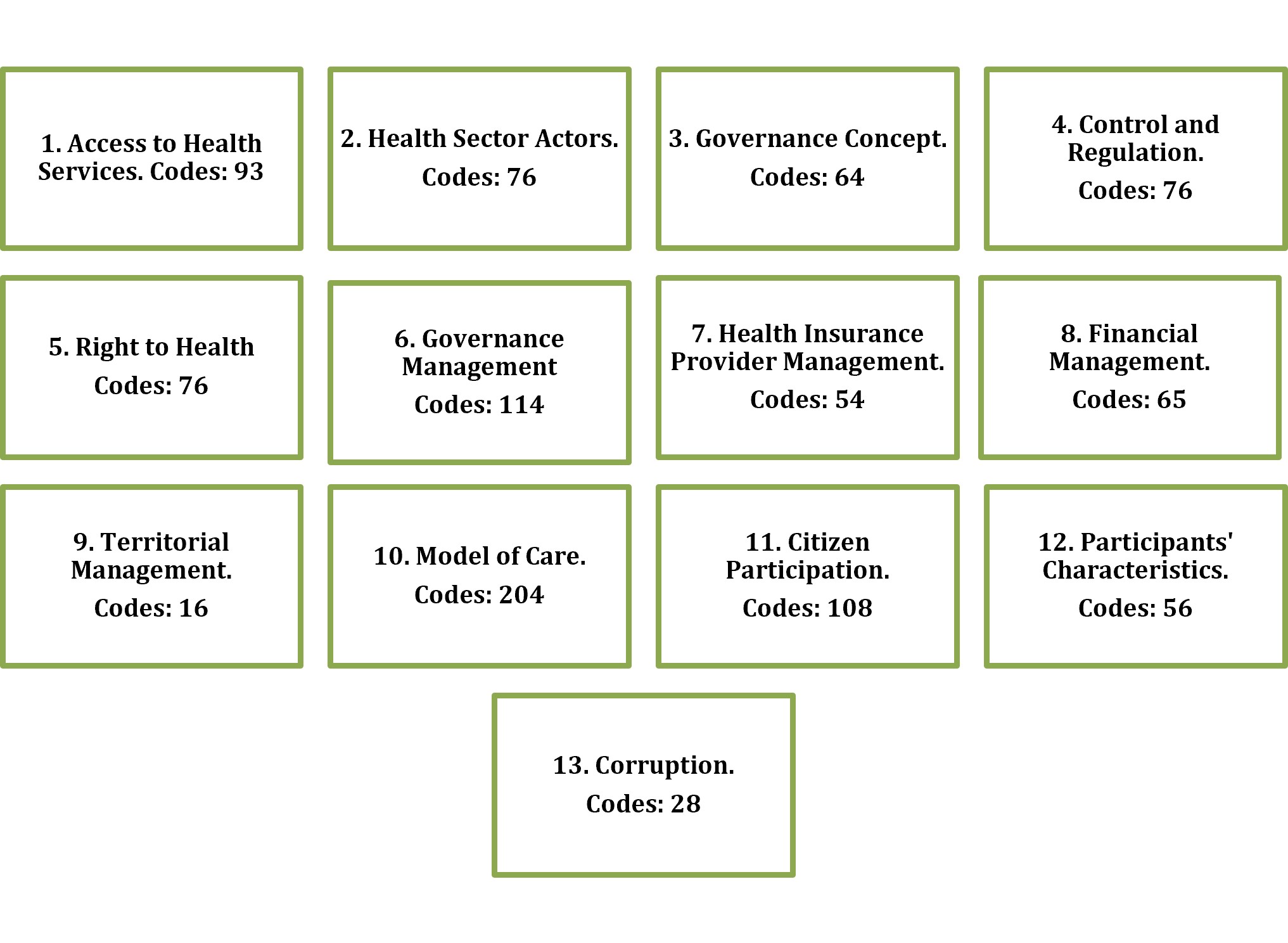
Figure 1. Descriptive categories
Analytical categories
During the axial coding phase, four analytical categories were developed based on the relationships
among the descriptive categories Figure 2 presents the first analytical
category.
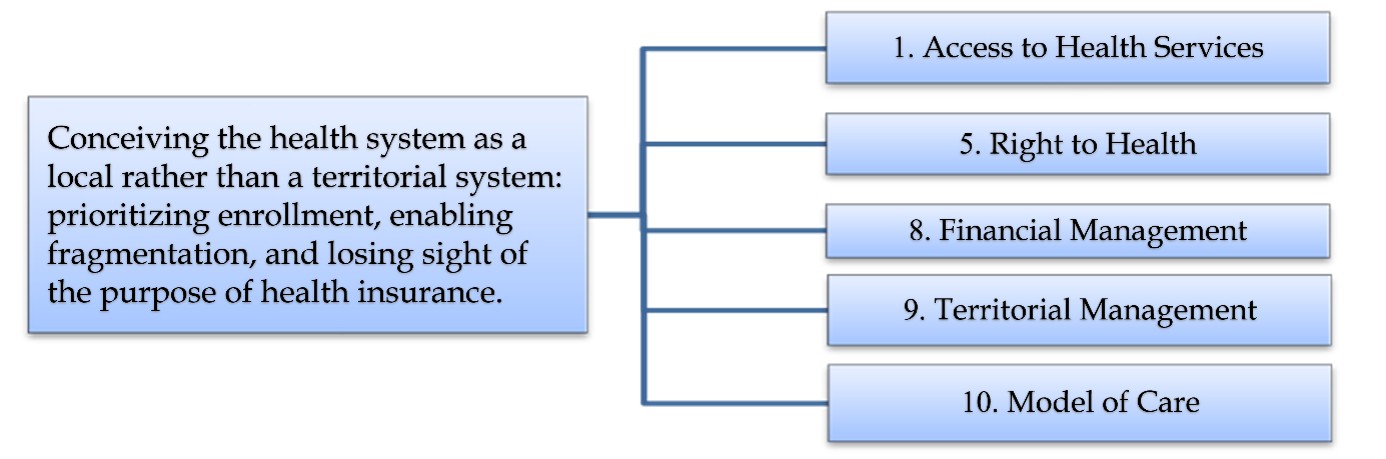
Figure 2. First analytical category
The current model has been conceived as a local health system rather than a territorial health model. The former prioritizes enrollment and provides services based on an individual’s insurance coverage, whereas the latter delivers care where individuals live and develop both biologically and socially. This has distorted the model, leading to geographic, socioeconomic, and administrative barriers. In other words, government centralization, together with a lack of multilevel coordination, results in insufficient technical assistance for territorial entities. Excerpts from the interviews are presented below:
“The main barrier in the old model… is this model of local territorial health systems—population silos versus territorial silos… So, if Sura or Sanitas goes into a neighborhood, you end up needing three or four teams, each from a different insurer. No, there should be just one. The response should be territorial, not based on where someone is enrolled. That’s a distortion, and it creates barriers to access.” (EN16EXP-2)
“The main barrier today is geographic… Services are heavily concentrated, especially highly
specialized
services, in the major cities.” (EN10EPS)
“There are limitations when it comes to access… I’m talking about the health workforce… Our
geography
is so challenging that it’s difficult for a medical specialist to build a life in remote
parts of Colombia—to
raise their children, have a family… Specialists simply aren’t going to go there.”
(EN8VPS-2)
Figure 3 spresents the second analytical category.
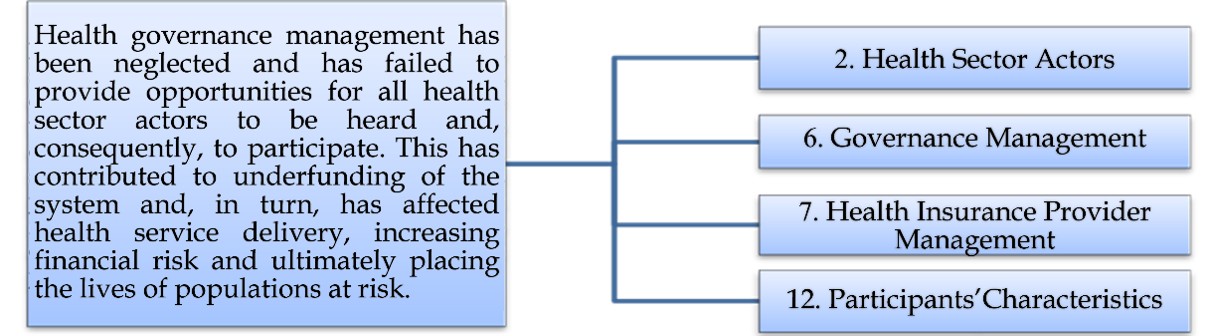
Figure 3. Second analytical category
Intersectoral collaboration and the participation of all health system actors are needed to develop action plans with transparent monitoring and accountability mechanisms that enable a structural assessment of the health system’s long-term financial viability. Sustainability should also be addressed through a clear vision that allows the system to continue evolving. This requires defining where the system is headed, identifying its starting points, and determining the areas that need improvement in order to maintain a system that continues to contribute to population health. Excerpts from the interviews are presented below:
“…There was a regulatory failure from the very beginning. There were no real solvency requirements to ensure that the EPS maintained capital and liquidity and recorded their technical reserves…” (EN8VPS-2)
“It’s not that the Ministry doesn’t listen to civil society; it’s that it doesn’t listen to Pacientes Colombia… They won’t meet with us… They’ve seen our voice not as a constructive one, but as a voice of opposition, and that has made it extremely difficult for us to participate in those spaces.” (EN13SOCIV-2)
Figure 4 presents the third analytical category.
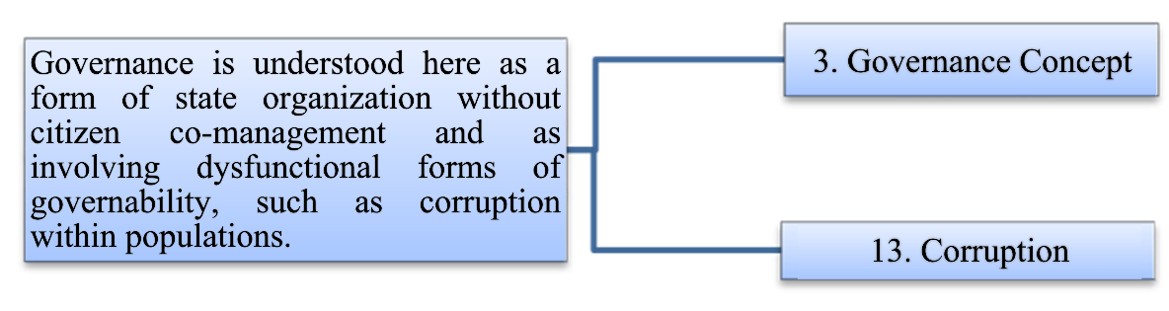
Figure 4. Third analytical category
Governance is associated with the State and involves a process of decision-making under centralized policies formulated and coordinated by the highest authorities, whereas governability is associated with government. Senior authorities exercise their power to convene representatives of the SGSSS and other actors with a social interest. Strengthening governance requires granting greater autonomy to decision-makers to formulate and co-manage their policies and to implement strategies in a coordinated, collaborative manner with both national actors and civil society organizations. Incorporating social actors within the local context, including civil society organizations, helps ensure that policies are comprehensive and sustainable over the long term, while also fostering the values of equity, reciprocity, shared responsibility, and solidarity. In short, governance entails a binding process.
Such a climate of trust would foster greater commitment and accountability among actors while strengthening transparency and accountability mechanisms. Otherwise, it can be inferred that there is confusion regarding decision-makers’ levels of responsibility and that the scope of their decisions is limited, creating conditions for corruption and clientelism to emerge as dysfunctional forms of governability. Excerpts from the interviews are presented below:
“…with weak oversight, and it all depends on the judgment of the official who authorizes the spending… So we have a system that is highly vulnerable to corruption…” (EN1VPS-1)
“Governance and governability are also connected to another concept: citizen empowerment… This also means that the government gives up some of its power, while citizens gain power.” (EN16EXP-2)
“Actors take part in government processes, public policy processes, planning, implementation, formulation, and evaluation, but their participation is not binding… Governance means that participation has to be binding.” (EN16EXP-2)
Figure 5 presents the fourth analytical category.
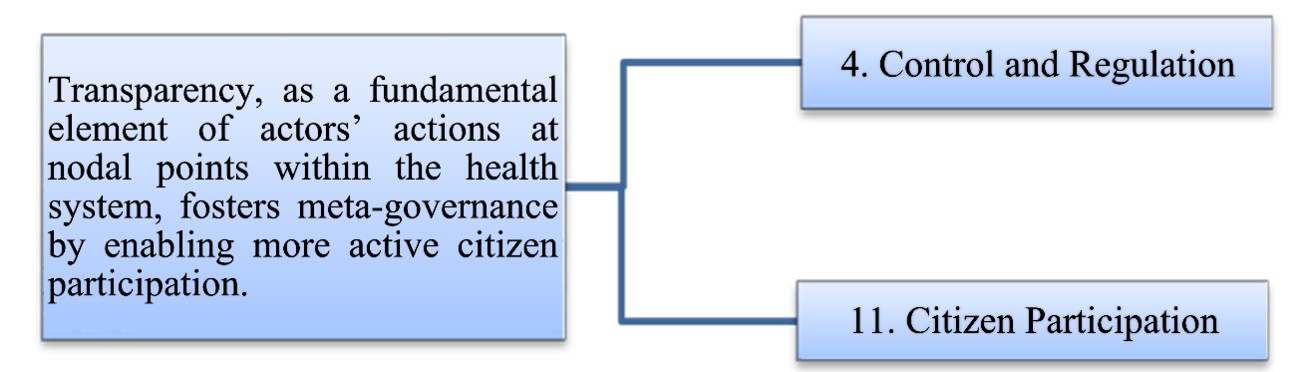
Figure 5. Fourth analytical category
Greater transparency does not imply an absence of authority, but rather a reconfiguration of power relations in which legitimacy is built through openness, dialogue, and accountability. Trust among actors in physical and virtual spaces shapes their decisions and actions, thereby facilitating more distributed and participatory governance to address health issues from a more comprehensive perspective that incorporates citizens’ experiences. This represents an open and flexible model of governance that facilitates citizen empowerment while the State deconcentrates its stewardship role within the system. Consequently, strengthening transparency contributes to the sustainability of metagovernance, understood as a higher level of coordination and collective learning that enables the system to self-regulate, innovate, and adapt. Excerpts from the interviews are presented below:
“Some actors say that the government’s role should be to foster governance processes… but the government doesn’t do that because it’s not in its interest. The structure is vertical: stewardship, the health secretariat, the Ministry of Health—and citizens are way down at the bottom. Patients are down there as passive recipients.” (EN9MS-2).
“…Metagovernance is about creating conditions, from a life-course perspective, to influence the determinants—that is, enabling individuals to change their environment… in other words, to gain political autonomy.” (EN16EXP-2)
“Citizens don’t know that whole range of entities; they don’t have access to that. So that’s part of the government’s role… to provide metagovernance…” (EN16EXP-2)
The analytical categories, integrated through selective coding, yielded a final interpretation articulated as a theoretical approach to the research question: “More Governance and Less Governability” Figure 6.
The governance of the Colombian health system is one of the most significant challenges for national and subnational governments, given the mixed nature of the health system model. Participants indicated that stewardship of the SGSSS has undergone a process of weakening that has affected the organization of services, financing, and the guarantee of the fundamental right to health. According to participants, the government has restricted opportunities for citizen participation, undermining the legitimacy of decision-making. This situation further reinforces geographic, economic, and social inequalities. It is therefore necessary to rebuild state capacities, strengthen territorial governance, restore health authority, and reestablish mechanisms for broad participation that enable a transition toward “more governance and less governability.” This does not imply a loss of state control, but rather an evolution toward a model of SGSSS governance based on the principles of inclusion, collaboration, and transparency, one that grants political autonomy to actors and strengthens decentralization within the health system.
Within the health system, governability refers to the State’s capacity to steer and regulate the system, ensure regulatory compliance, and exercise stewardship. In contrast, governance refers to processes of interaction, coordination, and negotiation among system actors, as well as to the institutional arrangements and rules of the game that enable the collaborative, efficient, and transparent formulation and implementation of policies aimed at guaranteeing the right to health.
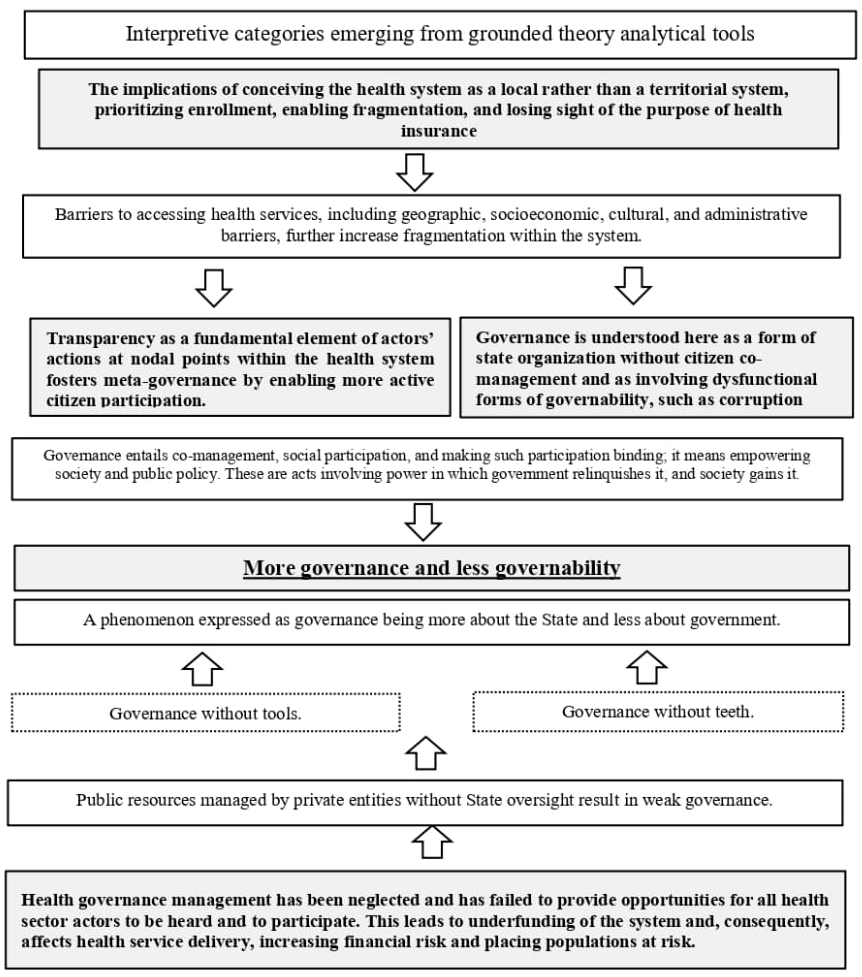
Figure 6. Theoretical approach to addressing the research question
Discussion
Among the study findings, participants identified the need to reform the SGSSS because, as recognized in studies such as that by López-Mallana et al.38, barriers to access persist across territories due to the high concentration of health services in major cities. In 90% of the national territory, the system lacks the capacity to meet the population’s health needs, particularly in rural areas, where patients discontinue medical treatment because of administrative processes and difficulties monitoring their health status38. These conditions reflect market and policy failures arising from the governability and governance of the SGSSS and represent a key determinant of system operations and relationships among actors39,40. However, shortcomings in SGSSS governance are not solely associated with stewardship. Therefore, health governance analytical frameworks that focus exclusively on regulation, such as those proposed by Vian et al.41 and Cleary et al.42, provide a limited perspective because governance is a multidimensional concept43. In this regard, multilevel frameworks, such as those proposed by Hufty et al.7 and Hufty8, Abimbola et al.44, Brinkerhoff and Bossert45, and Siddiqi et al.46, provide a more appropriate analytical approach39, 40.
According to Hernández Flórez3, governance has deeper implications for citizens’ role in health, whereas governability is more institutionally oriented. Therefore, treating these concepts as equivalent undermines the construct of governance as a means of building a stronger State. In this regard, the GAF enables analysis of the components of SGSSS governance by identifying the levels of responsibility of actors involved in health policy and distinguishing between the capacity to govern (governability) and decision-making and coordination mechanisms (governance). The scope of this study does not reveal the interrelated nature of the five governance dimensions of the TAPIC framework—Transparency, Accountability, Participation, Integrity, and Capacity47. Nevertheless, the GAF enables analysis of the interactions among actors, norms, and processes within the health sector.
In summary, the SGSSS requires more governance spaces with binding decision-making capacity. The aim is not to replace government but to strengthen State policies in the health sector. This underscores the need for an analytical framework for the system that does not focus solely on transparency. In other words, a multidimensional approach is proposed to support a reform that incorporates the demands of all actors.
Limitations
The recruitment process was delayed because of participants’ demanding schedules and, in some cases,
the need to coordinate in advance with their advisors. Acceptance of the interview invitations took
between one and four months.
Conclusions
This study is highly relevant to the policy debate on reforming the Colombian health system, as it reveals shortcomings in the governance process of the SGSSS that contribute to the persistence of health inequities. The steering and decision-making processes of the Colombian health system have limited participation by multiple actors, undermining the legitimacy of decisions and the system’s collective intelligence, given that decision quality improves when exchanges occur among diverse nodes. As the SGSSS is a complex system, broad participation is required for its effective management.
Stewardship of the SGSSS has weakened, a process associated with the operation of a mixed model involving both the market and the State, with implications for service delivery, financing, and the guarantee of the fundamental right to health. Consequently, health system governance has become one of the major public policy challenges in Colombia. The erosion of stewardship represents a governance problem because of the limited capacity to coordinate integrated networks, manage information, regulate the system’s solvency, and oversee service quality. This gap in State capacity calls for analytical frameworks that examine the problem from a multidimensional perspective. In this regard, frameworks that facilitate comprehensive assessment can inform the design of relevant SGSSS reforms and public policies.
Moreover, the lack of transparency in the health system creates information asymmetries. Facilitating citizen participation and influence in decision-making through access to information can therefore enhance their role in shaping the direction of the SGSSS and its reform, whether through oversight of resource use or participation in established forums for discussion and consensus-building.
Finally, there is an urgent need to rebuild State capacity, strengthen territorial governance, restore the health authority, and reestablish mechanisms for broad participation to move toward a health system that fully guarantees the fundamental right to health.
Conflict of interest: We declare that we have no financial or personal conflicts of interest that could inappropriately influence the preparation of this article.
Funding: This research received no grant funding from public, commercial, or not-for-profit organizations.
Author contributions: DOR-C: Conceptualization; Data Curation; Formal Analysis; Investigation; Project Administration; Writing-Original Draft Preparation. ICP-Z: Methodology; Resources; Validation; Visualization. PA-F: Supervision; Writing-Review & Editing.
References
-
Mandl Stangl J. Gobernanza de políticas públicas saludables en los ámbitos locales: una propuesta para el debate. Cuadernos del CENDES. 2017;34(96):65-86. https://www.redalyc.org/articulo.oa?id=40354944003
-
Rodríguez C, Lamothe L, Barten F, Haggerty J. Gobernanza y salud: significado y aplicaciones en América Latina. Rev Salud Pública. 2010;12(1s):151-159. https://revistas.unal.edu.co/index.php/revsaludpublica/article/view/33507
-
Hernández Flórez LJ. La gobernanza en la salud: un término arrebatado a la ciudadanía. La Silla Vacía. 2024. Consulta: julio 10, 2025. Disponible en: http://www.lasillavacia.com/red-de-expertos/red-de-ciencia-e-innovacion/la-gobernanza-en-la-salud-un-termino-arrebatado-a-la-ciudadania/
-
Lopez-Zambrano JY, Liccioni EJ. Principios de la nueva gobernanza en la administración pública. Una oportunidad para la transparencia en el sector salud.: Unidad de estudio: Hospital del IESS de Manta. 593. Digital Publisher CEIT. 2023;8(3-1):36-51. https://doi.org/10.33386/593dp.2023.3-1.1844
-
Báscolo E. Gobernanza de las organizaciones de salud basados en Atención Primaria de Salud. Rev Salud Pública. 2010;12(1s):8-27. https://revistas.unal.edu.co/index.php/revsaludpublica/article/view/33450
-
Repullo JR, Freire JM. Gobernabilidad del Sistema Nacional de Salud: mejorando el balance entre los beneficios y los costes de la descentralización. Informe SESPAS 2008. Gac Sanit. 2008;22:118-25. https://doi.org/10.1016/S0213-9111(08)76083-7
-
Hufty M, Báscolo E, Bazzani R. Governance in health: a conceptual and analytical approach to research. Cadernos de Saúde Pública. 2006;(22):35-45. https://doi.org/10.1590/S0102-311X2006001300013
-
Hufty M. Gobernanza en salud pública: hacia un marco analítico. Rev Salud Publica. 2010;12(1s):39- 61. https://revistas.unal.edu.co/index.php/revsaludpublica/article/view/33453
-
Naranjo Giraldo G, Lopera Morales JE, Granada Vahos J. Las políticas públicas territoriales como redes de política pública y gobernanza local: la experiencia de diseño y formulación de las políticas públicas sobre desplazamiento forzado en el departamento de Antioquia y la ciudad de Medellín. Estudios Políticos. 2009;(35):81-105. https://doi.org/10.17533/udea.espo.5157
-
Rojas Rojas BG, Sánchez Dávila K. Gobernabilidad local en épocas de pandemia en la región San Martin. Ciencia Latina Revista Multidisciplinar. 2021;5(4): 6211-6247. https://doi.org/10.37811/cl_rcm.v5i4.768
-
Minoletti A, Sepulveda R, Gómez M, Toro O, Irarrazabal M, Díaz R, Hernández V, Chacón S. Análisis de la gobernanza en la implementación del modelo comunitario de salud mental en Chile. Revista Panamericana de Salud Pública. 2018;(42). Disponible en: https://doi.org/10.26633/RPSP.2018.131
-
Cabral-Bejarano MS, Nigenda G, Arredondo A, Conill E. Rectoría y gobernanza: dimensiones estructurantes para la implementación de Políticas de Atención Primaria de Salud en el Paraguay, 2008-2017. Ciênc Saúde Coletiva. 2018;23(7):2229-2238. https://doi.org/10.1590/1413-81232018237.09242018
-
Díaz-Castro L, Ramírez-Rojas MG, Cabello-Rangel H, Arredondo A, Báscolo EP. Gobernanza en el sistema de salud ante la pandemia por Covid-19 en México. Salud Pública México. 2021;63(5):672-681. https://doi.org/10.21149/12956
-
Arenas-Monreal L, Jasso-Victoria R, Villanueva-Borbolla MA, Bonilla P. Experiencias de promoción de la salud y gobernanza en el ámbito local de México: retos y limitaciones. Global Health Promotion. 2012;19(1):83-89. https://doi.org/10.1177/1757975911429869
-
Silva Morocho, MA. Comités ciudadanos locales de salud: incidencia en el proceso de participación ciudadana del Cantón Palora, 2018 – 2021. [Especialización en Gestión y Gobernanza Territorial] Quito: Instituto de Altos Estudios Nacionales-IAEN, Universidad de posgrado del Estado; 2022. http://repositorio.iaen.edu.ec/handle/24000/6040
-
Molina Guzmán A. Funcionamiento y gobernanza del Sistema Nacional de Salud del Ecuador. Íconos Revista de Ciencias Sociales. 2019;(63):185-205. https://doi.org/10.17141/iconos.63.2019.3070
-
Flores W, Gomez-Sánchez I. La gobernanza en los Consejos Municipales de Desarrollo de Guatemala: Análisis de actores y relaciones de poder. Salud Pública. 2010;12(1s):138-150. https://revistas.unal.edu.co/index.php/revsaludpublica/article/view/33506
-
Chanturidze T, Obermann K. Governance in Health – The Need for Exchange and Evidence Comment on «Governance, Government, and the Search for New Provider Models». Int J Health Policy Manag. 2016;5(8):507-510. https://doi.org/10.15171/ijhpm.2016.60
-
Osei Afriyie D, Hooley B, Mhalu G, Tediosi F, Mtenga SM. Governance factors that affect the implementation of health financing reforms in Tanzania: an exploratory study of stakeholders’ perspectives. BMJ Glob Health. 2021;6(8):e005964 https://doi.org/10.1136/bmjgh-2021-005964
-
World Health Organization. Health systems governance for universal health coverage action plan: Department of health systems governance and financing. [Internet] 2014 [cited 2025 Jun 22]. Available from: https://www.who.int/publications/i/item/WHO-HSS-HSF-2014.01
-
Congreso de Colombia. Ley Estatutaria 1751: por medio de la cual se regula el derecho fundamental a la salud y se dictan otras disposiciones. Consulta: junio 22, 2025. Disponible en: https://www.funcionpublica.gov.co/eva/gestornormativo/norma.php?i=60733
-
Castro R. En busca del significado: supuestos, alcances y limitaciones del análisis cualitativo En: I. Szasz y S. Lerner. Para comprender la subjetividad. Investigación cualitativa en salud reproductiva y sexualidad. México: COLMEX; 1996. p. 57-85.
-
Guba E, Lincoln Y. Paradigmas en competencia en la investigación cualitativa. En: C. Denman y J. Haro, (comps). Por los rincones Antología de métodos cualitativos en la investigación social. México: Colegio de Sonora; 2002. p. 113-145.
-
Vives Varela T, Hamui Sutton L. La codificación y categorización en la teoría fundamentada, un método para el análisis de los datos cualitativos. Investigación En Educación Médica. 2021;10(40):97-104. https://doi.org/10.22201/fm.20075057e.2021.40.21367
-
Stake R. Investigación con estudios de Caso. 6.a ed. Madrid: Ediciones Morata; 2020.
-
Tamayo G. Diseños muestrales en la investigación. Semestre Económico. 2000;4(7). https://revistas.udem.edu.co/index.php/economico/article/view/1410
-
da Silva Barreto M, Simon BS, Marquete VF, de Souza RR, Girardon-Perlini NMO, Marcon SS. Proceso de muestreo teórico en investigación de Teoría Fundamenta vertiente. Rev Esc Enferm USP. 2021;55:e20210212. https://doi.org/10.1590/1980-220X-REEUSP-2021-0212
-
Gibbs G. El análisis de datos cualitativos en investigación cualitativa. Madrid: Ediciones Morata; 2012.
-
Álvarez Sousa A. El constructivismo estructuralista: La teoría de las clases sociales de Pierre Bourdieu. Rev Esp Investigaciones Sociológicas. 1996;(75):145-72. https://doi.org/10.2307/40184032
-
Castillo E, Vásquez M. El rigor metodológico en la investigación cualitativa. Colombia Médica. 2003;34(3):164-7. https://doi.org/10.25100/cm.v34i.3.269
-
Strauss A, Corbin J. Bases de la investigación cualitativa. Técnicas y procedimientos para desarrollar la teoría fundamentada. 1.a ed. Medellín (Colombia): Universidad de Antioquia; 2002.
-
Flick U. Introducción a la investigación cualitativa. Madrid: Ediciones Morata; 2018.
-
García PD. El método comparativo constante y sus potencialidades para el estudio de políticas educativas para la escuela secundaria en Latinoamérica. Revista Latinoamericana de Estudios Comparados en Educación. 2019;10(15):27-43. https://dialnet.unirioja.es/servlet/articulo?codigo=7075519
-
Gutiérrez Builes FA. Ruta para la atención de la persona con accidente cerebrovascular en una Institución Prestadora de Servicios de Salud en Colombia, bajo el enfoque de Atención en Salud Basada en el Valor (ASBV) [Tesis Doctorado en Salud Pública] Medellín. Universidad CES; 2025. https://hdl.handle.net/10946/9576
-
Posada Zapata IC, Carmona Parra JA. Cuando el dolor se vuelve político. [Tesis Doctorado en Ciencias Sociales] Manizales: Centro de Estudios Avanzados en Niñez y Juventud, Universidad de Manizales; 2022. https://ridum.umanizales.edu.co/handle/20.500.12746/6269
-
Osorno Navarro MM. Significados de las violencias sexuales ejercidas por paramilitares y su relación con las formas de afrontamiento y procesos de construcción de paz en las mujeres víctimas expuestas al conflicto armado interno en San Onofre, Sucre (1990-2005) [Tesis Doctorado en Ciencias Sociales, Niñez y Juventud] Medellín: Observatorio de la Salud Pública. Universidad CES; 2024. https://hdl.handle.net/10946/8454
-
Rangel-Carrero DO, Posada-Zapata IC, Agudelo-Flórez P. Archivos de entrevistas, diagramas y codificación de tesis Gobernanza del SGSSS. Mendeley Data, V1. 2025. https://doi.org/10.17632/rcjnv2w3m9.1
-
Lopez-Mallama OM, Zapata Loboa YA, Banguero Mejía KY, Andrade Díaz KV, Salazar Villegas B. Análisis de la Reforma del Sistema General de Seguridad Social en Salud 2022 – 2026: una Mirada desde el Plan Decenal de Salud Publica. Ciencia Latina Revista Multidisciplinar. 2024;8(1):1650-1664. https://doi.org/10.37811/cl_rcm.v8i1.9560
-
Báscolo E, Debrott Sánchez D, Houghton N, Vance C. Regulación y desempeño de los sistemas de salud: una revisión de los marcos de análisis. Revista Panamericana de Salud Pública. 2024;48. https://doi.org/10.26633/RPSP.2024.42
-
Rothgang H, Cacace M, Grimmeisen S, Wendt C. The changing role of the state in healthcare systems. Eur Rev. 2005;13(S1):187-212. https://doi.org/10.1017/S1062798705000256
-
Vian T, Bicknell WJ. Good governance and budget reform in Lesotho Public Hospitals: performance, root causes and reality. Health Policy Plan. 2014;9(6):673-84. https://doi.org/10.1093/heapol/czs121
-
Cleary SM, Molyneux S, Gilson L. Resources, attitudes and culture: an understanding of the factors that influence the functioning of accountability mechanisms in primary health care settings. BMC Health Serv Res. 2013;13(320). https://doi.org/10.1186/1472-6963-13-320
-
Pyone T, Smith H, Van den Broek N. Frameworks to assess health systems governance: a systematic review. Health Policy Plan. 2017;32(5):710-22. https://doi.org/10.1093/heapol/czx007
-
Abimbola S, Olanipekun T, Schaaf M, Negin J, Jan S, Martiniuk A. Where there is no policy: governing the posting and transfer of primary health care workers in Nigeria. Int J Health Plann Manage. 2016;32(4):492-508. https://doi.org/10.1002/hpm.2356
-
Brinkerhoff D, Bossert T. Health governance: principal–agent linkages and health system strengthening. Health Policy Plan. 2013;29(6):685-93. https://doi.org/10.1093/heapol/czs132
-
Siddiqi S, Masud T, Nishtar S, Peters D, Sabri B, Bile K, et al. Framework for assessing governance of the health system in developing countries: Gateway to good governance. Health Policy. 2009;90(1):13-25. https://doi.org/10.1016/j.healthpol.2008.08.005
-
Greer S, Wismar M, Figueras J. Strengthening Health System Governance: Better policies, stronger performance. [Internet] 2016 [cited 2026 Jan 16]. Available from: https://eurohealthobservatory.who.int/docs/librariesprovider3/studies---external/strengthening-health-system-governance-better-policies-stronger-performance.pdf#page=42
