



Table 1. Sociodemographic characteristics
Table 1. Sociodemographic characteristics
| Characteristic | Confirmed NF
(n=29) % (n) |
NF Ruled Out (n=106) % (n) |
Total (n=135) % (n) |
p-value |
|---|---|---|---|---|
| Age, median [IQR], years | 56 [23;69] | 54 [34;67] | 56 [33;67] | 0.810 |
| Sex | 0.890 | |||
| Male | 55.22 (16 ) | 53.77 (57) | 54.07 (73) | |
| Female | 44.82 (13) | 46.22 (49) | 45.92 (62) | |
| Health insurance scheme | 0.057 | |||
| Contributory | 86.20 (25) | 97.16 (103) | 94.81 (128) | |
| Special | 6.89 (2) | 0.94 (1) | 2.22 (3) | |
| Other | 6.89 (2) | 1.88 (2) | 2.96 (4) | |
| Nationality | 1.00 | |||
| Colombian national | 100 (29) | 97.16 (103) | 97.70 (132) | |
| Foreign national | 0 (0) | 2.83 (3) | 2.22 (3) |
IQR: Interquartile range; NF: Necrotizing fasciitis
Clinical characteristics
Among confirmed NF cases (n=29), higher proportions of comorbidities were
observed, including
hypertension (41.37%), diabetes mellitus (51.72%), and chronic kidney
disease (20.70%). However,
only diabetes mellitus showed a statistically significant difference
compared with the group without
NF (p = 0.031), suggesting an association with necrotizing infections. No
between-group differences
were observed in the frequency of immunosuppression (17.24%).
Regarding clinical presentation, 37.93% of patients with NF had fever. Pain intensity was greater in this group, with moderate pain reported in 20.68% and severe pain in 27.58%. This difference was statistically significant (p < 0.001), highlighting severe pain as an important warning sign of NF. Hospital length of stay was significantly longer among patients with NF (median 24 days, IQR 18–52; p < 0.001), indicating a more severe clinical course and greater complexity of care. A significant difference in body temperature was also identified (p=0.009), indicating greater temperature abnormalities among confirmed NF cases.
A high proportion of surgical interventions was observed in the study population (60.00%), and all patients with NF required surgical management. In-hospital mortality was 13.00% in the NF group, whereas no deaths occurred in the group without NF see Table 2.
Table 2. Clinical characteristics
Table 2. Clinical characteristics
| Characteristic | Confirmed NF
(n=29) % (n) |
NF Ruled Out (n=106) % (n) |
Total (n=135) % (n) |
p-value |
|---|---|---|---|---|
| Length of hospital stay, median [IQR] | 24 [18;52] | 8 [4;12] | 11.5 [4;16] | <0.001 |
| Comorbidities | ||||
| Hypertension | 41.37 (12) | 34.90 (37) | 36.29 (49) | 0.520 |
| Diabetes mellitus | 51.72 (15) | 30.18 (32) | 34.81 (47) | 0.031 |
| Chronic kidney disease | 20.68 (6) | 14.15 (15) | 15.55 (21) | 0.390 |
| Immunosuppression | 17.24 (5) | 16.98 (18) | 17.03 (23) | 0.970 |
| Respiratory rate, median [IQR] | 22 [21;24] | 22 [21;22] | 22 [21;22] | 0.990 |
| Heart rate, median [IQR] | 100 [95;113] | 99 [94;105] | 100 [94;106] | 0.730 |
| Body temperature Median [IQR] |
37 [36.87;38.35] |
36.5 [36.07;37.22] |
36.55 [36.17;37.50] |
0.009 |
| Fever | ||||
| Present | 37.93 (11) | 25.54 (27) | 28.14(38) | 0.240 |
| Pain Severity (VAS) | ||||
| VAS 0–3: Mild pain | 51.72 (15) | 84.90 (90) | 77.77 (105) | |
| VAS 4–7: Moderate pain | 20.68 (6) | 8.49 (9) | 11.11 (15) | <0.001 |
| VAS 8–10: Severe pain | 27.58 (8) | 6.60 (7) | 11.11 (15) |
NF: Necrotizing fasciitis; IQR: Interquartile range; VAS: Visual Analog Scale
Laboratory characteristics (LRINEC
components)
Relevant between-group differences were observed in laboratory
parameters.
Median C-reactive
protein (CRP) levels were higher among NF cases (180 mg/L), although
this
difference was not statistically
significant (p = 0.10). Hemoglobin levels showed a statistically
significant
difference (p< 0.001), with median values 2 g/dL lower among
patients with NF. Likewise, glucose levels were significantly
higher in the NF group (median 132 mg/dL; p=0.033).
Leukocytosis was more pronounced among patients with NF (median leukocyte count of 16,200 cells/μL), and the between-group difference was statistically significant (p=0.039), supporting its utility as a marker. Conversely, no significant differences were found in serum creatinine (p=0.24) or serum sodium levels (p=0.80), suggesting that these parameters did not contribute to discriminating between groups in this population. Detailed results are presented in Table 3.
Table 3. Laboratory characteristics
Table 3. Laboratory characteristics
| Characteristic | Confirmed
NF
(n=29) median [IQR] |
NF Ruled
Out
(n=106) median [IQR] |
Total
(n=135)
median [IQR] |
p-value |
|---|---|---|---|---|
| CRP (mg/L) | 180 [106;241] | 122.5 [37;206] | 139[45;213] | 0.10 |
| Hemoglobin (g/dL) | 11.4 [10;12.6] | 12.7 [12;14.8] | 12.5 [11.8;14.6] | <0.001 |
| Serum creatinine (mg/dL) | 0.87 [0.64;1.33] | 0.80 [0.67;1] | 0.83 [0.66.1.10] | 0.24 |
| Serum sodium (mEq/L) | 138 [136;141] | 138 [136;140] | 138 [136;140] | 0.80 |
| Glucose (mg/dL) | 132 [113;198] | 106 [92;148] | 114 [92;154] | 0.033 |
| Leukocyte count (cells/μL) | 16200 [9175;21898] | 11535 [8228;15572] | 11810 [8228;16185] | 0.039 |
IQR: Interquartile Range; NF: necrotizing fasciitis; CRP: C-reactive protein (mg/L)
Evaluation of the LRINEC
score
The mean LRINEC score was 6 points in
the NF group and 4 points in the non-NF group. At a cutoff
score
of
≥6 points, the area under the ROC curve (AUC) was 0.67, with
a
sensitivity of 62.07% and a specificity of 71.70%
Figure 2. Positive and negative predictive
values were 37.50% and 87.36%,
respectively, with a positive likelihood ratio (LR+) of
2.193
and a
negative
likelihood ratio (LR−) of 0.529.
At an LRINEC cutoff score of ≥8 points, the AUC was 0.6205,
with
a
sensitivity of 34.48% and a specificity
of 89.62% Figure 2. Positive and
negative
predictive
values were 47.62% and 83.30%, respectively,
with an LR+ of 3.32 and an LR− of 0.73. Based on the AUC and
likelihood
ratio values, the LRINEC
score showed limited discriminatory ability in the study
population.
Although the score may serve as a
complementary diagnostic tool, it is insufficient as a
stand-alone
diagnostic criterion.
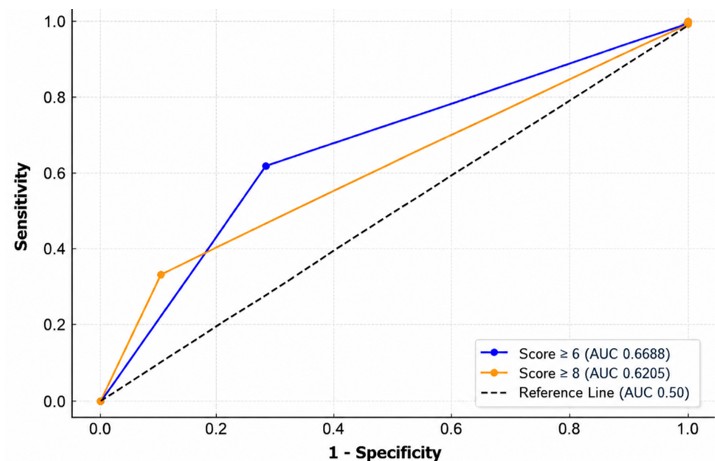
Figure 2. AUC for different LRINEC score cutoff
values
Discussion
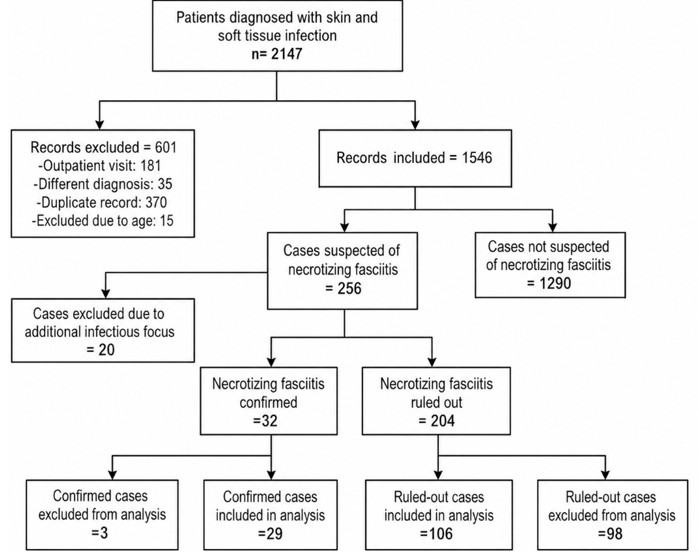
During the 6-year study period, 32 cases of NF were identified among 1,546 patients hospitalized with SSTIs at the participating institutions, corresponding to an NF frequency of 2.06% in the SSTI population evaluated. However, among the subgroup of 256 patients with systemic inflammatory response syndrome (suspected cases of NF), 32 cases were confirmed, corresponding to a frequency of 12.5%.
The present study provides pioneering evidence regarding the diagnostic performance of the LRINEC score for assessing the risk of NF in a Latin American population. The mean LRINEC score was 6 points among patients with confirmed NF. Furthermore, an LRINEC score ≥6 yielded a sensitivity of 62.07% and a specificity of 71.7% for the diagnosis of NF, whereas a score ≥8 yielded a sensitivity of 34.48% and a specificity of 89.62%. These findings are particularly relevant because this is the first study conducted in Colombia to evaluate the diagnostic performance of this tool in a population with SSTIs.
The diagnostic performance observed differed from that reported in the original validation study, which included a larger number of patients with NF than the present cohort6. Furthermore, the diagnostic performance of the LRINEC score has been shown to vary according to study design and the population evaluated15. Compared with other studies conducted in Latin American populations, these findings are consistent with those reported by Ferrer Lozano et al.11 in 2019, as well as with findings from retrospective studies such as that conducted by Breidung et al.16 at a tertiary care center in Germany. That study included 125 patients with NF and reported a sensitivity of 59% and specificity of 82% for an LRINEC cutoff score ≥6. These findings contrast with those of prospective studies, which have reported higher sensitivity and specificity. For example, a prospective study conducted at three hospitals in India and published in 2020 included 36 patients with NF and reported a sensitivity of 87.8% and specificity of 100% for an LRINEC score ≥888.
The retrospective design of the present study may explain the lower diagnostic performance observed compared with the original validation study. However, when compared with studies conducted in Latin American populations, such as a single-center study conducted in Cuba in 2018 that included 28 cases of NF and reported an AUC of 0.67, a sensitivity of 66%, and specificity of 75%, the diagnostic performance observed was similar to that found in the present study11.
When used in isolation and without appropriate clinical context, the LRINEC score has limited diagnostic utility for differentiating NF from other soft tissue infections due to its low sensitivity. Nevertheless, in the study population, it retained adequate specificity and negative predictive value (NPV). Accordingly, an LRINEC score lower than 6 points may help rule out NF, with an NPV of 87%. Systematic reviews and meta-analyses, such as that by Tarricone et al., which included 12 studies conducted primarily in developed countries, have highlighted the utility of the LRINEC score for ruling out NF because of its high NPV, which may reach 89%, despite its limited sensitivity17. Other systematic reviews have also reported high specificity and an adequate NPV18. However, validation studies conducted in tropical countries have reported limited sensitivity, although these studies have primarily used retrospective designs19. This limitation may result in NF being incorrectly ruled out in affected patients when the LRINEC score is used alone. Therefore, the LRINEC score should be used to guide clinical decision-making and the use of additional diagnostic tests in conjunction with clinical judgment. Given its low sensitivity, the findings of the present study are consistent with those reported by other authors: an LRINEC score lower than 6 may help rule out the possibility of NF; however, scores greater than 6 or 8 require complementary diagnostic testing because of the limited sensitivity of the score20.
The present study showed that the frequency of NF among patients hospitalized with SSTIs was 2%. Other authors have reported NF in 5.1% to 6.1% of patients with lower-extremity cellulitis21. No deaths occurred in the group without NF, whereas in-hospital mortality among patients with NF was 13. This finding is consistent with reports from other populations showing a progressive decline in mortality22, lA nationwide study conducted in the United States that included 4,178 NF cases between 2010 and 2014 reported a mortality rate of 12.6%23. Similarly, a mortality rate of 11.8% was reported in a study involving a low-income population24.
Cases of NF occurred in a population with a mean age of 56 years and were more frequent among men, findings similar to those reported in other populations25,26. Furthermore, patients with NF in the present study had a higher frequency of chronic comorbidities. Diabetes mellitus was present in 52% of patients, hypertension in 41%, and chronic kidney disease in 20%. Studies conducted in other populations have likewise identified diabetes mellitus as the most common comorbidity among patients with NF27.
Although the clinical presentation of NF varies according to the causative microorganism, anatomical site, and depth of infection28, severe pain out of proportion to physical findings and extending beyond the margins of inflammation is considered a clinically useful indicator15. In the present cohort, pain severity was a clinical characteristic that differed significantly in patients with NF.
Previous studies conducted in other populations have reported fever in 44% of patients with NF, tachycardia in 59%, hypotension in 21%, and tachypnea in 26%, with considerable variability depending on the clinical and epidemiological context29-31. In the present population, 38% of patients with NF presented with fever, highlighting the need for an integrated clinical assessment that extends beyond a single clinical sign and incorporates the patient’s overall clinical and symptomatic status32.
Strengths and
Limitations
The present study is novel because it is the first study
conducted in a Colombian population to describe
the clinical and demographic characteristics of patients
with
NF. It was conducted at two tertiary care
university hospitals serving as referral centers. The
proposed
objectives were achieved, demonstrating the diagnostic
performance and validity of the LRINEC score in the
Colombian
population. The results
were similar to those reported in other retrospective
studies.
Among the study limitations is its retrospective design. Data quality depended on the accuracy, completeness, and standardization of the medical records. The number of incomplete records led to the exclusion from statistical analysis of 3 suspected cases with confirmed NF and 98 suspected cases in which NF was ruled out. Furthermore, because more than 10% of the records had incomplete data, imputation could not be performed as initially proposed in the study protocol. The retrospective nature of the study and the exclusion of patients with incomplete records should be considered because of the potential for selection bias, which may affect the precision of the LRINEC score and the generalizability of the findings to the broader population. These limitations underscore the need to strengthen clinical data recording systems, improve data standardization, and promote prospective study designs in future research.
Conclusions
In this study of patients hospitalized with SSTIs in Colombia, NF had a low but clinically relevant frequency, and its associated mortality underscores the importance of early diagnosis. The LRINEC score demonstrated limited diagnostic performance, with greater utility for reducing the probability of NF when the score is low; however, when used alone, it is insufficient as a confirmatory diagnostic tool.
These findings reinforce the need to integrate the LRINEC score with clinical judgment, comprehensive patient assessment, and additional diagnostic tests, particularly when the clinical presentation is atypical. The methodological limitations inherent to the retrospective study design may have influenced the observed diagnostic performance. Prospective multicenter studies are therefore needed to provide a more valid estimate of the true utility of the LRINEC score and to explore modifications or models that may improve its discriminatory capacity.
Conflicts of Interest: The authors declare no conflicts of interest.
Funding: This study was self-funded by the authors.
Author contributions: CDAM: Conceptualization; Methodology; Investigation; Project Management. LCN-B: Data Curation; Investigation. PAGC: Formal Analysis; Software; Validation; Visualization. SdMMR: Writing – Original Draft Preparation; Writing – Review & Editing. CHST: Supervision; Methodology; Validation; Writing – Review & Editing.
References
-
Chen LL, Fasolka B, Treacy C. Necrotizing fasciitis: A comprehensive review. Nursing. 2020;50(9):34-40. https://doi.org/10.1097/01.NURSE.0000694752.85118.62
-
van Stigt S, Knubben M, Schrooten T, Tan E. Prognostic factors for mortality in 123 severe cases of necrotizing fasciitis in 5 hospitals in the Netherlands between 2003 and 2017. European Journal of Trauma and Emergency Surgery. 2022;48(2):11891195. https://doi.org/10.1007/s00068-021-01706-z
-
Hadeed G, Smith J, O’Keeffe T, Kulvatunyou N, Wynne J, Joseph B, et al. Early surgical intervention and its impact on patients presenting with necrotizing soft tissue infections: A single academic center experience. Journal of Emergencies, Trauma, and Shock. 2016;9(1):22-27. https://doi.org/10.4103/0974-2700.173868
-
Zhang L-X, Liang Z-J, Zhao B-Y, Shi X-W, Zhang T, Liu H, et al. Delayed diagnosis and management of necrotizing fasciitis of the left lower leg: A case report. Medicine. 2022;101(43):e31231. https://doi.org/10.1097/MD.0000000000031231
-
Nawijn F, Smeeing DPJ, Houwert RM, Leenen LPH, Hietbrink F. Time is of the essence when treating necrotizing soft tissue infections: a systematic review and meta-analysis. World Journal of Emergency Surgery. 2020;15(1):4. https://doi.org/10.1186/s13017-019-0286-6
-
Wong C-H, Khin L-W, Heng K-S, Tan K-C, Low C-O. The LRINEC (Laboratory Risk Indicator for Necrotizing Fasciitis) score: A tool for distinguishing necrotizing fasciitis from other soft tissue infections. Critical Care Medicine. 2004;32(7):1535-1541. https://doi.org/10.1097/01.CCM.0000129486.35458.7D
-
Liao C-I, Lee Y-K, Su Y-C, Chuang C-H, Wong C-H. Validation of the laboratory risk indicator for necrotizing fasciitis (LRINEC) score for early diagnosis of necrotizing fasciitis. Tzu Chi Medical Journal. 2012;24(2):73-76. https://www.sciencedirect.com/science/article/pii/S1016319012000110
-
Gupta M, Aggarwal A, Singh H, Khazanchi RK, Mahendru S, Brajesh V, et al. Clinical and laboratory risk indicator for necrotizing fasciitis score in predicting the outcomes in necrotizing soft tissue infection patients. International Surgery Journal. 2020;7(6):1852-1856. https://doi.org/10.18203/2349-2902.isj20202395
-
Norimatsu Y, Fukasawa T, Ohno Y, Norimatsu Y, Matsuda KM, Hisamoto T, et al. Validation of Laboratory Risk Indicator for Necrotizing Fasciitis (LRINEC) score and establishment of novel score in Japanese patients with necrotizing fasciitis (J-LRINEC score). Journal of Dermatology. 2025;52(3):439–444. https://doi.org/10.1111/1346-8138.17663
-
Rodríguez-Roiz J. Serie de 41 casos de fascitis necrotizante en un hospital de tercer nivel. ¿Es tan mortal como pensamos? ¿Es útil hoy en día la escala LRINEC? Acta Ortop Mex. 2025;39(1):27–31. https://doi.org/10.35366/118849
-
Ferrer Lozano Y, Morejón Trofimova Y. Escala LRINEC en la Fascitis necrosante. ¿Una herramienta diagnóstica útil? Revista Habanera de Ciencias Médicas. 2018;17(2):236–243. https://www.redalyc.org/articulo.oa?id=180459978009
-
Peduzzi P, Concato J, Kemper E, Holford TR, Feinstein AR. A simulation study of the number of events per variable in logistic regression analysis. Journal of Clinical Epidemiology. 1996;49(12):1373–1379. https://doi.org/10.1016/S0895-4356(96)00236-3
-
Arévalo CD, Nocua Baez LC, González Caicedo PA, Meléndez Rhenals S del M, Saavedra Trujillo CH. “Evaluación de la escala LRINEC para el diagnóstico de fascitis necrosante en una población latinoamericana”. (2026). Mendeley Data, V2. https://doi.org/10.17632/wsghdf4hpd.1
-
Ministerio de Salud. Resolución número 8430 DE 1993. Santafé de Bogotá DC Colombia; 1993. Consulta: Mayo 12, 2025. Disponible en: https://www.redjurista.com/Documents/resolucion_8430_de_1993.aspx
-
Kiat H, En Natalie Y, Fatimah L. Necrotizing Fasciitis: How Reliable are the Cutaneous Signs? Journal of Emergencies, Trauma, and Shock. 2017;10(4):205-210. https://doi.org/10.4103/JETS.JETS_42_17
-
Breidung D, Malsagova AT, Barth AA, Megas IF, Billner M, Hitzl W, et al. Diagnostic and prognostic value of the Laboratory Risk Indicator for Necrotising Fasciitis (LRINEC) based on an 18 years experience. Journal of Plastic, Reconstructive & Aesthetic Surgery. 2023;77:228–35. https://doi.org/10.1016/j.bjps.2022.11.061
-
Tarricone A, Mata KD La, Gee A, Axman W, Buricea C, Mandato MG, et al. A Systematic Review and Meta-Analysis of the Effectiveness of LRINEC Score for Predicting Upper and Lower Extremity Necrotizing Fasciitis. The Journal of Foot and Ankle Surgery. 2022;61(2):384–389. https://doi.org/10.1053/j.jfas.2021.09.015
-
Kim DH, Kim SW, Hwang SH. Application of the laboratory risk indicator for necrotizing fasciitis score to the head and neck: a systematic review and meta-analysis. ANZ Journal of Surgery. 2022;92(7–8):1631–1637. https://doi.org/10.1111/ans.17459
-
Holland MJ. Application of the Laboratory Risk Indicator in Necrotising Fasciitis (LRINEC) Score to Patients in a Tropical Tertiary Referral Centre. Anaesthesia and Intensive Care. 2009;37(4):588–592. https://doi.org/10.1177/0310057X0903700416
-
Henry R, Matsushima K, Etzel M, Henry RN, Golden A, Wong V, et al. Utility of the Laboratory Risk Indicator for Necrotizing Fasciitis Score: Comorbid Conditions Do Matter. Surgical Infections. 2021;22(8):797–802. https://doi.org/10.1089/sur.2020.398
-
Tianyi FL, Mbanga CM, Danwang C, Agbor VN. Risk factors and complications of lower limb cellulitis in Africa: a systematic review. BMJ Open. 2018;8(7):e021175. https://doi.org/10.1136/bmjopen-2017-021175
-
Nawijn F, Smeeing DPJ, Houwert RM, Leenen LPH, Hietbrink F. Time is of the essence when treating necrotizing soft tissue infections: a systematic review and meta-analysis. World Journal of Emergency Surgery. 2020;15:4. https://doi.org/10.1186/s13017-019-0286-6
-
Al-Qurayshi Z, Nichols RL, Killackey MT, Kandil E. Mortality Risk in Necrotizing Fasciitis: National Prevalence, Trend, and Burden. Surgical Infection. 2020;21(10):840–52. https://doi.org/10.1089/sur.2019.277
-
Chen Y, Huang Y, Shou J, Song R, Tan J, Deng J. Epidemiology and prognostic factors of necrotizing fasciitis in resource-limited regions based on 119 cases. Sci Rep. 2025;15:27458. https://doi.org/10.1038/s41598-025-13278-8
-
Bodansky DMS, Begaj I, Evison F, Webber M, Woodman CB, Tucker ON. A 16-year Longitudinal Cohort Study of Incidence and Bacteriology of Necrotising Fasciitis in England. World J. Surg. 2020;44(8):2580-2591. https://doi.org/10.1007/s00268-020-05559-2
-
Nguyen QD, Diab J, Khaicy D, Diab V, Hopkins Z, Foong LH, et al. Necrotising Fasciitis During the COVID-19 Pandemic: An Australian Hospital Network Experience. World J. Surg. 2023;47:1616-1630. https://doi.org/10.1007/s00268-023-07040-2
-
Hua C, Sbidian E, Hemery F, Decousser JW, Bosc R, Amathieu R, et al. Prognostic factors in necrotizing soft-tissue infections (NSTI): A cohort study. Journal of the American Academy of Dermatology. 2015;73(6):1006-1012. https://doi.org/10.1016/j.jaad.2015.08.054
-
Diab J, Bannan A, Pollitt T. Necrotising fasciitis. BMJ. 2020;369:m1428. http://www.bmj.com/content/369/bmj.m1428.abstract
-
Hakkarainen TW, Kopari NM, Pham TN, Evans HL. Necrotizing soft tissue infections: Review and current concepts in treatment, systems of care, and outcomes. Current Problems in Surgery. 2014;51(8):344-362. https://doi.org/10.1067/j.cpsurg.2014.06.001
-
Shimizu T, Tokuda Y. Necrotizing Fasciitis. Internal Medicine. 2010;49(12):1051–1057. https://doi.org/10.2169/internalmedicine.49.2964
-
Frazee BW, Fee C, Lynn J, Wang R, Bostrom A, Hargis C, et al. Community-Acquired Necrotizing Soft Tissue Infections: A Review of 122 Cases Presenting to a Single Emergency Department Over 12 Years. Journal of Emergency Medicine. 2008;34(2):139–46. https://doi.org/10.1016/j.jemermed.2007.03.041
-
Zhou L, Li H, Luo G. Consensus on the Diagnosis and Treatment of Adult Necrotizing Fasciitis (2025 Edition). Burns & Trauma. 2025;13. https://doi.org/10.1093/burnst/tkaf031
